Europe wants to become more efficient and cut red tape: Is ESG now at risk?
'Competitiveness and sustainability are not opposing forces,' says Invesco's Vincent McCarthy.
Europe has an innovation problem. In recent years, a widening gap in Gross Domestic Product (GDP) has opened between Europe and the US, underpinned primarily by a slowdown in productivity growth on this side of the Atlantic.
On a per capita basis, real disposable income has grown almost twice as much in the US as in the EU since 2000, according to former European Central Bank (ECB) president Mario Draghi, whose eye-opening analysis, published last year, detailing Europe’s challenges has drastically influenced the European Commission’s policy agenda.
In the report, Mr Draghi warned Europe had largely missed out on the digital revolution, led by the internet and its subsequent productive gains.
The productivity gap between Europe and the US is largely explained by the tech sector. Only four of the world’s top 50 tech companies are European, and as Draghi notes: “The EU is entering the first period in its recent history in which growth will not be supported by rising populations.
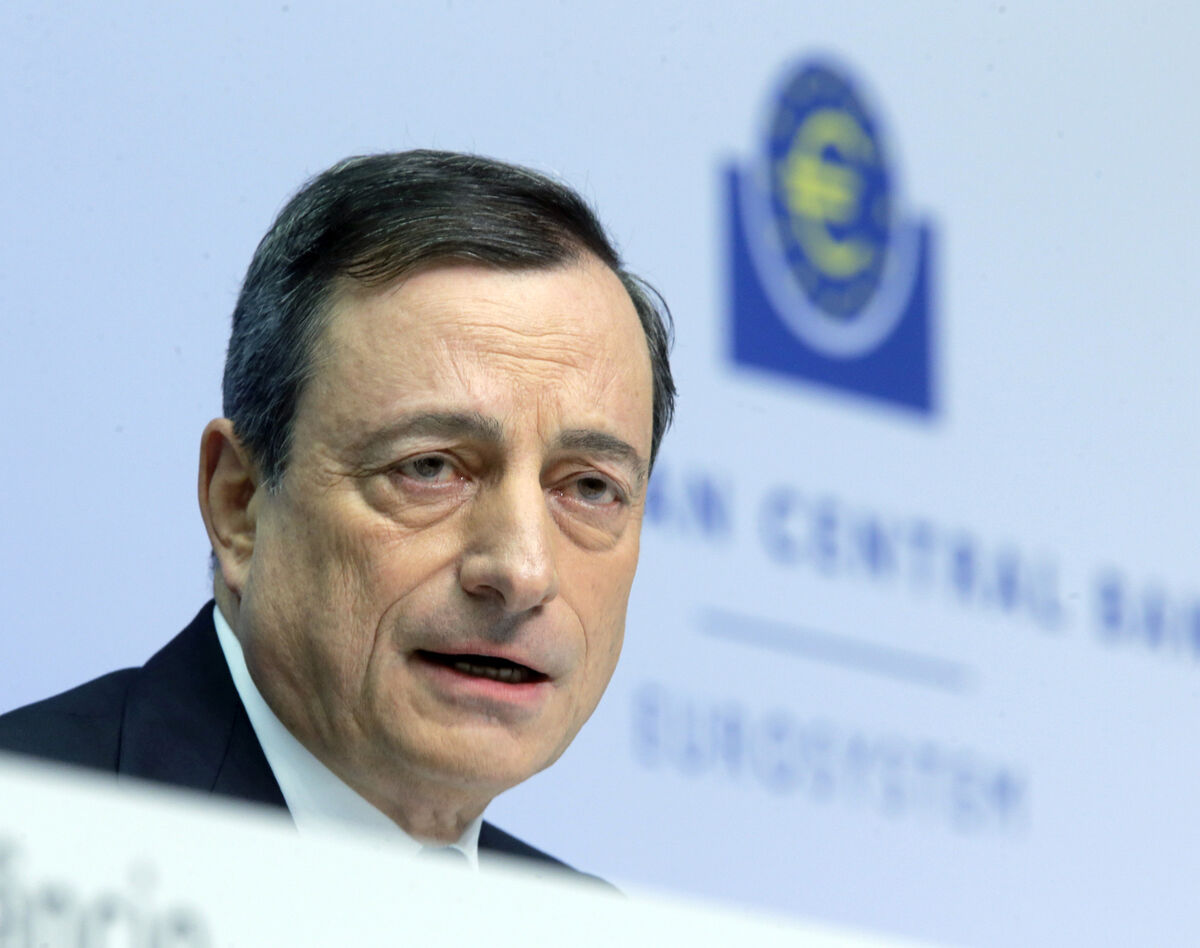
“To digitalise and decarbonise the economy and increase our defence capacity, the investment share in Europe will have to rise by around five percentage points of GDP to levels last seen in the 1960s and 70s. This is unprecedented.
“We will not be able to finance our social model. We will have to scale back some, if not all, of our ambitions. This is an existential challenge.”
The only way to meet this challenge is for the EU to grow and become more productive. According to Draghi, this will require radical change.
While extensive, the Draghi report can be boiled down to three necessities for the EU to boost its competitiveness: Closing the innovation gap, decarbonising the economy, and reducing dependencies on non-EU entities.
With the threats outlined by Draghi fresh in the mind of policymakers, the European Commission launched its competitiveness compass at the beginning of this year, describing it as a new roadmap to restore Europe’s dynamism and boost economic growth.
Part of the commission's strategy is to cut red tape, help companies adopt new technologies like AI and robotics, and simplify rules and laws for companies operating across the EU.
But the simplification process of regulatory requirements has been met with pushback by legal scholars, who claim efforts to strip back some of the commission’s Corporate Sustainability Due Diligence Directive, which was proposed as part of an omnibus bill put forward in February, are quite risky.
The warning comes from more than 30 legal scholars across the EU and UK, who want EU lawmakers to rethink their planned revision of environmental, social, and governance (ESG) due diligence requirements, according to a letter addressed to the European Parliament.
Of particular concern to the legal scholars behind the letter is the treatment of so-called transition plans. These are supposed to require companies to document how they will cut emissions in line with the EU’s 2050 net-zero goal, which the bloc has enshrined in law.

However, the current wording of the omnibus proposal appears to drop a requirement obliging companies to put transition plans into effect.
“Competitiveness and sustainability are not opposing forces,” says Vincent McCarthy, founder of ESG Ireland and the Responsible Investment Institute, a platform dedicated to ESG integration and sustainability education.
“The EU is currently behaving like they are. Developing more resilient companies and enhancing competitiveness cannot be the cover used to roll back on regulation,” Mr McCarthy told the .
Pressure to scale back regulations has come from Germany and France amid concerns European companies will be too burdened by regulatory requirements to compete with US and Asian rivals.
This has been largely supported by the Commission’s president Ursula von der Leyen, who has made clear she also wants to cut red tape, with the likely outcome being a slimmed-down framework for ESG requirements across the 27-member bloc.
“Simplifying rules shouldn’t mean just rolling back on them,” says Mr McCarthy.
As for European companies, many seem to agree. A survey conducted by WeAreEurope, an apolitical collective of European professionals, found just over half of the 1,000 companies it surveyed were dissatisfied with the EU’s omnibus simplification, which the organisation said “directly contradicts” the narrative laid out by business lobby groups and policymakers.
In addition, the group also found European companies largely rejected the idea the Corporate Sustainability Due Diligence Directive placed them at a global disadvantage. Instead, many point to a lack of guidance as the main issue hindering growth.
“The commission says it cannot impinge on competitiveness because we will be left behind, but these are not the issues companies across Europe are struggling with,” says Mr McCarthy.
“In addition to this, we have to make sure that we care about the type of companies that exist across Europe. The fact of the matter is, many unsustainable business practices are still too profitable.”
Scared of missing out on the next digital revolution, the European Commission is heavily pushing AI and encouraging companies to adopt new technologies through its AI initiatives.
According to the EU, its newly-launched InvestAI initiative will mobilise €200bn for investment in AI and set up a new fund of another €20bn for AI gigafactories.
But as Mr McCarthy notes, the environmental impact of increased AI adoption must also be considered.
“If we are going to lead on AI, which the EU has said it wants us to, we need to know the sustainability impact of that,” the ESG Ireland founder notes.
Data centres, which house AI servers, are major consumers of water and rely on rare elements and minerals that are often mined unsustainably.
Globally, AI-related infrastructure may soon consume six times more water than Denmark, a country of six million people, according to one study cited by the United Nations.
A request made through ChatGPT consumes 10 times the electricity of a Google Search, according to the International Energy Agency.
These impacts will also be felt in Ireland due to its tech hub status, with the agency estimating the rise of AI could see data centres account for almost 35% of the country’s energy use by 2026.
“This seems to be venturing into dangerous territory,” Mr McCarthy says.
“The European Commission needs to refocus. It has spent the last six or seven years focusing on company disclosures and not on tackling unsustainable business activity.
“It’s time to relocate capital out of unsustainable companies to ensure we innovate in the correct way. The commission needs to correct this now and not take the easy way out.”
CONNECT WITH US TODAY



Be the first to know the latest news and updates