First shockwaves of Trump’s tariffs about to hit world economy
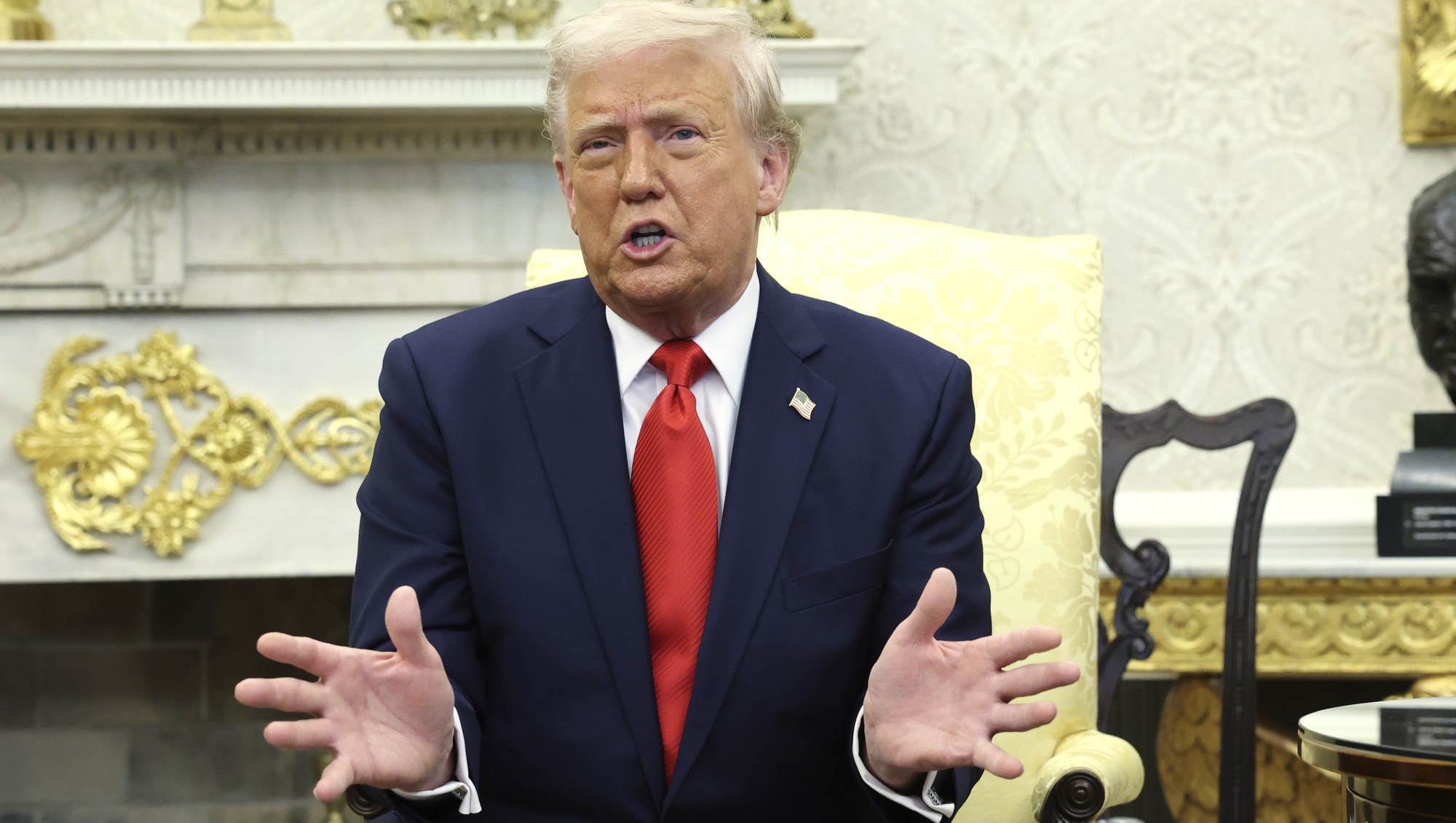
The combined picture is set to offer finance ministers and central bankers assembled in Washington a chance to make initial damage assessments on Mr Trump’s attempt to rewire the global trade system. File Picture: PA
Three weeks after US president Donald Trump effectively declared a trade war with the world, economic forecasts and surveys will point to the initial fallout.
A few blocks from the White House, the International Monetary Fund is set to lower its outlook for economic growth in new projections released today.
On Wednesday, purchasing manager indexes (PMIs) from Japan to Europe to the US will offer the first co-ordinated glimpse of manufacturing and services activity since Mr Trump’s global tariffs — now partly on hold — were unleashed on April 2.
Business surveys from major economies are also on the calendar.
The combined picture is set to offer finance ministers and central bankers assembled in Washington a chance to make initial damage assessments on Mr Trump’s attempt to rewire the global trade system.
“Our new growth projections will include notable markdowns, but not recession,” IMF managing director Kristalina Georgieva said on Thursday.
Those clouds shrouding the global economy are unlikely to lift for a while. Federal Reserve chairman Jerome Powell said on Wednesday that the US Central Bank is “well positioned to wait for greater clarity” before considering changes to monetary policy, while European Central Bank (ECB) chief Christine Lagarde could not say whether uncertainty has peaked.
In the meantime, Ms Georgieva is hoping the coming days, which also feature a meeting of a group of 20 finance chiefs, might lower the temperature in global trade relations.
“We need a more resilient world economy, not a drift to division,” she said. The Washington gatherings “provide a vital forum for dialogue at a vital time”.
In the US, investors will watch for any additional deterioration in consumer sentiment and inflation expectations when the University of Michigan issues revised April data on Friday.
On Wednesday, the Fed’s Beige Book will offer anecdotes of regional economic conditions and provide a glimpse into how much US government policy and uncertainty are affecting business decisions.
Earlier that day, the US government is expected to report a marginal increase in March new home sales.
With mortgage interest rates largely stuck above 6.5% since October, builders have been trying incentives to get buyers off the sidelines. Home resales data will be issued on Thursday.
A report on March durable goods orders the same day will help provide clues on business demand for equipment.
In Europe this week, the main focus will be survey reports. A consumer confidence report in the region is released on Tuesday, and the ECB also publishes its survey of professional forecasters.
Its wage tracker, due on Wednesday, is pointing to slower pay growth, Ms Lagarde said last week after cutting rates.
Investors may pay most attention to the PMIs out then too, offering the first glimpse of activity in manufacturing and services since the US tariff onslaught intensified at the start of April.
Germany’s closely-watched Ifo survey of business confidence comes on Thursday, showing how sentiment at companies has reacted to trade tensions and, on a more positive note, to the agreement on a federal coalition government.
Similar indexes in France are released on Friday. Britain's PMI reports also come tomorrow, as will the latest public finance numbers for March. Retail sales data are published on Friday.
The Swiss National Bank releases first-quarter earnings on Thursday, and president Martin Schlegel addresses its annual general meeting the following day.
Finally, Russia’s central bank will announce its latest monetary decision on Friday.
A recent reduction in consumer price pressures probably is not enough to convince policymakers to lower the benchmark from a record 21%.
Officials may sound a dovish note, though, for a potential rate cut later this year.
- Bloomberg


CONNECT WITH US TODAY



Be the first to know the latest news and updates