Business group Ibec welcomes Budget spending commitments on infrastructure
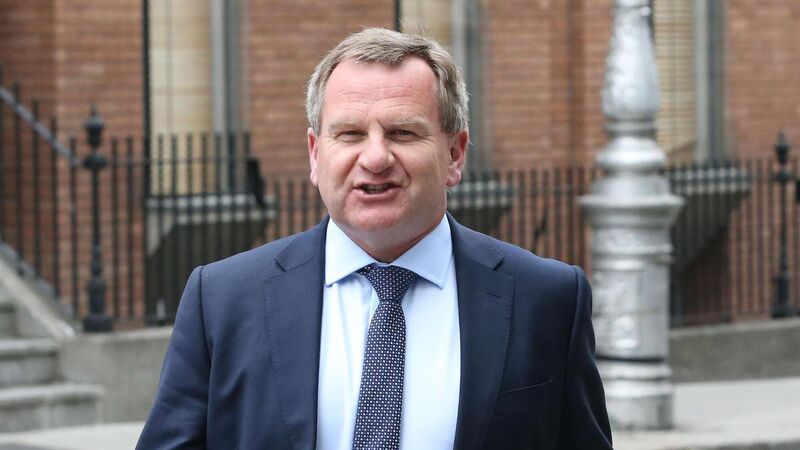
Chief executive of Ibec Danny McCoy said that the business group will be working with the Government to ensure these new policies do not inadvertently drive up costs, unnecessarily placing businesses in a more vulnerable position.
Business representative group Ibec has welcomed investments in infrastructure and human capital announced in the Budget saying it signals a move towards a “sustainable path forward for businesses worried about rising cumulative costs”.
In his budget speech, Finance Minister Jack Chambers announced additional infrastructure measures including €1bn in capital spending to Irish Water, an additional €1.25bn to the Land Development Agency to accelerate the supply of new housing, and €750m in capital spending to further development of our electricity grid infrastructure.
Prior to the budget, business groups raised concerns about the capacity constraint within the economy — particularly when it came to housing. In response to the budget, Ibec said it welcomed the “ambitious scale of investment”, particularly in infrastructure and human capital.
Chief executive of Ibec Danny McCoy said the budget reflects the “incredible contribution businesses have made in creating the surplus that is enabling the Government to be ambitious in the type of investment made today”.
“Ireland is a high-cost location relative to our competitors. Therefore, we must remain vigilant in protecting our ability to compete and safeguarding cost competitiveness, especially in light of rising operating costs and changes to labour costs.
“The areas central to Ibec’s message to the Government — regulatory changes, the introduction of auto-enrolment, and changes in taxation such as the small benefits exemption, to retirement relief and improvements in schemes for investment — are paving a more realistic path for improving cost competitiveness."
Mr McCoy added that Ibec will be working with the Government to ensure these new policies do not inadvertently drive up costs, unnecessarily placing businesses in a more vulnerable position.
In addition to infrastructure spending, the budget will see a €1.5bn package over the next six years comprising both current and capital investment to better fund research, further and higher education, skills and development and decarbonisation.
The money will come from a surplus recorded in the National Training Fund (NTF). Mr McCoy said Ibec welcomed this move having called for it to be done in the past.
Among the other measures for business in the budget, Public Expenditure Minister Paschal Donohoe announced an energy subsidy scheme which aims to help small and medium-sized businesses with their energy costs. Under the scheme, €170m will be made available to support 39,000 firms.
In addition, over €1bn will be invested into the Department of Enterprise in capital funding to enable IDA Ireland and Enterprise Ireland to provide additional environmental aid to their clients.
Mr Chambers also made changes to the Small Benefit Exemption which will be increased by €500. Employers can now apply five non-cash benefits in a year of up to €1,500.
The audio-visual sector is also set to benefit from the introduction of a new tax credit for unscripted production, subject to European Commission approval.
The credit will be available at a rate of 20% on qualifying expenditure of up to €15m and projects will be required to pass a cultural test.
In addition, Mr Chambers announced an 8% uplift for smaller feature film projects. This will apply to feature film productions with a maximum qualifying expenditure of €20 million.
Chief executive of Audiovisual Ireland, a group within Ibec, Torlach Denihan welcomed these measures saying they will “help the screen sector to capitalise on its remarkable achievements over the last decade and to secure a vibrant future for the industry”.
CONNECT WITH US TODAY



Be the first to know the latest news and updates