Jim Power: A likely cost-of-living package is not reassuring as the budget needs long-term vision
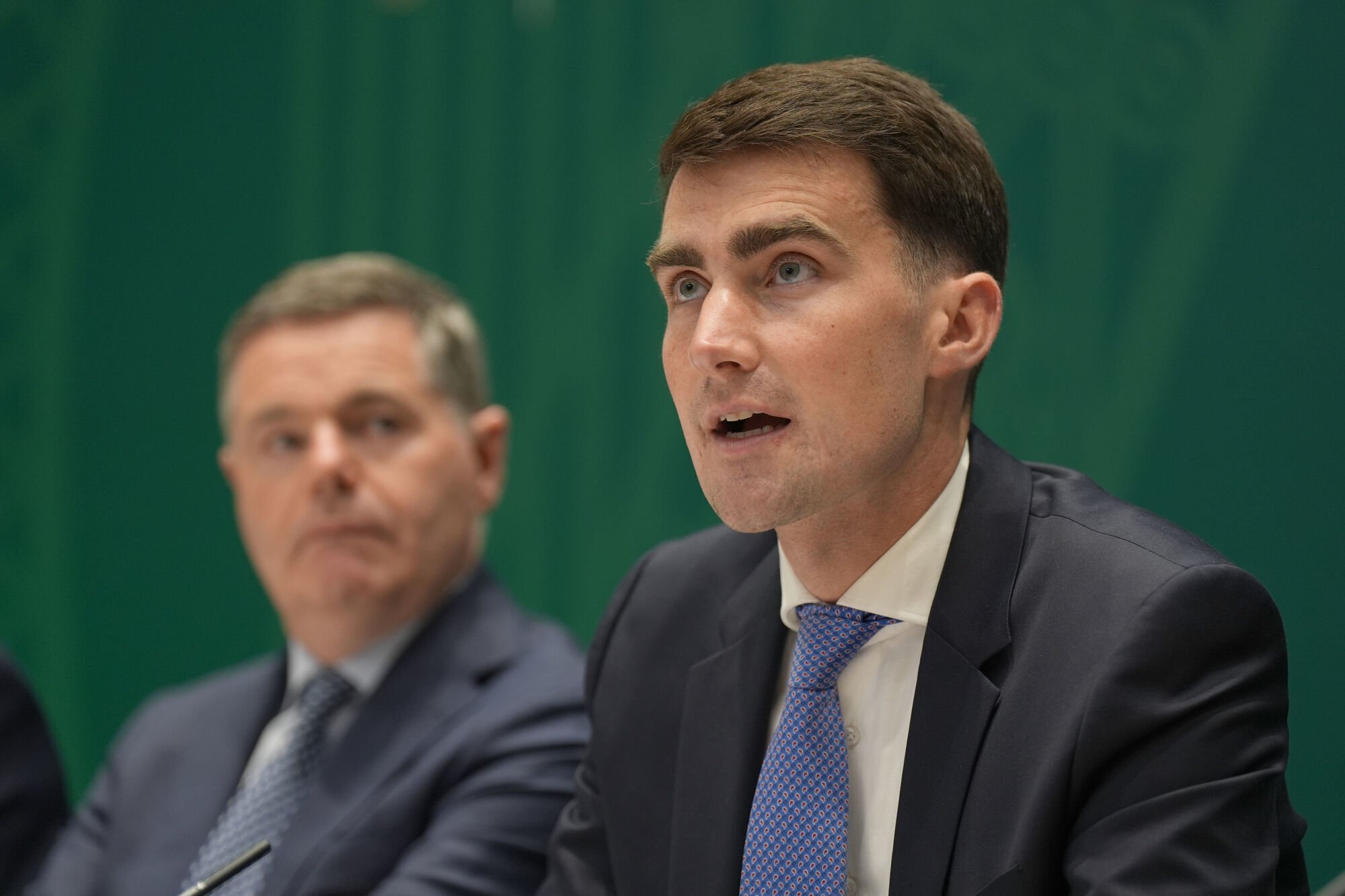
Former Minister for Finance Paschal Donohoe and incumbent Jack Chambers. There are always vulnerabilities and threats out there, and policymakers should have a risk register, and engage in strategic actions and long-term planning to mitigate the big risks. Picture: Niall Carson
Ahead of Budget Day on October 1, there will be one further set of published monthly Exchequer returns relating to the end of the month.
On budget day, the returns for the end of September will not be in the public domain, but presumably the bulk of the September performance will be available to the Department of Finance and will have some impact on the contents of the budget.
In any event, as far as tax revenues are concerned now, and for some time past, the trend is your friend.
On Tuesday last we got the returns for the end of July, and they still provide considerable comfort to a government preparing a pre-election budget. For the first seven months, the tax take at €52bn is running 9.5% ahead of last year. Income tax, Vat and corporation tax accounted for 88.6% of the total tax take, and all three are still performing strongly.
On the other hand, while revenues are growing strongly, so is expenditure. Gross voted current expenditure is running 9.5% ahead of last year, and gross voted capital expenditure is running 57.3% ahead. The latter is positive provided the money is being spent productively and cannot be taken for granted, but the growth in current spending must be a source of concern.
Income tax and Vat are to a certain extent dependent on what is happening in the domestic economy and are strongly driven by the labour market and consumer spending. We have some control over the drivers of these variables, but corporation tax is a different matter. The Tax Strategy Group papers published by the Department of Finance last month showed just how dependent the corporation tax take is on a small number of multinational companies, and the same can be said for a large chunk of income tax emanating from employees in the well-paid multinational sector.
Irish policymakers need to take a very strategic approach to the vulnerabilities posed by the multinational sector. These were highlighted in stark fashion in recent days by the operator of the electricity network, Eirgrid. It warned about the danger of a mass exodus of data centres, particularly if a few large players decided to exit due to concerns about the reliability of power supply, which is essential for data centres, which in turn are an important component of many multinational activities here.
It suggested that Ireland needs a credible transition plan, not a shutdown. A safe, secure and reliable source of electricity is essential, and this requires considerable investment and planning.
When one is so heavily dependent on a small number of multinationals there is always the risk that if any of those companies were to get into trouble, one could be very exposed.
The competition ruling against Google, which is based on its exclusive arrangements with browsers and devices in relation to its search engine, is a key issue for Google, but also for Apple. Apple executives testified in defence of its arrangement with Google. We now await the next move from the Department of Justice.
The global chip war is also worth watching from an Irish perspective. An international analyst recently warned of the danger of Intel going the way of Nokia. This seems a long shot now, but the company is under considerable pressures from chip rivals and strategic errors in recent years.
There are always vulnerabilities and threats out there, and policymakers should have a risk register, and engage in strategic actions and long-term planning to mitigate the big risks. The likelihood of another cost-of-living package in the next quarter is not reassuring.
- Jim Power is a leading Irish economist

CONNECT WITH US TODAY



Be the first to know the latest news and updates