Eoghan O'Mara Walsh: Ireland's tourist trade was hard won but could be quickly lost

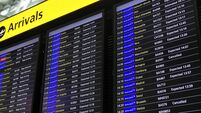
An over-riding ministerial order may be needed, such is the importance of this key piece of transport infrastructure to the country and national economy. Pic: Leon Farrell/Rolling News
Recent figures from the Central Statistics Office (CSO) showed the continued importance of overseas tourism to the Irish economy. Nearly 550,000 international visitors were in Ireland during the month of April each staying an average of over six nights and benefitting all parts of the country.
Despite this though, most tourism leaders will rightly point out that their sector is still some way off pre-pandemic recovery.
A multitude of data sources, from weak hotel occupancy levels to food business closures, confirm the sentiment within the industry that 2024 is looking soft.
Demand may be strong from the all-important North American market but other business sources, from Britain to Europe and even the domestic market, are much weaker.
Tourism has significant potential for the island of Ireland. Industry leaders estimate that it can grow by 50% out to 2030 in an environmentally responsible manner but only if significant roadblocks are overcome.
And many of those roadblocks are State-induced and thus importantly in the gift of government to address.
Labour measures that have come into effect from January are estimated by economist Jim Power to be adding a whopping €466m to the payroll of tourism and hospitality enterprises this year alone.
For a labour-intensive sector with thin margins this is hugely challenging. A pressing question for many businesses is whether they should pass the extra cost on to the consumer, thereby damaging demand, or absorb it to the bottom line thereby threatening business viability.
Neither is a good outcome and it further shows that the Government’s decision to hike the Vat rate on the sector last year was ill-judged and ill-advised. The 9% Vat rate should be restored without delay particularly to support food-related businesses which have seen insolvencies more than double in the first three months of the year.
A mixed demand picture allied to significant cost pressures mean that the immediate outlook for the sector is challenged. But it is capacity constraints that risk putting a handbrake on its longer-term health.
With 75% of the Irish tourism economy made up of international visitation, the cap on passengers at Dublin Airport is hugely problematic.
By all means, the Government could and should be doing more to assist Cork and Shannon airports to maximise their under-utilisation but for the main gateway into the island of Ireland to be restricted is an act of self-sabotage for an island nation.
A lifting of this cap is needed urgently – connectivity was hard won over the years but can be quickly lost. If the planning process can’t resolve the issue expeditiously then an over-riding ministerial order may be needed, such is the importance of this key piece of transport infrastructure to the country and national economy.
Meanwhile, the shortage of hotels must force the Government to tread carefully with impending legislation to curb short-term tourism rentals and ensure regional Ireland is not denuded of self-catering holiday homes just at the time when it needs them most.
At the National Economic Dialogue last week in Dublin Castle it was evident that the country’s finances are in a strong position.
Tourism though, Ireland’s largest indigenous industry and biggest regional employer, is at a vulnerable juncture and must be protected. No other industry can provide such a level of regional economic balance and as a sector it can’t be taken for granted.
A long overdue national policy on tourism is due shortly. It must match industry’s responsible ambition for the sector. And many of the challenges to growth, from the State’s use of hotels to the Vat rate to the airport passenger cap, must be addressed and reflected in the policy.
There is also an opportunity to reconfigure Tourism within the Government’s architecture – it would surely be a much better fit alongside Enterprise and Trade, a more appropriate Departmental home for such a key economic sector.
- Eoghan O’Mara Walsh is chief executive of the Irish Tourism Industry Confederation

CONNECT WITH US TODAY



Be the first to know the latest news and updates