Small businesses do not have the luxury of time and resources — SFA

Small businesses are projected to face nearly a 37% increase in labour costs over the next two years.
Ireland is a nation of small businesses; they account for 98% of the total number of businesses in Ireland.
They are the heartbeat of our towns and the lifeblood of the wider economy and they play a vital role in Ireland’s economic success story.
Small businesses have endured unique and terrifying challenges in recent years: a global pandemic, a war in Europe, and Brexit in the space of just a few years.
This has led to supply chain uncertainty, fluctuating commodity prices, and spiralling energy costs.
Coupled with international economic upheaval, small businesses are trying to manage a tsunami of regulations.
In addition, the increase to the national minimum wage came into effect in January.
This perfect storm of spiralling business costs is leaving many viable businesses struggling to stay afloat.
The much-reported closure of various retail and hospitality outlets merely represents the canary in the coal mine.
Around three businesses per day are closing with more yet to come, unless the Government acts decisively and fast.
During Taoiseach Simon Harris’ maiden speech to the Fine Gael Ard Fheis, he singled out the contribution small businesses make.
He correctly stated that small businesses are the heart of our communities that fuel local economies, that provide good quality, stable jobs.
Furthermore, the taoiseach stated that his administration will prioritise small businesses before the general election.
For the small business community, these are very encouraging words, but is it too late?
To the Government’s credit, the Department of Enterprise, Trade and Employment in collaboration with the Department of Social Protection, has already assessed the cumulative effect of the various additional labour costs on small businesses in a report published last month.
The report acknowledges the challenges for small businesses, many of which feel that there are too many new labour cost requirements coming in such a short space of time.
The report noted some small businesses are projected to face nearly a 37% rise in labour costs over the next two years, with 20% of this increase directly attributable to government measures.
Since last year, the Small Firms Association (SFA) has been calling for additional assistance for small businesses.
The SFA welcomes the Government package of €257m for the increased cost of business grant.
This grant has been set up in a way that makes it easily accessible to smaller businesses. However, more and targeted help is needed.
The SFA also welcomed the announcement that the applicable interest rate for warehoused debt has been reduced to 0%.
Last week, the SFA launched its policy priority document, which outlines key recommendations ahead of a busy year of elections.
The policy document focuses on four key pillars aimed at creating better conditions for businesses to survive and grow: tackling business costs; easing the tax burden; upskilling the workforce, and enabling prosperity through better national infrastructure.
Among the recommendations is the introduction of a PRSI rebate to assist small businesses with the transition towards the incoming living wage rates.
However, implementation needs to be swift because small businesses do not have the luxury of time and resources that larger businesses might have.
Looking beyond the current business cost crisis, the small business sector is looking to be fit for purpose for the needs of the 21st century.
The SFA is proposing a national training voucher scheme, which has the potential to boost in-company training and widen participation in upskilling and reskilling employees.
It is a method of assisting firms with time lost due to employees taking up training programmes during business hours.
Upskilling staff helps small businesses compete in the marketplace.
If Ireland is to be ‘the best little country in the world to do business in’ then the Government needs to be serious about putting the interests of small businesses at the heart of its policy platform.
Not just for the election season but permanently.
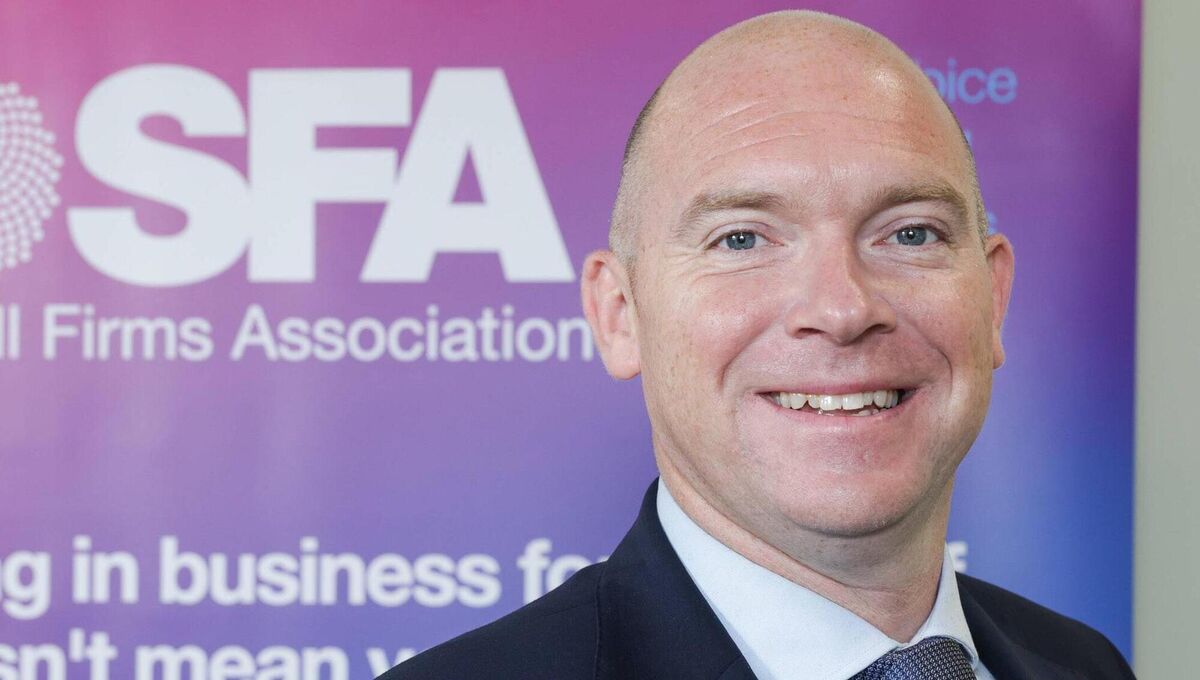
- David Broderick is director of the Small Firms Association
CONNECT WITH US TODAY



Be the first to know the latest news and updates