Britain's next government faces fiscal risks and credit rating challenge, S&P analyst warns
Whoever wins the election expected later this year will have to balance growing demands for more spending on services such as healthcare with the need to fix the public finances, analyst says
Britain's next government faces fiscal risks and credit rating challenge, S&P analyst warns

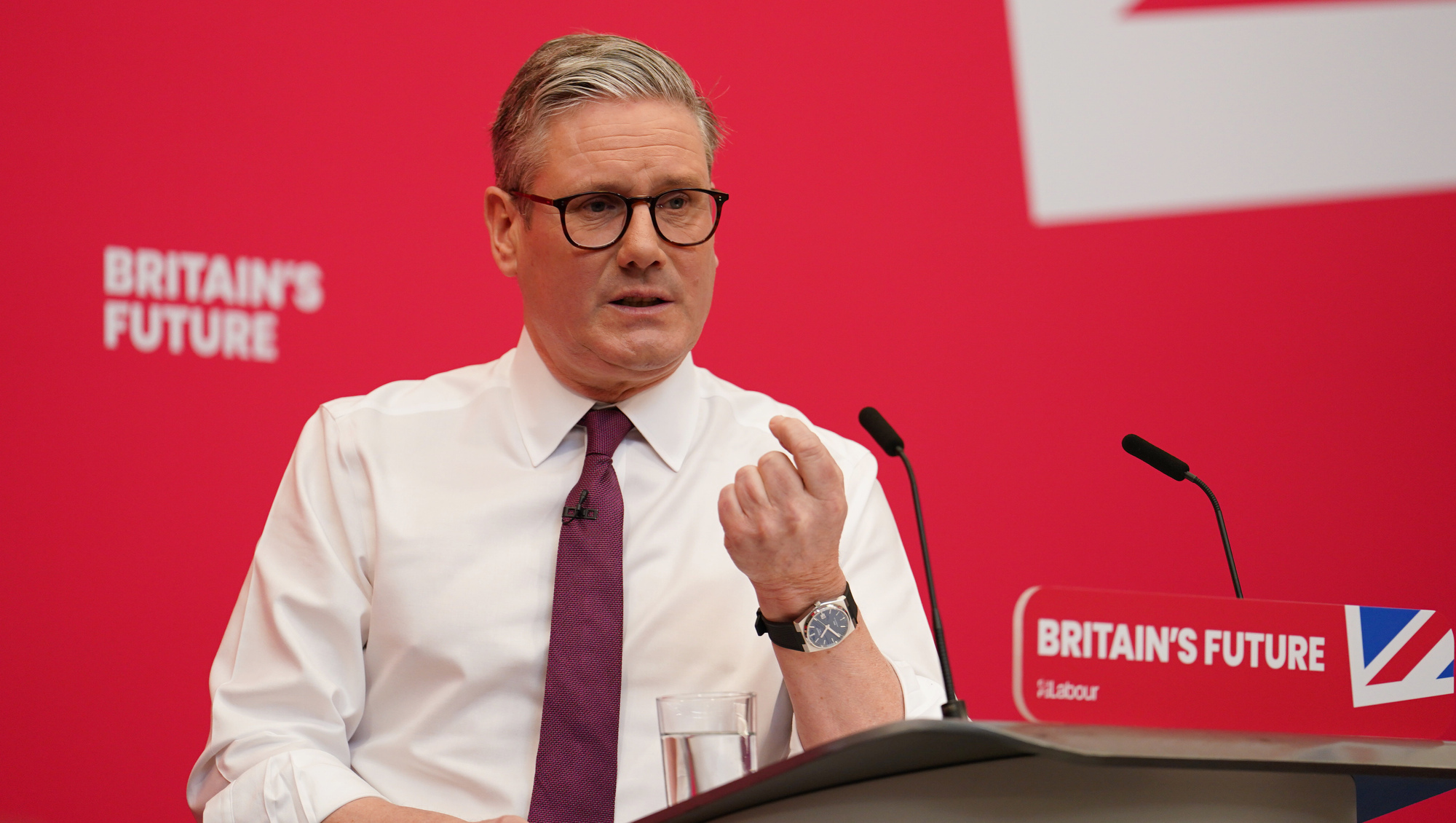
Labour leader Keir Starmer: Labour has promised to stick with the current Conservative government's target of bringing down debt as a share of economic output.

Britain's next government will have to tread carefully to avoid jeopardising the country's already diminished credit rating with the public finances under heavy strain, a senior analyst at  S&P Global Ratings has warned. 

Maxim Rybnikov, S&P's primary sovereign analyst for the United Kingdom, said whoever wins the election expected later this year will have to balance growing demands for more spending on services such as healthcare with the need to fix the public finances.


"We do see fiscal risks," Rybnikov said in an interview. "The picture is improving but we definitely still see them and we think that it's going to be not an easy position for the incoming administration to manage that," he said. 

Britain's opposition Labour Party, which is far ahead in opinion polls, has promised to stick with the current Conservative government's target of bringing down debt as a share of economic output between the fourth and fifth year in forecasts produced by Britain's budget watchdog.

Prime minister Rishi Sunak is barely on course to hit that target and Labour is likely to come under pressure to spend more on public services with polls showing widespread dissatisfaction about the state of healthcare, education and housing.

S&P cut Britain's credit rating by two notches from AAA to AA after the 2016 Brexit referendum decision and warned of another possible downgrade following former premier Liz Truss's "mini budget" huge tax cut programme announced in 2022. 

Its "negative" outlook was restored to "stable" in 2023 after most of Ms Truss's agenda was dumped by her successor Rishi Sunak.

"These things have moved back from the fore to some degree and the focus is really on the fiscal in both the upside potential and downside potential for the rating at the moment," Mr Rybnikov told Reuters.

On the positive side for Britain's economy, growth is likely to gather pace to about its non-inflationary speed limit of 1.7% a year by 2026, S&P estimates. That would be faster than in the eurozone, with Germany — which currently has a potential growth rate of under 1% — likely to be growing by 1.2% in 2026.

Britain's growing population, boosted by migration and which contrasts with expected demographic declines in Germany and Italy, should help to sustain overall economic growt,h although on a per capita basis the outlook is weaker, S&P senior economist Marion Amiot said.

But S&P also expects Britain's budget deficit to be above 3% of GDP in 2026, down from 6% last year but higher than the official forecasts, given the implausibility of some of the government's promises to limit spending increases and the likelihood an expensive fuel duty freeze will continue.

"The room for manoeuvre is less than five years ago and much less than it was 15 years ago," Rybnikov said. 

"Any future government, regardless of their policy ideas, would have to deal with that."

x

More in this section

The Business Hub

Newsletter

News and analysis on business, money and jobs from Munster and beyond by our expert team of business writers.

Cookie Policy Privacy Policy Brand Safety FAQ Help Contact Us Terms and Conditions

© Examiner Echo Group Limited