Irish manufacturing contracts in March as costs continue to rise
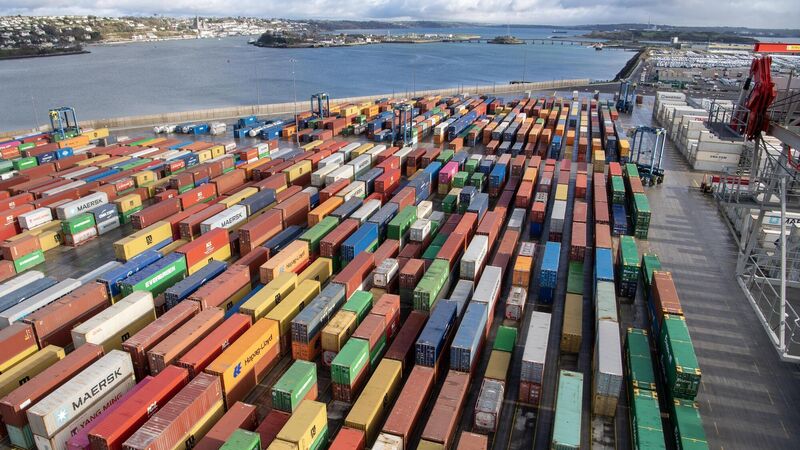
The PMI survey showed output and new orders contracted at Irish factories last month amid subdued demand at home and from exports
Irish manufacturing activity contracted last month, as demand slowed and input costs accelerated.
The latest AIB Manufacturing Purchasing Managers’ Index (PMI) also showed that factories were hit by higher transport costs, rising commodity prices, as well as by stronger wage pressures that all added up to a “robust increase” in cost burdens in March.
The headline reading from the manufacturing survey fell to 49.6 from the reading of 52.2 in February, marking a worsening in conditions, as output and new orders contracted amid subdued demand at home and from export markets.
Purchasing managers reported reduced export orders, with many citing lower demand from customers in Britain as well as from challenging global economic conditions overall.
According to the survey, managers also said that their factories had cut back production schedules because of the weaker-than-expected sales pipelines.
The PMI headline reading is a headline indicator of the manufacturing sector’s performance in the month. A reading below 50 indicates that manufacturing activity has contracted. It is derived from indicators for new orders, output, employment, suppliers’ delivery times and stocks of purchases.
AIB chief economist David McNamara said the fall in the index reflected declines in both output and in new business.
“A fall in output and new orders, alongside accelerated price pressures, were the key features of the March PMI survey,” he said.
“The output index fell to its lowest level in five months on the back of a downturn in domestic demand.
“New export orders were also lower, owing to softer UK demand in particular, but also reflecting broadly softer global demand.”
The survey showed that input cost inflation accelerated in March to its highest level since February last year. Manufacturers made efforts to pass the cost increases on to their customers, as shown in the rate of factory gate price inflation that was running at its highest rate since April last year.
Mr McNamara said that inflationary price pressures continued to build in the early months of 2024, which he said was linked to generally higher costs for commodities and rising wages.
“Output prices also accelerated, and this implies that demand remains strong enough at present for manufacturers to pass on price rises to customers and protect margins,” he said.
According to the PMI, growth expectations for the year ahead have “weakened considerably” with “optimism slipping to the lowest since October 2020”.
The reading was largely attributed to concerns over the prospects for the global economy as well as to subdued prospects for exports.
Despite the modest contraction, manufacturers maintained a “moderate rate of job creation” in March.
Higher levels of employment have now been recorded for three months in a row. Recruitment has been attributed to long-term growth plans and to new product launches.
The Irish manufacturing index covers both factories that supply the local market as well as the huge number of multinationals that dominate manufacturing here, including the US-owned pharma giants whose output is solely destined for export.
In the US, factory activity unexpectedly expanded in March for the first time since September 2022 on a sharp rebound in production and stronger demand, while input costs climbed, according to the Institute for Supply Management (ISM).
The US survey showed a reading that was barely above 50 that separates expansion and contraction, but it halted 16 straight months of shrinking activity.
Timothy Fiore, the chairman of the ISM manufacturing business survey committee, stated: “Demand remains at the early stages of recovery, with clear signs of improving conditions. Production execution surged compared to January and February, as panelists’ companies re-enter expansion.”
- Additional reporting Bloomberg


CONNECT WITH US TODAY



Be the first to know the latest news and updates