Saudi Aramco oil chief: Global energy transition 'visibly failing'
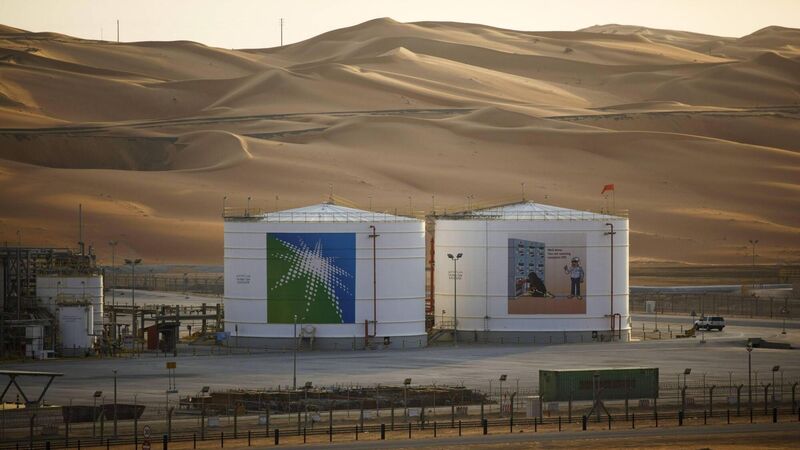
Storage tanks stand at an oil processing facility in Saudi Aramco's Shaybah oilfield in the Rub' Al-Khali (Empty Quarter) desert in Shaybah, Saudi Arabia.
Saudi Aramco chief executive Amin Nasser has said the global energy transition is “visibly failing” on most fronts as proponents overlook the impacts on consumers dependent on cheap, reliable fuels.
In remarks at the opening day of the CERAWeek by S&P Global conference in Houston, Mr Nasser, boss of the world's largest oil producer, lamented the way the oil industry has been painted as the transition’s “arch enemy".
Mr Nasser also predicted that a peak in worldwide oil demand is unlikely for “some time to come”, let alone by the 2030 benchmark laid out by some policymakers and executives.
He sees crude demand reaching an all-time high during the second half of this year, with significant growth potential in developing countries. Solar and wind supply less than 4% of the world’s energy supply, on a combined basis, and electric-vehicle penetration is less than 3%, according to Mr Nasser. On the other hand, natural gas is still a mainstay, with demand growing by roughly 70% since the start of the century.
Without government subsidies, electric vehicles are as much as 50% more expensive than internal-combustion cars, he added. “They cannot be subsidised forever,” he said.
The remarks come as Saudi Arabia pushes ahead with a secondary share sale in Aramco, the world’s biggest oil producer. The Saudis plan to hire JPMorgan Chase as one of the main underwriters to the Aramco offering, with Bank of America and Morgan Stanley also contending for lead roles on the deal.
The latest offering could raise as much as $20bn (€18.4bn), becoming one of the largest deals of its kind in recent years. Local investment banks Riyad Capital and SNB Capital have previously received approvals from the Saudi regulator to conduct market-making activities on Aramco shares.
CONNECT WITH US TODAY



Be the first to know the latest news and updates