Buy now pay later schemes could create unwanted debt in the new year, experts warn
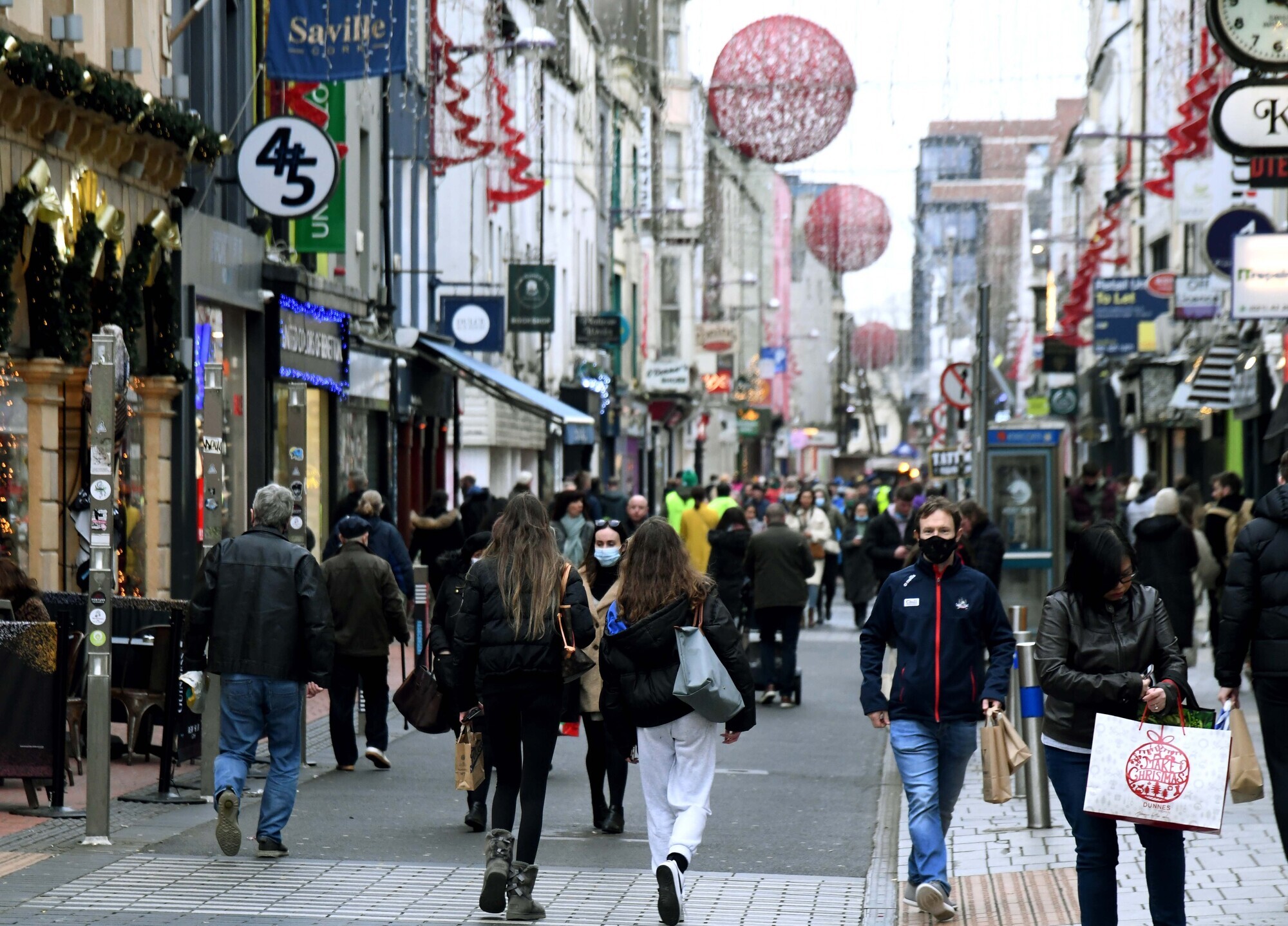
Lingering cost pressures continue to weigh on households going into the festive period.
Buy now pay later schemes could create unwanted debt in the new year, experts warn

Research published by the Competition and Consumer Protection Commission (CCPC) suggested that, during the Christmas period, the number of people planning to borrow has increased this year, while the average expected spend is down. Picture: Denis Minihane

Christmas has always come with price pressures but, with a lingering cost-of-living crisis and a fall in household savings, some experts are concerned consumers will tie themselves up in financial knots this year.

Dermott Jewell, advisor with the Consumers Association Ireland, said that he “appreciates very much that money of all kinds can be very tight this time of year” but warned against people entering into ‘buy now pay later’ schemes which are a form of credit.

“I know people do it with car insurance and house insurance but when this is just for Christmas, it’s a problem,” said Mr Jewell.

“The buy now pay later structure is sold with great positivity and sweetness. The difficulty with that is you’re still borrowing money that you don’t have and you’re assuming that everything is going to be fine,” he said.

Central Bank research published last month indicated that many consumers do not realise that these delayed payment schemes are a form of credit.

The first instalment for the product is paid at the point of purchase and the remaining balance is given as a loan, and is owed as a form of short-term credit from a buy now pay later lender. Many of these agreements can include administration fees, including for late or missed payments.

Gerry Cross, director of policy and risk at the Central Bank said:

If you are finding that you are relying on short-term credit to pay for things that you could budget for previously, this could be a warning sign of potential financial difficulty.

The regulator also said that these agreements can be used as a convenient and legitimate form of credit.

Last week, the competition watchdog gave its own warning against buy now pay later schemes that could put shoppers into debt in the new year.

Research published by the Competition and Consumer Protection Commission (CCPC) suggested that, during the Christmas period, the number of people planning to borrow has increased this year, while the average expected spend is down.

“At this time of year, it’s easy to feel pressured into making snap decisions around borrowing, whether it’s putting the groceries on your credit card or choosing Buy Now Pay Later at the checkout,” said Grainne Griffin, CCPC director of communications.

Ms Griffin urged shoppers to “know the full cost of credit before you buy, and only borrow what you’ll be able to repay.” 

The average expected spend this Christmas is forecast to drop to €1,030 from €1,186 last Christmas, indicating there isn’t as much cushioning available in household budgets.

Mr Jewell said the use of buy now pay later schemes in households that are already struggling may be manageable for “one item” but for several purchases it can be “bad financial management”.

He added:

I don’t know one person who would want me to go into debt to buy them a present at Christmas.

Inflation levels have cooled in Ireland and in the eurozone but are still elevated compared to early 2021 levels before the European Central Bank (ECB) began its aggressive campaign of hiking interest rates. Inflation in Ireland has plummeted to 3.9% in November compared to 5.1% in October, while eurozone inflation decreased more than expected to 2.4%.

Prices in many sectors still remain stubborn though, and are weighing on household finances.

Household savings

Household savings slipped further in the months from July to September, recent figures from the Central Statistics Office (CSO) suggested.

Statistician in the CSO national accounts analysis and globalisation division, Peter Culhane, said this is the first time the household savings rate has fallen below 10% in three years, “but leaves it at a similar level to pre-pandemic savings in 2019”.

Prices at the end of September were 0.9% higher than at the end of the June quarter, and 6.4% higher than a year previously.

Many consumers ate into their extra funds as post-pandemic demand stayed strong despite rising prices. However, spending plans fell in November, according to a separate report.

Although some households may operate on volatile budgets, Revolut, a buy now pay later agreement provider, argued that “these schemes can be used as a tool to manage money more efficiently and avoid unmanageable debt.” 

Rob Mooney, head of lending at Revolut Ireland, said that the company’s buy now pay later scheme allows consumers to spread the cost of purchases over several months. This could potentially lead to another financial burden though as other consumers struggle with other responsibilities. 

Fall in spending

The decline in spending for the first month of winter could be due to the additional costs associated with heating a home, even if energy prices have fallen from soaring levels recorded after Russia invaded Ukraine, according to consumer sentiment analysis by economist Austin Hughes.

“The scale of difficulties in this regard is evident in recent data showing 275,000 domestic customers in arrears on their electricity bills in the third quarter, up 10% on the previous three months,” said Mr Hughes.

Another explanation for softer spending plans could be that “consumers may be temporarily curbing spending ahead of increased outlays over the Christmas period”.

The responses to this Union Consumer Sentiment Survey showed that Christmas remains a challenging time financially but participants were overall less negative than last year when the full shock of the cost-of-living crisis was being felt in rapidly accelerating food and energy prices.

Meanwhile, by the end of September, the number of mortgage holders in private homes in early arrears increased by 482, driven primarily by properties owned by vulture funds, according to separate Central Bank figures.

Overall, out of the 708,810 private residential mortgages on the market during that period, 47,325 were in arrears.

However, the overall economy remains steady despite lasting cost pressures hitting households. During its quarterly economic statement, the ESRI indicated that Ireland’s current economic model is not broken, despite a slowdown this year.

ESRI research professor Kieran McQuinn said that while a contraction in GDP this year technically puts the economy in recession, “the underlying performance in the economy is still strong”.

“When you look at tax receipts and the labour market, that does point to an economy that is still performing robustly,” he said.

x

More in this section

The Business Hub

Newsletter

News and analysis on business, money and jobs from Munster and beyond by our expert team of business writers.

Cookie Policy Privacy Policy Brand Safety FAQ Help Contact Us Terms and Conditions

© Examiner Echo Group Limited