ECB officials facing quandary as markets bet on early rate cut
Dilemma faced by policymakers evokes December 2021, when they dragged their feet as the US Federal Reserve enacted a hawkish pivot and investors began betting on ECB rate increases
ECB officials facing quandary as markets bet on early rate cut

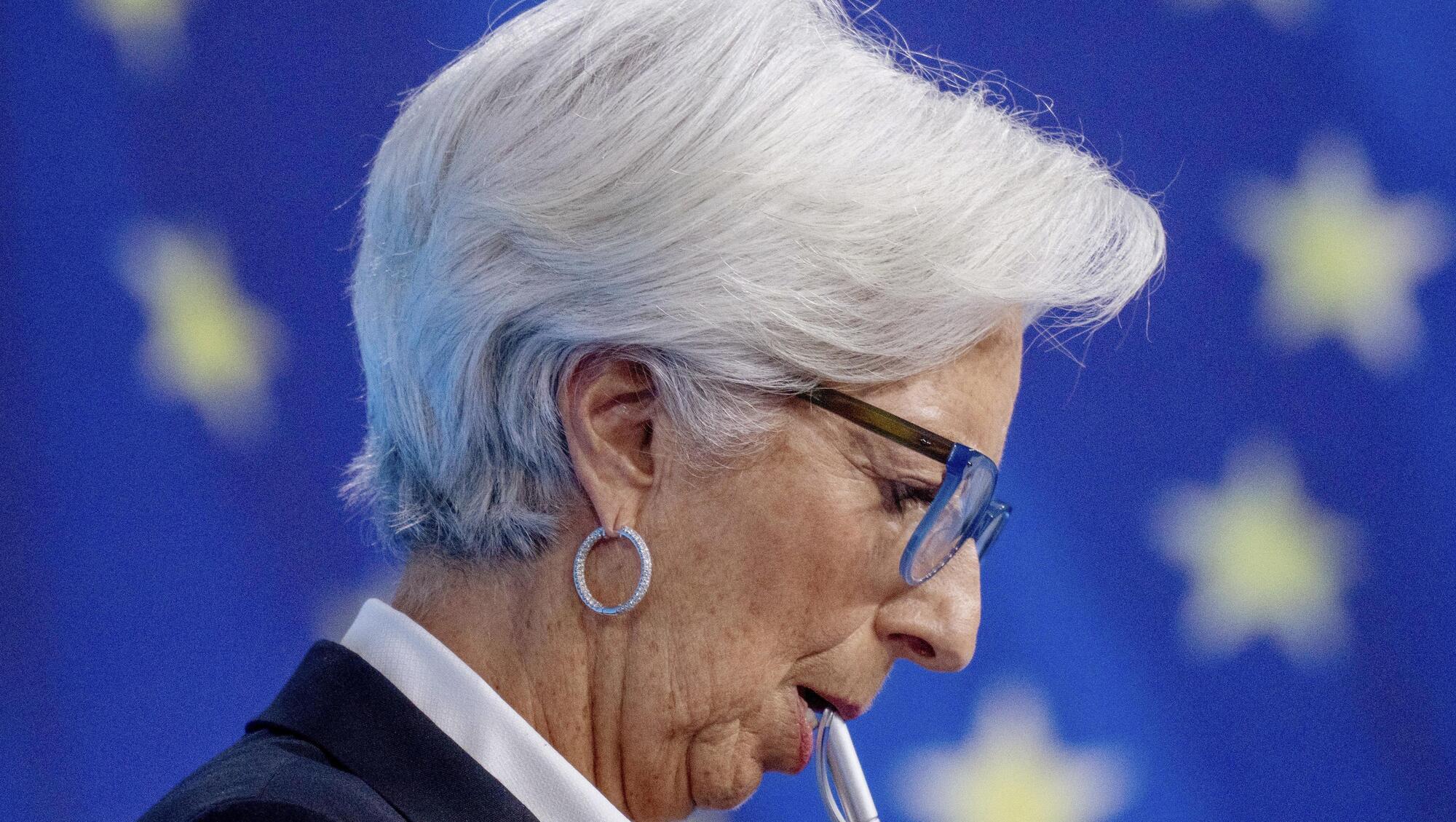
ECB president Christine Lagarde weighs the risks of cutting too soon and letting inflation run rampant, or crashing the economy with too much constriction. Picture: Michael Probst/PA

The European Central Bank’s forecasts and any accompanying messaging are about to take prominence as president Christine Lagarde weighs how far to push against market wagers on interest-rate cuts.

With rapidly-weakening inflation, a feeble economy, and one hawkish policymaker changing tack, traders are heaping bets on a reduction as soon as March. They are now seeing the rate falling to 2.5% by the end of 2024, when just last week they envisaged borrowing costs staying above 3%. 

If markets are right, the ECB will be the first among major central banks to cut next year, delivering the most aggressive easing cycle. But officials show no rush to act, even though their new projections will need to acknowledge the changed economic backdrop with a lower outlook for prices. 

The quandary policymakers face evokes December 2021, when they dragged their feet as the US Federal Reserve enacted a hawkish pivot and investors began betting on ECB rate increases. Forecasts then showed inflation accelerating, but hikes only started seven months later, a move most observers judged as behind the curve.

Blackout period

Ms Lagarde and her colleagues, who entered a blackout period before the decision next Thursday, face a similar trade-off now as they ask which error they would rather risk making: Cutting too soon and letting inflation run rampant, or crashing the economy with too much constriction.

Bjoern Griesbach, senior investment strategist at Allianz, believes the consumer-price danger is still weighing on many officials’ minds.

“The projections will be very important,” he said. “One thing is clear: They need to come down. 

But the ECB is determined not to be caught underestimating inflation for a second time.

Officials are putting finishing touches on the forecasts that Ms Lagarde will present next Thursday along with a view of where the risks lie — communication that may in itself massage expectations.

A majority of economists predict that the updated outlook will have a somewhat or significantly stronger-than-usual impact on the ECB’s messaging this time. The projections are more comprehensive than those in September and involve a half-yearly process compiling numbers from national central banks, whose deadline to provide data was a week ago. 

Longer horizon

December forecasts are also the only ones out of the four annually to feature a longer horizon into the future — in this case, 2026.

The ECB previously predicted inflation to average 3.2% next year and return to the 2% goal in the second half of 2025. That outlook seems increasingly obsolete after consumer-price growth in November slowed to 2.4%, the lowest since mid-2021.

Some economists have revised outlooks, with Deutsche Bank this week forecasting 1.5% in rate cuts next year, and a first move in April instead of June.

Last week, Goldman Sachs switched to predict a cut as soon as April too, while on Thursday, Banco Santander economist Antonio Villarroya said he now anticipates a reduction in June rather than September. 

  • Bloomberg

x

More in this section

The Business Hub

Newsletter

News and analysis on business, money and jobs from Munster and beyond by our expert team of business writers.

Cookie Policy Privacy Policy Brand Safety FAQ Help Contact Us Terms and Conditions

© Examiner Echo Group Limited