How the First Home Scheme works
There are a variety of supports out there to help potential homeowners to secure a property. John Hearne goes through the details
How the First Home Scheme works

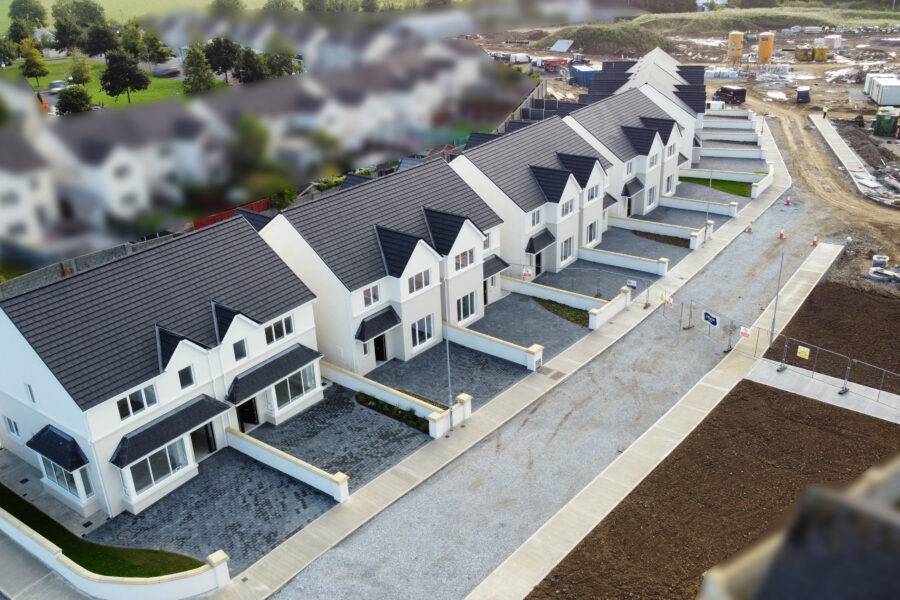
New homes in Cork developed by the Land Development Agency in partnership with the First Home Scheme, Cork County Council and the O’Flynn Group. Picture: LDA

THE First Home Scheme (FHS) aims to make homeownership achievable for thousands of individuals and families by bridging the gap between their combined deposit and mortgage, and the price of their new home.

It is what’s known as a shared equity scheme. This means that homebuyers can receive funds from the scheme in return for the FHS taking a percentage ownership in the property. While it’s aimed at first-time buyers, there are exceptions, which we’ll get to in a minute.

You do need to be over the age of 18 to qualify. You must have mortgage approval with a participating lender and borrow the maximum amount available (up to four times your income). You’ll need to have a minimum deposit of 10% of the property purchase price, or build cost.

Note too that for self-builds, the equity you hold in your site can contribute to your deposit. Also, to participate, you cannot avail of a macro-prudential exception (MPE) from the lender.

What’s an MPE? The Central Bank sets ceilings on the amount of money that can be borrowed to buy residential property, but within that, the financial institutions have the freedom to lend above those limits in certain cases. These are known as macro-prudential measure exceptions.

To be eligible for the scheme, the property must be a qualifying house or apartment, or a self-build on a privately owned site. It can also be a house or apartment that you’re currently renting and which the landlord is selling.

It has to be in the Republic of Ireland and can be in a private development or on a site which is in your name. It will have to be your principal private residence and it must also be below the local authority property price ceiling for the property type.

Those property price ceilings vary depending on where you are in the country. In Cork and Dublin, for example, the property in question can’t cost more than €475,000 if it’s a house, and €500,000 if it’s an apartment.

In Galway City, the equivalent figure is €425,000 for houses and apartments, while in Waterford, the ceiling for houses is €350,000 and €450,000 for apartments.

The maximum stake that the scheme will take is 20%, if the buyer is also availing of the government’s separate Help to Buy scheme, and 30% if Help to Buy is not used.

The Help to Buy scheme is another incentive for first-time buyers, designed to help would-be purchasers with the deposit for a self-build or a new house or apartment. There’s no money upfront. If you meet the conditions, you’ll receive a refund on income tax.

There are a number of other conditions — for more information see revenue.ie.

The First Home scheme application process runs in parallel with the mortgage application process but is separate from it, so if you’re thinking of applying for the scheme, you’ll have to continue to go through the bank’s mortgage application process at the same time.

As it stands, three banks are taking part: AIB (including its EBS and Haven Mortgages businesses), Bank of Ireland, and Permanent TSB.

So how does it work?

Suppose you’re a couple, and neither of you has ever owned a home before. Let’s say your joint salary comes to €87,500. Under current central bank rules, the most you can borrow is four times that salary, which comes to €350,000.

Suppose the property purchase price is €450,000 and you’ve got a deposit of €30,000. Let’s assume too that you secure €20,000 under the Help to Buy scheme, which thereby limits the equity the government can take in the new house to 20%.

So you have a deposit of €30,000, you get an additional €20,000 under Help to Buy, and you’ve borrowed €350,000. This comes to a total of €400,000, leaving a €50,000 shortfall. Since this sum is less than 20% of the purchase price of the house, the First Home Scheme can step in and close that gap by advancing you equity of €50,000.

While the scheme is aimed primarily at first-time buyers, applicants may also be eligible despite previously purchasing or building a property in Ireland if they did so with a spouse, civil partner, or partner, and that relationship has ended.

In that case, the applicant must not have a beneficial interest in the previous property, or else they must have sold it as part of a personal insolvency or bankruptcy arrangement, "or other legal process as a consequence of insolvency".

When a first-time buyer who has bought a home using the scheme subsequently decides to sell it, they will be required to use the sale proceeds to redeem the outstanding mortgage and pay the scheme the portion of the sale proceeds that corresponds to the scheme’s equity stake.

For example: Suppose you bought the house for €350,000 and under the terms of the First Home Scheme, the government provided €70,000 to bridge the affordability gap, and took a 20% stake in the house.

If you then sell the house for €400,000, you’ll have to pay the scheme 20% of that, which is €80,000.

Scheme users will have the option, but not the obligation, to buy out some or all of the First Home Scheme equity stake at any time, if they wish and have the resources to do so. A maximum of two partial buy-outs are allowed per year. Partial or full buy-outs are based on the market value of the property at the time the buy-out takes place.

You are obliged to redeem the government’s equity share of the property in certain circumstances: if you switch the mortgage to a non-participating lender, if you sell the property, if the homeowner (or, in the case of joint applications, the last applicant) dies or if the property is no longer your principal private residence.

No other payments are due to the First Home Scheme if the equity stake is bought out in the first five years of ownership.

From year six onwards however, scheme participants will be liable for a service charge starting at 1.75% of the euro value of the original equity provided by the First Home Scheme.

To clarify: they must pay simple interest of 1.75% of the portion of the purchase price that was provided by First Home, not 1.75% of the total purchase price. This service charge will increase to 2.15% from year 16 and to 2.85% from year 30, if it’s still applicable.

Homeowners will have the option of paying this charge each year or deferring the payment until the property is sold.

To restate: under the First Home Scheme, you can apply for equity support of up to 30% of the purchase price of the home unless you’re also applying for the Help to Buy scheme, in which case, the maximum available is 20%.

Applications can be made online at firsthomescheme.ie.

x

More in this section

The Business Hub

Newsletter

News and analysis on business, money and jobs from Munster and beyond by our expert team of business writers.

Cookie Policy Privacy Policy Brand Safety FAQ Help Contact Us Terms and Conditions

© Examiner Echo Group Limited