Covid-19 reshaped the healthcare industry. The waning of the pandemic is reshaping it all over again
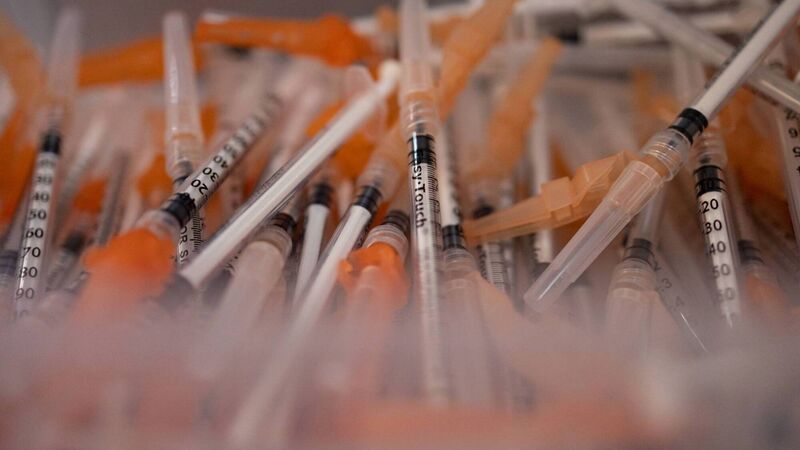
With the pandemic boom for makers of vaccines and testing kits unravelling, investors are turning their focus to sectors such as weight-loss drugs
Covid-19 reshaped the healthcare industry. The waning of the pandemic is reshaping it all over again

Many have put the pandemic behind them, but the virus has not entirely gone away. New strains continue to circulate and covid hospitalisations continue, but far below their peak levels.

Vaccine makers and pharmacy chains are seeing a steep decline in the number of people getting covid shots. Makers of at-home rapid tests are going belly-up. Companies that made personal protective equipment have shut down.

When the coronavirus first emerged, companies across the healthcare industry raced to reconfigure themselves. 

Pharmaceutical companies that were focused principally on cancer and rare diseases threw themselves into the pursuit of vaccines and antivirals. Medical device makers developed at-home testing kits and quickly ramped up production.

That transformation is now unravelling. Pfizer — one of the biggest winners from the pandemic boom — on Monday offered one of the most dramatic signs of the turnabout, cutting $9bn (€8.51bn) from its annual sales forecast because of declining demand for its covid shots and the Paxlovid treatment, which is manufactured at the company's facility in Cork.

“The weakening demand for the vaccine and Paxlovid goes to show this really is the transition to post-covid,” said Max Nisen, an analyst at Bloomberg Intelligence. 

“People are going to have to figure out what that looks like well beyond Pfizer.” 

Shares of Novo Nordisk A/S, the maker of the  Ozempic and Wegovy drugs used for weight loss, are up 49% this year.

Many have put the pandemic behind them, but the virus has not entirely gone away. New strains continue to circulate and covid hospitalisations continue, but far below their peak levels. Fewer and fewer people are working from home. Restaurants and airports are full.

Not every healthcare business that faced sudden change because of covid is hurting. More people are returning to their doctors for routine checkups and procedures they put off when clinics were crowded with virus patients. That has been good news for physicians and for hospitals.

Still, Pfizer’s decision to rein in its financial guidance shows how the landscape has changed, and it will put pressure on other companies that benefited from serving covid patients to take another look at their expectations and make adjustments. Pfizer shares gained 3.6% on Monday.

Also on Monday, Pfizer rival Moderna reaffirmed its covid vaccine sales guidance for 2023 but said it was too early to accurately project where vaccination rates would land. Its shares declined 6.5%, hitting their lowest level since November 2020.

Moderna has said it expects vaccine sales of $6bn (€5.68bn) to $8bn (€7.57bn) this year. In a note to investors on Monday, William Blair analyst Myles Minter said he saw the company hitting the lower end of that range. Moderna has predicted the US market this season will be at least 50 million doses, but Michael Yee, an analyst at Jefferies, expects it will be lower — between 35 million and 40 million.

Weight shift 

Not long ago, Wall Street was excited about the potential for mRNA — the technology behind the covid vaccines from both Moderna and Pfizer. Both companies bet the breakthrough would have a range of applications, and rivals were under pressure to make mRNA moves of their own. 

However, the narrative has shifted, with investors pouring money into weight-loss drugs that some analysts are already predicting will have broad economic ramifications.

So far this year, Pfizer shares are down 35%, and Moderna shares have tumbled 49%. By contrast, shares of Novo Nordisk A/S, the maker of the Ozempic and Wegovy drugs used for weight loss, are up 49% this year.

The rocky rollout of this season’s vaccine has made it harder to figure out how much demand there really is. Pharmacies have found themselves low on both Moderna’s and Pfizer’s new shots, forcing them to turn people away who were seeking the vaccines when they first became available this autumn.

Test makers 

Tested vaccine makers are not the only ones seeing a decline in pandemic-related business. In February, Lucira Health, a publicly traded maker of at-home covid tests, filed for Chapter 11 bankruptcy protection in the US. Test maker Ellume Ltd, which had clinched the first US clearance for its at-home covid test kit, collapsed into liquidation in June.

Abbott Laboratories saw a rapid decline in covid testing sales in 2022, a downturn that forced the company to cut temporary workers this year. Abbott’s covid tests are expected to generate sales of just $1.3bn (€1.23bn) in 2023, according to analyst estimates, well below the $7.7bn (€7.29bn) tests racked up in 2021.

Unlike its smaller rivals, however, Abbott has other businesses that can offset that decline: Demand for medical devices like its diabetes monitors has cushioned the blow from dwindling covid-related income.

For health insurers, the fading influence of covid-19 has meant more people are seeking medical care. Patients postponed surgeries and other care during the pandemic, but insurance companies saw a rebound this year in joint replacements and heart procedures.

For hospitals, surgery centres, and medical device makers, patients coming back for more care is good for business. Labour costs spiked during covid as hospitals depended on travel nurses and temporary medical staff, but those pressures have eased somewhat. Meanwhile, investor enthusiasm for virtual care has receded.

  • Bloomberg

More in this section

The Business Hub

Newsletter

News and analysis on business, money and jobs from Munster and beyond by our expert team of business writers.

Cookie Policy Privacy Policy Brand Safety FAQ Help Contact Us Terms and Conditions

© Examiner Echo Group Limited