Irish economy sees growth but at much slower rate than expected
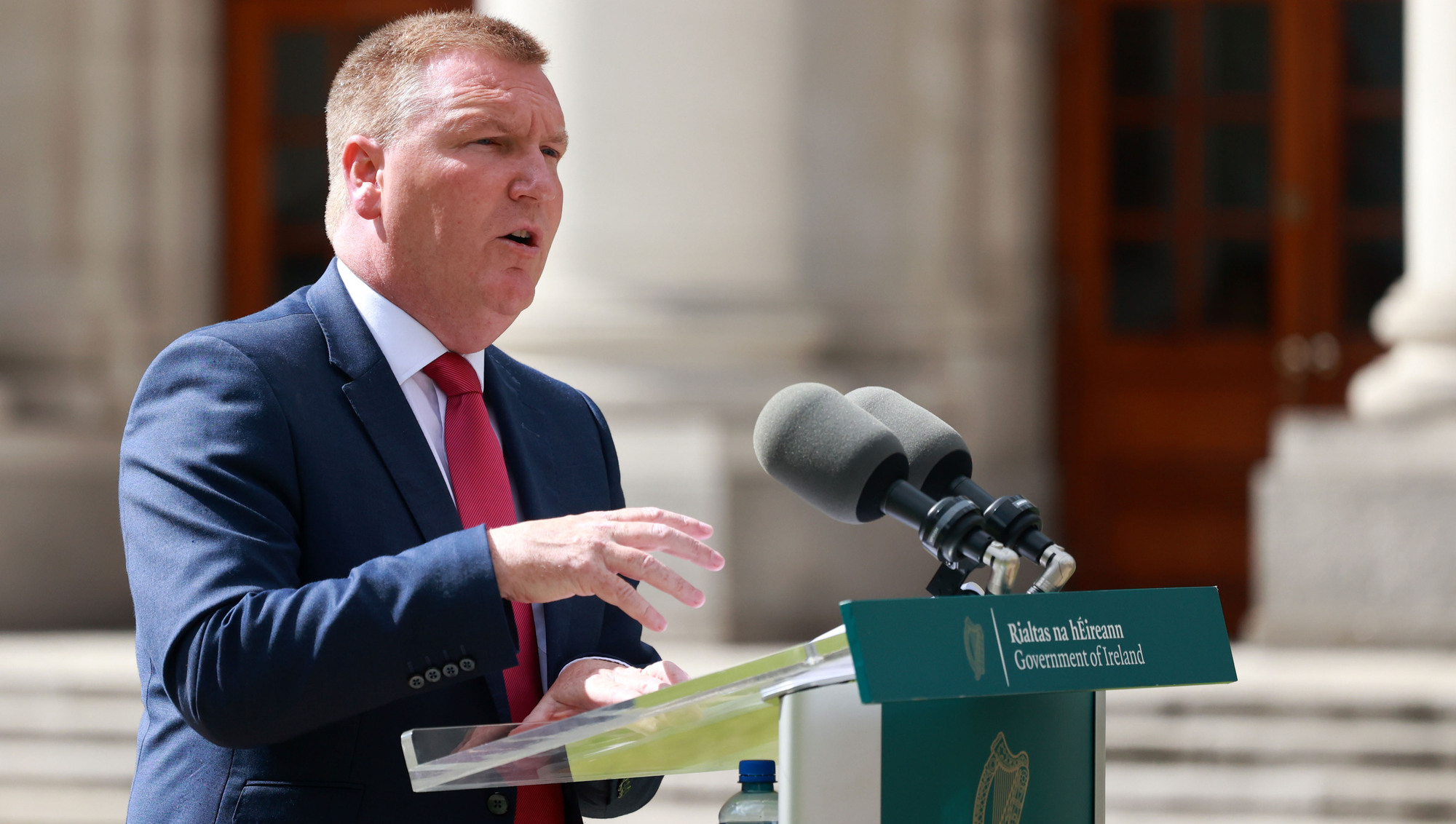
Finance Minister Michael McGrath said while the data confirms growth in the domestic economy, he is conscious of several headwinds such as capacity constraints. Picture: Sam Boal /RollingNews.ie
Ireland’s economy grew marginally between April and June, following two quarters of reductions, but the pace of growth was significantly slower than previously estimated, new data from the Central Statistics Office (CSO) shows.
According to the latest national accounts, Ireland’s gross domestic product grew by 0.5% between April and June compared to the first three months of the year.
Between January and March this year, GDP dropped by 2.6% and by 0.9% during the last three months of 2022.
Compared to the same period last year, GDP was down 0.7%.
Gross Domestic Product (GDP) grew by 0.5% in Quarter 2 2023https://t.co/ajPSbf5NzS#CSOIreland #Ireland #NationalAccounts #BalanceofPayments #Economy #Macroeconomics #EconomicIndicators #CapitalStocks #FixedAssets#GovernmentFinances #GovernmentAccounts #GovernmentExpenditure pic.twitter.com/PQLLQpwupQ
— Central Statistics Office Ireland (@CSOIreland) September 1, 2023
CSO estimates from July expected GDP to grow at 3.3%, which would have been the highest of all EU member states.
The CSO said the drop-off between the estimate and the actual GDP figure was due to the limited data it had at the time, which was mainly turnover on sales.
However, since then, it has received data which showed costs rose just as quickly as turnover, which led to GDP being revised down.
The drop-off is reflected in weaker exports, particularly in multinational-dominated sectors. Exports fell by 4.1% between April and June while imports increased by 0.1%, leading to a decline in overall net exports of 14.4% or €7bn during the quarter.
According to the CSO, multinational-dominated sectors grew by 6.2% in the quarter and accounted for 53.1% of total value added in the economy, compared with a 46.9% share for all other sectors.
All other sectors grew by 1.5%.
The industry sector — which does not include construction — grew by 3.8%. This sector includes many multinational companies, particularly those in the pharmaceutical sector.
The information and communications sector — another area dominated by multinationals — grew by 2%.
The CSO data showed modified domestic demand (MDD) — which is the preferred measure as it excludes the activity of multinationals and focuses on underlying domestic activity — also grew by 1% following three quarters of declines.
Finance Minister Michael McGrath said he was “encouraged” to see MDD grow at a “solid pace”.
“While today’s data confirm continued growth in the domestic economy, I am conscious of several headwinds. Our economy is clearly operating at full-employment and capacity constraints, in both our housing and labour markets, are increasingly binding.
“Externally, growth is slowing in some of our main trading partners, and this could have knock-on implications for Irish exports,” he said.
It was a mixed picture overall for the domestic market, with some sectors seeing strong performance quarter-on-quarter while others saw a decrease.
The agriculture, forestry and fishing sector grew by 10.3%, with the distribution, transport, hotels and restaurants sector increasing by 1.9% quarter-on-quarter.
Professional, administrative and support activities as well as finance and insurance activities grew by 6.9% and 4.6% respectively.
However, there were declines in construction as well as arts and entertainment in the period of 2.2% and 0.9% respectively.
Personal spending on goods and services, a key measure of domestic economic activity, increased by 0.9%.
Personal spending between April and June came to €32.1bn — 9% above the peak pre-pandemic level of personal spending seen during the same period in 2019.

CONNECT WITH US TODAY



Be the first to know the latest news and updates