Bank of England hikes interest rates as inflation buffets British economy
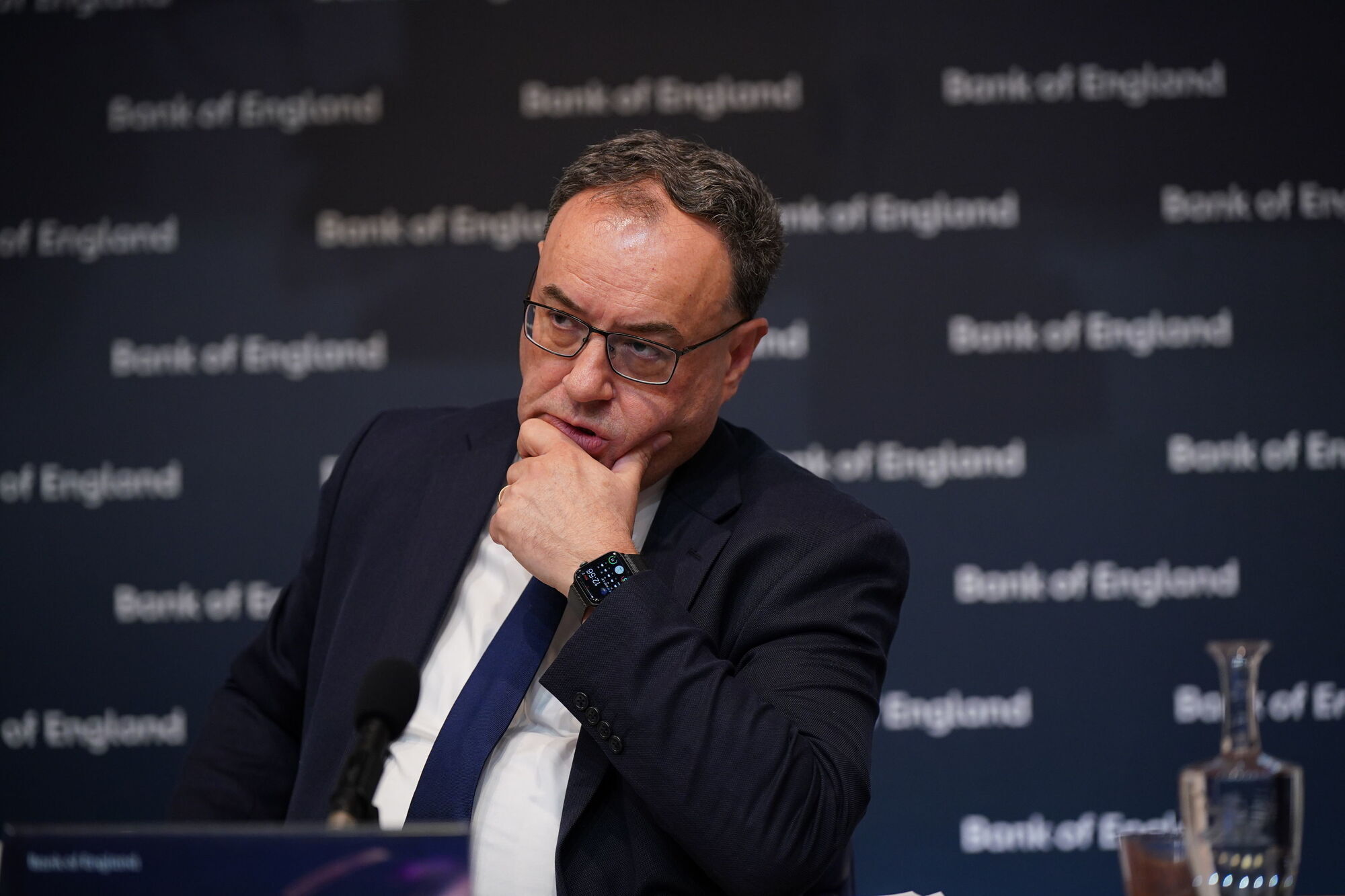
Bank of England governor Andrew Bailey: 'Low and stable inflation is the foundation of a healthy economy.'
The Bank of England raised its benchmark lending rate to the highest level since 2008, with governor Andrew Bailey saying further increases may be needed to “stay the course” in the fight to slow inflation.
The British central bank lifted its key rate a quarter point as expected to 4.5%, with two of the nine-member monetary policy committee voting for no change. The majority of the panel said “repeated surprises” pointing to the resilience of the economy have added to price pressures and required action.

The latest rate decision continues the quickest round of increases in four decades, a move the Bank of England expects to weigh more heavily on households and businesses in the coming months. It is fighting double-digit price increases that remain stronger than the forces buffeting the eurozone and the US.
“Low and stable inflation is the foundation of a healthy economy,” Mr Bailey told reporters in London after the decision was announced.
“And we have to stay the course to make sure inflation falls back to the 2% target.”
He said his chief economist was wrong to make recent comments suggesting the British must accept they are worse off. Mr Bailey said the UK cannot escape the economics of a “very big hit to national income” after the central bank’s chief economist Huw Pill was criticised and made the front pages of newspapers for the remarks.
Money-market traders added to bets on the terminal or peak rate, pricing it at 4.95% by September, compared to 4.9% before the decision.
By the end of 2023, UK inflation is forecast to have fallen to 5.1%. While above the 3.9% previously forecast, it would be enough for British prime minister Rishi Sunak to meet his pledge to cut inflation in half this year.
Higher mortgage costs are also bumping up rental prices, as landlords demand higher sums from tenants and some look to sell their properties due to rising expenses.
The opposition British Labour Party lashed out at Mr Sunak, blaming him for higher mortgage costs due to his perceived failure to boost growth in the economy post-pandemic. The cost-of-living crisis is expected to become major issues in the British general election, widely expected next year.
Officials led by Mr Bailey also delivered the biggest upgrade to growth projections since the Bank of England gained independence in 1997, erasing a recession previously forecast and anticipating the real economy will be 2.25% bigger by mid-2026 than it thought in February.
“The MPC has again been driven to raise rates by stubbornly high inflation, ongoing strength in wage growth, and better-than-expected activity,” said Anna Leach, deputy chief economist for the Confederation of British Industry.
"With inflation having been at or above 9% for a full year, the bank are rightly concerned that higher inflation could become entrenched.”
• Bloomberg