John Whelan: Record cuts in freight shipping costs welcomed by exporters
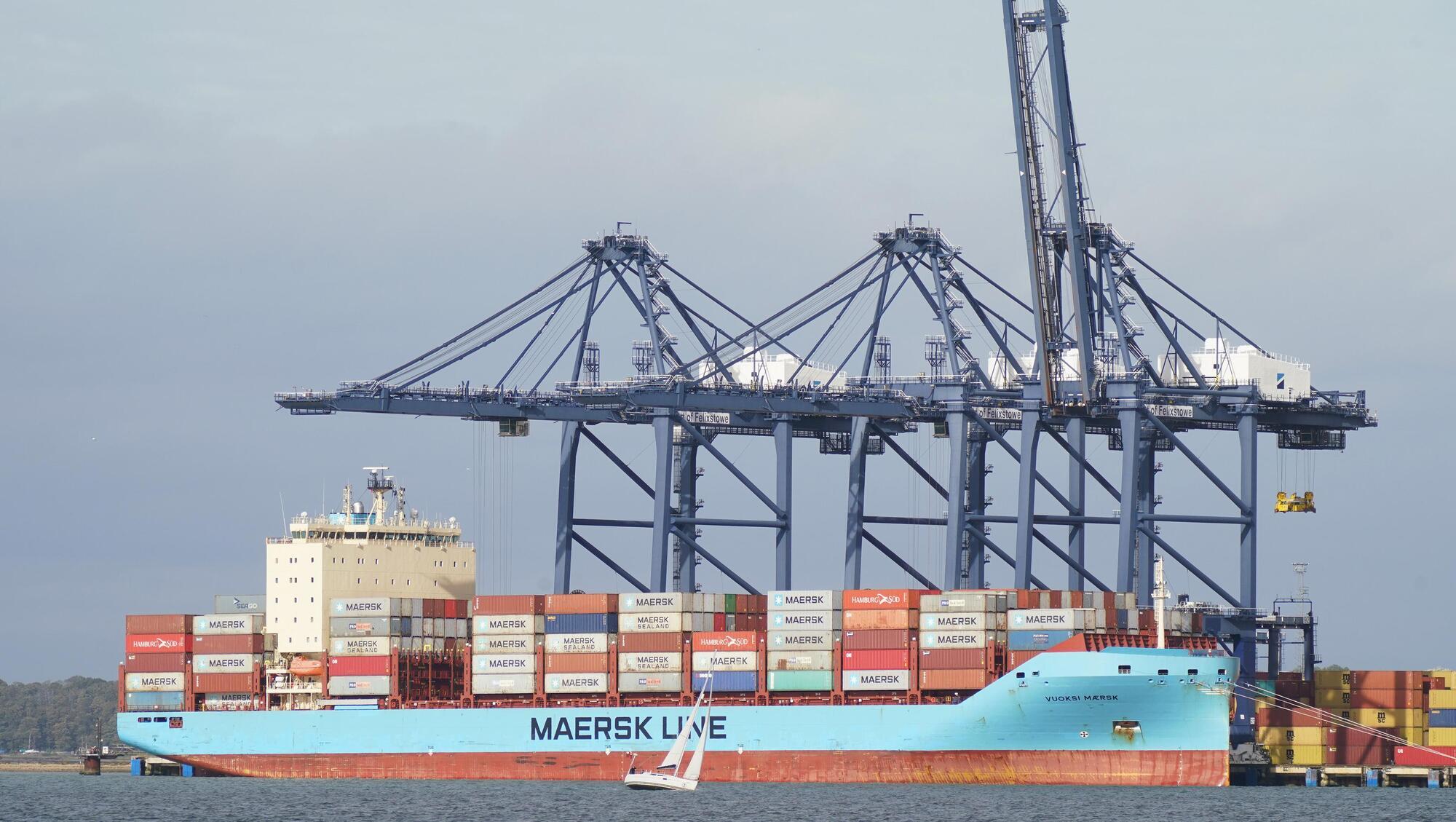
The indications are that larger, more efficient ships are likely to become the new normal, writes John Whelan. File Picture: PA
Since the start of the year, exporters from Ireland to their main markets in Asia and the US have been able to benefit from a plunge in shipping rates.
It is becoming clear that long-haul shipping contract rates this year will give exporters and importers a cut in shipping cost of 55% to 85% in most cases, when compared with 2022 costs, according to global maritime research consultancy Drewry.
The importance of the markets outside Europe has increased in the past few years. The international shipping lines that move the vast majority of Ireland’s international trade of manufactured goods such as pharmaceuticals, furniture, home appliances, clothing, computers, and electronics are critical to reaching these markets.
Exports to markets outside Europe now account for over half of Ireland’s sales of goods and equipment. Imports from Asia and the US have also increased significantly, pushing total trade outside Europe to €172bn in the past 12 months. Hence, what happens to ocean sea freight rates is of vital importance to both exporters and importers.
In less than two years, the ocean freight market went from one extreme to the other as resources including ships, containers, trucks, and warehouses went from shortage to glut on the back of the pandemic.
The rush to find sources of protective masks, hospital ventilators, and other associated equipment kicked off the shipping demand.
As China became the go-to source, the shipping rates from Asia skyrocketed. This was compounded by the shortage of the 40ft sea freight containers and lack of ships to meet the soaring demand.
Inevitably shipping rates rose rapidly, but much more than was anticipated, rising 10-fold in the space of a few months in the early stages of covid back in 2020.
The current global inflationary trend arguably started from there, with global banks wrongly betting on the trend being temporary.
Corrections to the international shipping imbalance were delayed when China went into a second lockdown in 2022, resulting in exports to the US sliding by 22% year-on-year, and those to the EU falling by 12%.
High inflation cut into household purchasing power, while packed warehouses forced retailers to cancel orders. In Europe, rocketing energy prices spurred inflation, that has discouraged consumers from opening their wallets.
The resulting slowdown in demand has led to a collapse of ocean freight rates.
In addition to securing much lower rates, exporters and importers are receiving improved service this year. Transit times are twice as fast as a year ago, and port congestion at major ports has reduced significantly.
However, the fall in shipping rates is not universal — rates for moving a 40ft container from Dublin to Spain and Portugal, or Sweden and Norway continue to hold and are now higher than shipping a container to China or Japan.
But the long-haul routes have traditionally provided the bulk of the major shipping lines profits, and hence it is no surprise to see companies such as Mediterranean Shipping Co announcing the purchase of five giant container ships from South Korean yard Daewoo. Each ship will be carrying 23,000 containers each, which is 10 times the size of the largest cargo ship visiting Dublin Port.
The ships are likely to be deployed on the Asia-to-Europe trade lane, which is the world’s busiest ocean container route. Carriers including MSC, and competitors such as A.P. Moller-Maersk and China’s Cosco Shipping use their biggest vessels there, but faltering global trade has left the operators competing more aggressively on pricing.
Bigger ships can be the answer, as when these MSC mega ships are full, their fuel consumption per container is a quarter that of smaller vessels, as well as being more environmentally friendly with less emissions.
The indications are that larger, more efficient ships are likely to be the new normal, helping to keep long-haul shipping rates down, which may enable continued expansion of Ireland’s exports outside Europe, as trade disputes between the US, China, and Europe are putting the brakes on global economic growth, with warnings from the International Monetary Fund that the world economy is on course for its weakest year of growth since the financial crisis.


CONNECT WITH US TODAY



Be the first to know the latest news and updates