Silicon Valley Bank's fall widens systemic cracks as cheap money vanishes
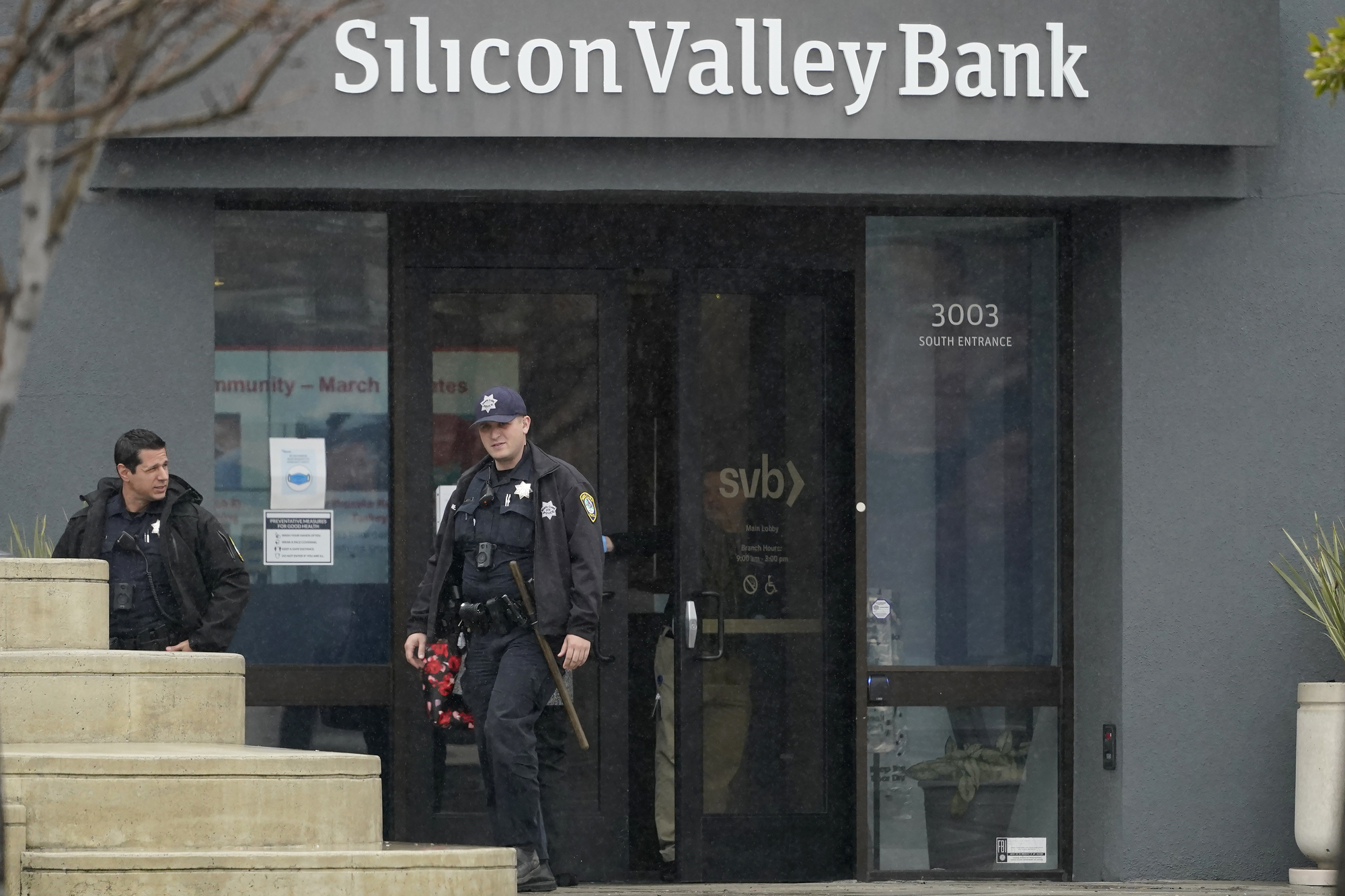
Data shows 89% of Silicon Valley Bank's $175bn (€164.2bn) in deposits were uninsured.
Cracks are appearing in the global financial system as the decade-long era of cheap money ends, with some investors worrying the shock collapse of Silicon Valley Bank signals world markets may be on the cusp of a reckoning.
Over the past year, the US Federal Reserve launched its most aggressive interest rate hiking cycle since the early 1980s and other central banks, including the ECB have joined in, leaving global investors to face a gamut of consequences.
They have seen the longest selloff in technology shares since the dotcom bubble at the turn of the millennium, a collapse in the cryptocurrency industry, a run on US and international real estate funds and an intervention by the Bank of England to prevent a near-collapse of British pension funds.
After the second largest bank failure in US history on Friday, market participants worry more disruptions lay ahead, as climbing interest rates cut off access to cheap money and expose vulnerabilities in the economy.
So far, the pain has been largely felt by investors and institutions who placed risky bets. It remains to be seen whether the pain spreads to others and a new crisis emerges. That could be determined by how hard the world's central banks continue to push interest rates higher.
Federal Reserve Chair Jerome Powell on Wednesday reaffirmed his message of higher rate hikes but emphasized the debate was still underway, depending on upcoming data. US officials have also argued the banking system is robust.
Even so, signs of market unease have grown in recent days: the S&P 500 fell 4.6% last week, nearly erasing its gains for the year, while the Cboe Volatility Index, known as Wall Street’s fear gauge, surged to its highest level in three months. Yields on two-year Treasuries saw their biggest plunge since the 2008 financial crisis. That suggests a flight to safety among investors as well as bets that economic distress may force the Fed to ease up or reverse its aggressive tightening.
The US administration said they see few signs of a 2008-style financial crisis, in which failing institutions threatened to bring down others in their wake. US Treasury Secretary Janet Yellen and the White House both noted the US banking system remains more resilient than it was in the 2008 financial crisis.
The market is signaling contagion could factor into the Fed's calculus, possibly prompting it to slow down the pace of interest rate hikes. Investors were now pricing in a 38% chance that the Fed will raise interest rates by 50 basis points later this month, down from a 68.3% chance seen the day before.
California banking regulators shut down Silicon Valley Bank on Friday after the bank, which had $209bn (€196.1bn) in assets at the end of 2022, saw a run, with depositors pulling out as much as $42bn (€39.4bn) on a single day, rendering it insolvent.
Similar to the UK pension fund crisis in September, the firm appeared to be on the wrong side of the surge in yields, leaving it exposed to interest rate risk and unable to meet its liabilities.
Investors looked for vulnerabilities elsewhere and fled other banks where they perceived risks. The KBW Bank index has fallen more than 10% over the past two days, its worst decline since March 2020.
Some banks rushed to reassure. US lenders First Republic Bank and Western Alliance issued statements to say liquidity and deposits remained strong, even as shares in both companies fell more than 14% Friday. Germany's Commerzbank, meanwhile, said that it saw no “corresponding risk” to itself on a day that its shares fell 2.6%.
Silicon Valley Financial Group was deeply woven into the fabric of the technology industry. It was a source of funding for startups and a popular provider of payroll processing and personal wealth management.
Regulatory data shows 89% of the bank's $175bn (€164.2bn) in deposits were uninsured as the end of 2022, and billions were stranded while regulators tried to find a buyer.
Reuters
CONNECT WITH US TODAY



Be the first to know the latest news and updates