Setback for plans to curb energy demand as wholesale gas prices jump 7%
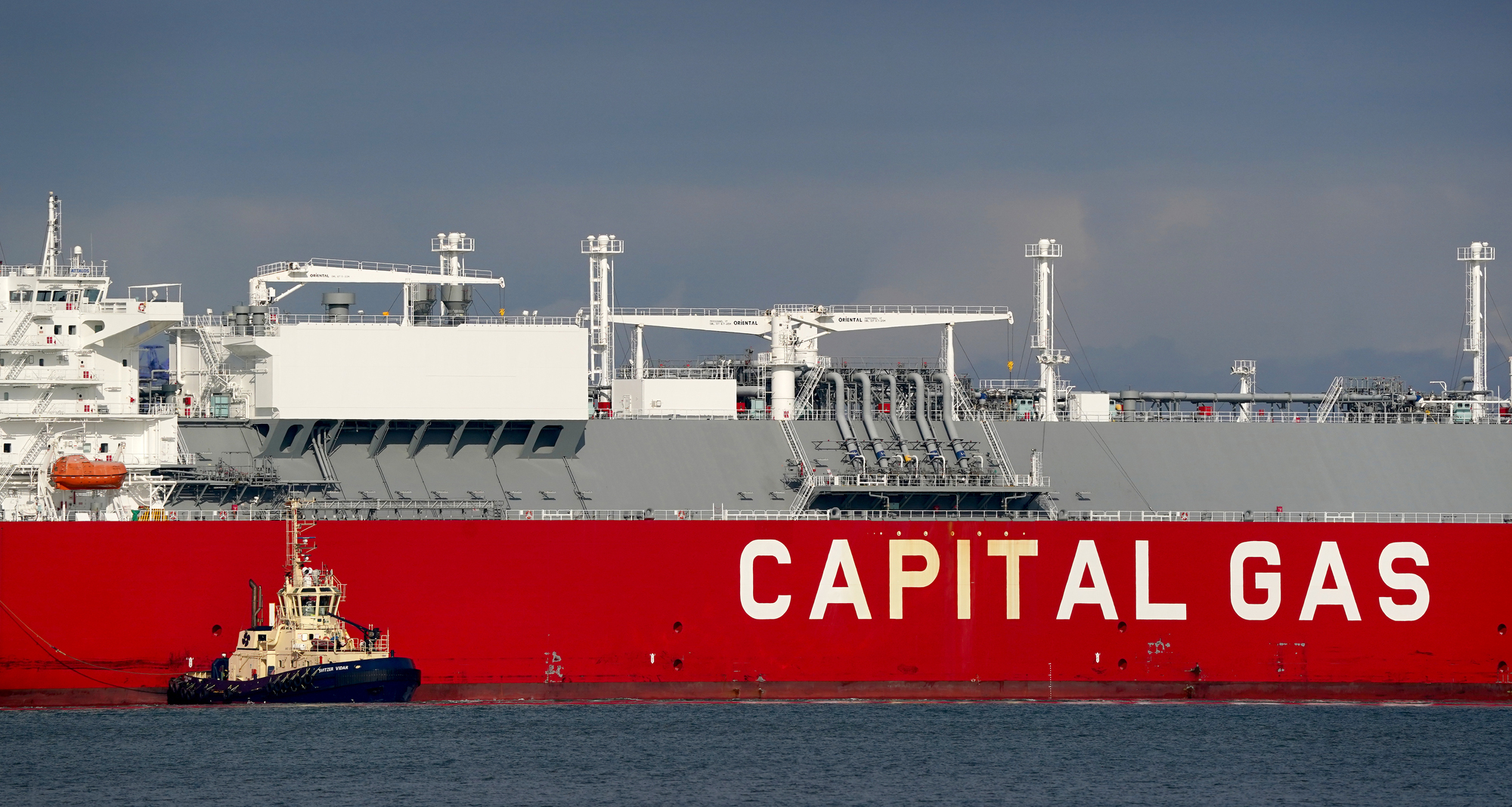
A liquefied natural gas ship arriving at a terminal in Kent, in England. Britain plan to slash the wholesale cost of energy in bills this winter. Picture: PA
Plans by European governments to curb the consumption of energy this autumn and winter faced a setback, as the price of wholesale gas jumped 7% following recent sharp declines.
The European Commission only last week laid out what it called "extraordinary" proposals to cut electricity consumption by 10% this winter, and to raise €142bn by imposing a cap on revenues on energy producers.
The commission proposes member states, including Ireland, cut electricity consumption by 10% through to next March, with a focus on curtailing demand during peak hours when demand for gas is at its highest level to generate electricity.
However, any sharp increases in fuel costs to heat, light, and power industry, businesses, and households over the coming months will complicate efforts to build up reserves and make it more costly for most European countries, including Ireland, to further subsidise energy bills for businesses and households.
The price of wholesale European gas for delivery next month and in the winter months through to March — when the EU restrictions are due to run — jumped by over 7%. Gas for delivery in March traded at €209.50 per megawatt hour, according to the so-called Dutch TTF futures contract that trades on the ICE exchange.
Big continental European countries like France and Germany have also responded by building up gas reserves to around 86% of capacity to meet the huge challenges should Russia further turn off or down its westward flow of gas supplies to the EU through other pipelines, after shutting off the key subsea Baltic line, Nordstream 1, in recent weeks.
Last week, the commission estimated it could raise €117bn from power producers, such as windfarms and nuclear generators, which have tapped exceptional levels of revenues during the crisis, and a further €25bn from oil, gas, and coal companies, it said.
Finance Minister Paschal Donohoe will announce the costs of additional energy subsidies that will likely cost the exchequer billions of euro.
Meanwhile, Germany is preparing fresh credit lines for gas purchases, while Chancellor Olaf Scholz will chase new deals during his trip to the Middle East this weekend.
Britain also plans to slash the wholesale prices that are incorporated into business energy bills this winter. This is in addition to a plan to cap household expenses for two years.
Gas traders are also closely watching steadily filling gas stockpiles in Europe, which are about 86% full, slightly above the five-year average. Together with strong imports of liquefied natural gas, or LNG, that has helped ease prices from the highs of August.
Still, the threat remains of further disruptions in Russian supply, especially through the remaining major route through Ukraine. An unusually cold winter could also tighten the market sharply.
The storage build-up “has been very impressive”, analysts at Deutsche Bank said. Yet “rationing, in some shape or form, is likely” given there may be no Russian gas this winter — unless temperatures are mild, they said.
- Additional reporting Bloomberg


CONNECT WITH US TODAY



Be the first to know the latest news and updates