John Fahey: Markets bet ECB will hike interest rates to 2.25% by next summer
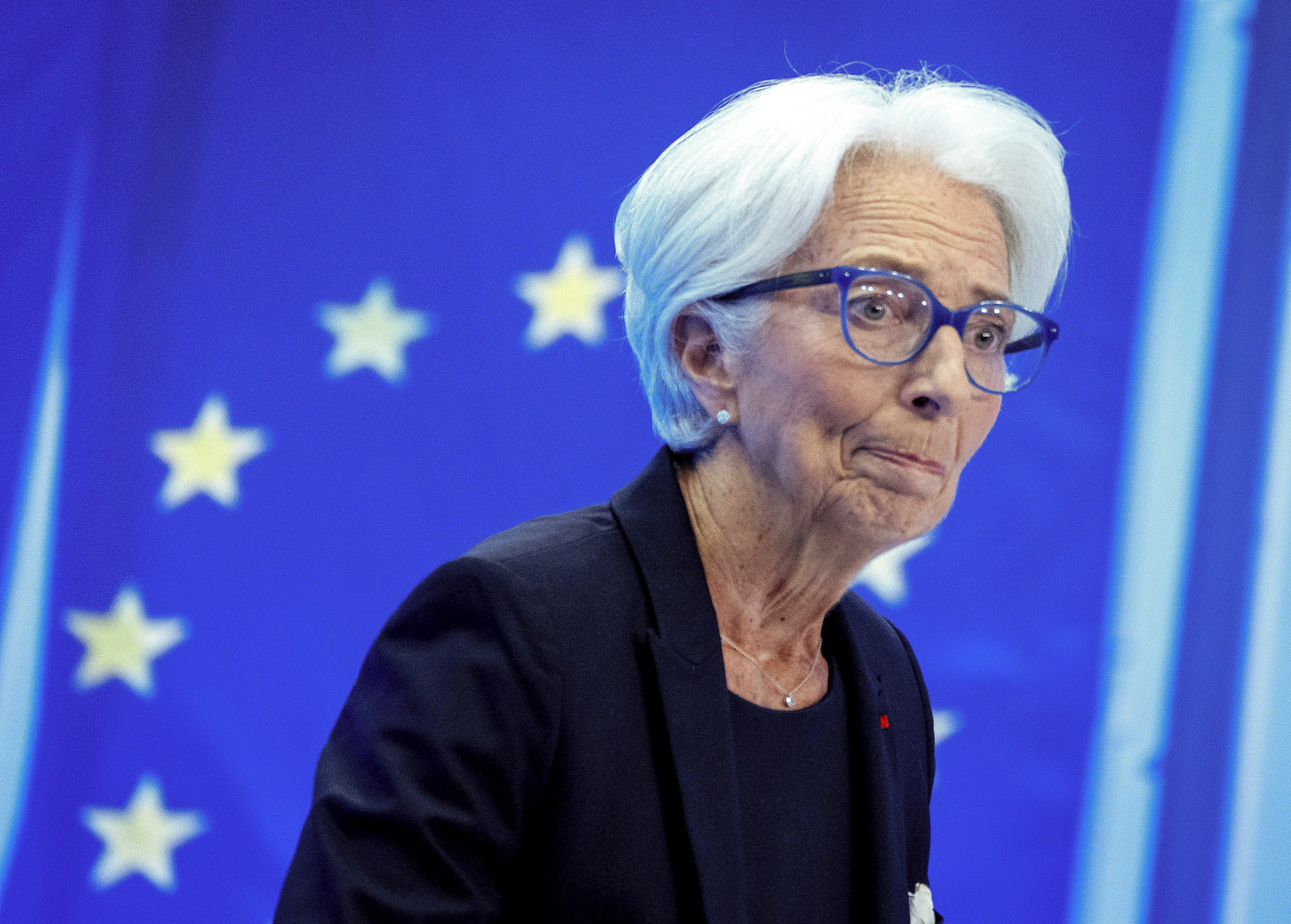
ECB president Christine Lagarde: ECB is still far away from the rate it hopes will help bring inflation back to its 2% target
Last week’s European Central Bank meeting provided further evidence that central bankers are very keen to emphasise their resolve and credentials to tackle higher-than-expected and more persistent inflation, by implementing an aggressive front-loading of rate hikes.
The ECB announced its largest ever rate hike, with an increase of 75 basis points, or 0.75%, in interest rates. This followed a 50 basis point rise at its previous meeting in July, when it ended its negative interest rate policy. The deposit rate will increase from zero to 0.75%, while the refi rate will rise to 1.25%.
The ECB’s frontloading of rate hikes is against the backdrop of inflation being at an all-time high of 9.1%, and the fact that it is likely to stay above its 2% target for an extended period. Therefore, the ECB concluded unanimously, after a thorough discussion, that it needed to frontload its rate hikes to ensure a timely return to its 2% inflation target over the medium term.
Similar to the soundings coming for the US Federal Reserve and Bank of England, the ECB is willing to implement an aggressive pace of rate increases even if this creates a significant headwind for the eurozone economy in the near term.
They view this as being more favourable than a scenario whereby, inflation spirals further out of control, there is a de-anchoring of inflation expectations, and official interest rates have to be hiked by a much greater magnitude, resulting in a more severe and longer lasting downturn.
These inflation concerns within the ECB were highlighted in its updated projections. The central bank revised higher its 2022 inflation forecast to 8.1%, from 6.8%. For 2023, it expects inflation to average 5.5%. It also upped its 2024 projection to 2.3%. It stated that it viewed the risk to these inflation projections to be to the upside.
Meantime, the ECB downgraded its growth forecasts for the period 2023-2024. It outlined that it anticipates the eurozone economy will stagnate later this year and into the first quarter next year.
The key factors behind this downbeat assessment were the hit to consumers' purchasing power from very high energy prices, supply bottlenecks, and the impact on consumer/business confidence from geopolitical risks, especially the war in Ukraine, combining to dampen economic activity.
It revised lower its growth forecasts for 2022 and 2023 to 0.9% and 1.9%, respectively. It also commented that the risks to these growth projections were mainly to the downside.
In terms of the interest rate outlook, the ECB stated that it expects over the next several meetings to raise interest rates further. President Christine Lagarde continued to emphasise that future policy decisions will be data-dependent and made on a meeting-by-meeting basis.
However, the president provided no indication as to where the ECB sees the terminal rate. She stated that the ECB is still far away from the rate it hopes will help bring inflation back to its 2% target.
There are two ECB meetings remaining this year, on October 27 and December 15. Futures contracts suggest that the market is anticipating the deposit rate ending 2022 at 1.75%. Further out, the market is expecting that rates could reach 2.25% by the middle of next year and stabilise in and around this level into the end of next year.
- John Fahey is senior economist at AIB
CONNECT WITH US TODAY



Be the first to know the latest news and updates