Felixstowe Port strike raises fears for fallout for Ireland
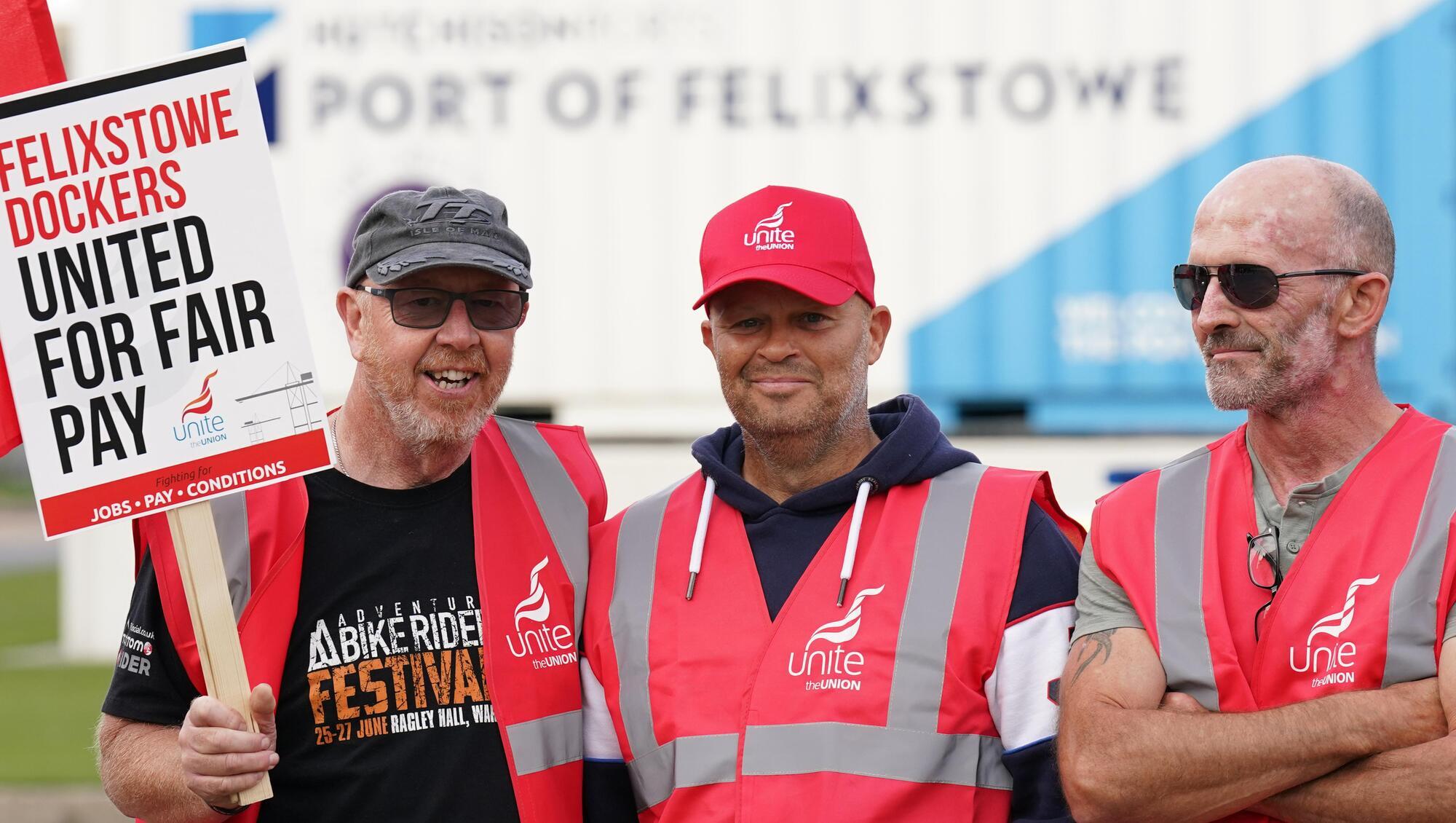
Members of the Unite union man a picket line at one of the entrances to the Port of Felixstowe in Suffolk, Britain's biggest and busiest container port, after backing industrial action in a dispute over pay.
More than 1,900 workers at Britain's biggest container port, Felixstowe, have begun eight days of strike action that will cause disruption to trade and supply chains in Ireland and Britain.
The staff at Felixstowe, on the east coast of England, are taking industrial action in a dispute over pay, becoming the latest workers to strike in Britain as unions demand higher wages for members facing a cost-of-living crisis.
About 48% of all containers brought into the UK are transported through the Felixstowe Port, according to the Unite union, making it an important import hub for Britain.
There are also fears in Ireland over the knock-on effects for Irish traders and hauliers in accessing exports and imports from the continent. Trade expert John Whelan told the Irish Examiner that the strike, along with another threatened dispute at Liverpool, could halt the recent decline in sky-high freight container prices, and hit Irish businesses at a time of record inflation.
Britain's biggest and busiest container port, and also one of Europe's largest, Felixstowe services 2,000 ships arriving each year, according to its website. Felixstowe imported £37.4bn (€44.2bn) worth of goods last year, according to the Observatory of Economic Complexity online data platform.
In 2021, its top imports included toys, data processing machines, and wooden and metal furniture. At £9.1bn, the port's exports amounted only to about a quarter of its imports. Exports included pharmaceutical products, scrap aluminium, and copper.
In May, China was both the top origin and destination country for most goods transported through Felixstowe. About 70% of containers transported through Felixstowe are delivered, via road and rail links, to a logistics hub, home to the British distribution centres of many of Britain's high street brands and retailers including Tesco, Asda, and Marks and Spencer.
The strike could disrupt trade including in clothing and electronic components, causing trade to be diverted to smaller British ports as well as international ports including Wilhelmshaven in Germany, risk management firm Russell Group said.
The disruption spells more uncertainty for businesses, consumers and governments and could exacerbate shipping congestion and backlogs caused by the coronavirus pandemic, Suki Basi at the Russell Group said.
Paul Davey, the head of corporate affairs at Hutchison Ports, the Hong Kong-based operator of Felixstowe, said that while local haulage firms would lose money from the strike, consumers around the country would not see a big impact.

CONNECT WITH US TODAY



Be the first to know the latest news and updates