Hopes rise Russian gas will flow again to EU on Thursday
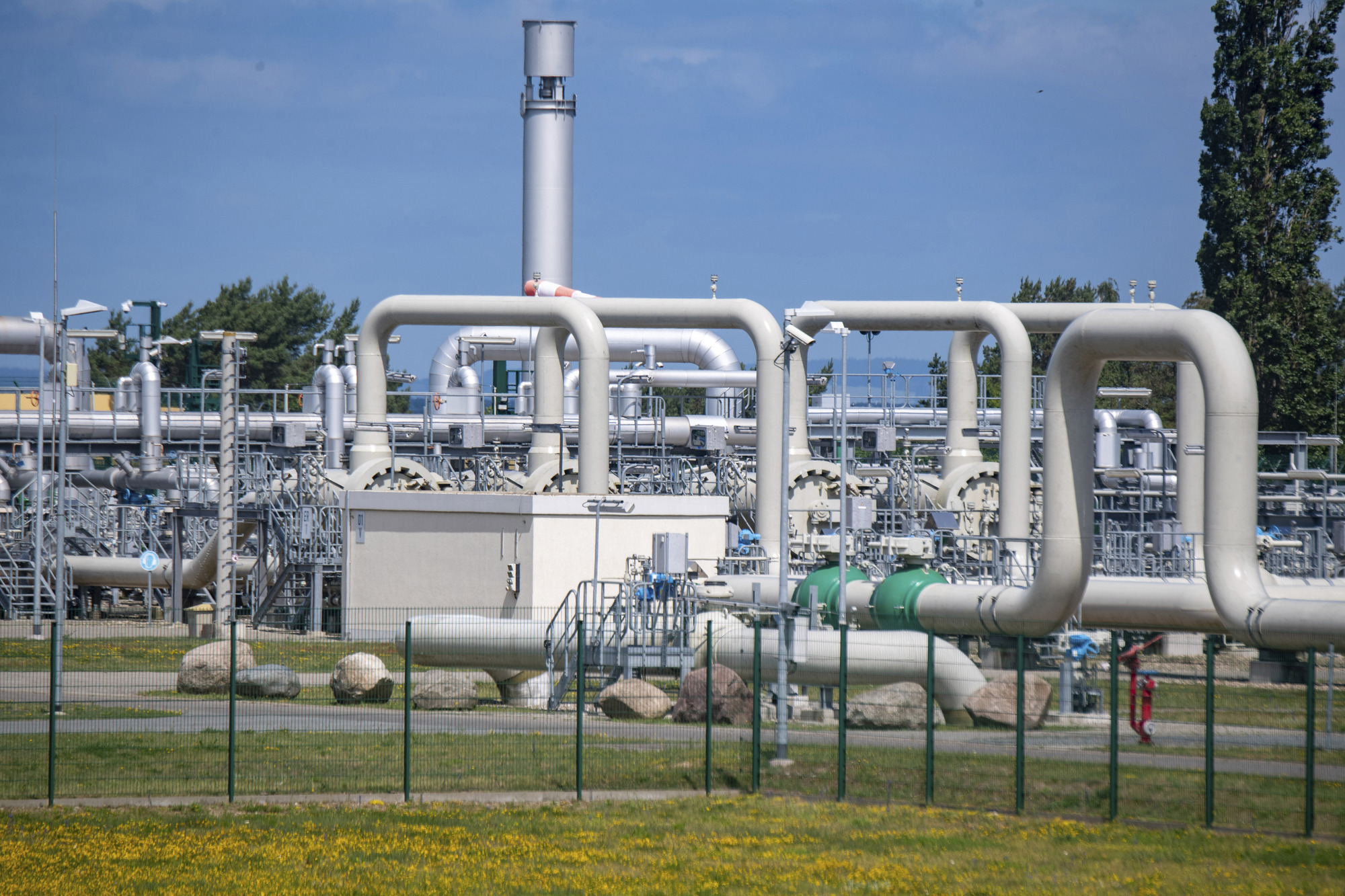
Pipe systems and shut-off devices at the gas receiving station of the Nord Stream 1 Baltic Sea pipeline at Lubmin in Germany.
The price of wholesale European gas dipped following a report indicating that Russian gas flows through the Nord Stream 1 pipeline to Germany would resume on Thursday.
The pipeline is the main gas link from Russia to most of the EU and is expected to operate at reduced levels following planned maintenance, according to sources.
European officials and gas traders have been watching for signs of whether the link will restart as scheduled after the 10-day works. The market remains on edge while tensions run high following Russia’s invasion of Ukraine.
“The prospect of gas flows not resuming through Nord Stream 1 after the current maintenance period poses material immediate downside risks to European growth,” broker Jefferies Group had said.
Russia's Gazprom has given no indication that Nord Stream won’t restart as scheduled.
The European Commission is working on the assumption that the link won’t return to service this week, according to a senior official.
Germany plans to wait until at least Monday to determine whether gas supplies have been cut. Flows had been reduced to just 40% of capacity before the maintenance on the link, while a turbine for the network — in Canada for repairs — was stranded there amid sanctions on Russia.
The part was being flown back to Germany, according to a report this week, and then it needs to go back to Russia, which could take several days.
European gas prices for delivery in August fell 1.5% to €154.30 per megawatt-hour.
Economists say that gas supplies for Ireland's generators, to generate electricity for the all-Ireland grid and for Irish manufacturers and households, wouldn't be directly shut off should Russia decide to step up the economic war with the West over Ukraine by turning off the gas.
Ireland taps about a quarter of its annual gas needs from the Corrib gas field off the Mayo coast and North Sea via interconnectors across the Irish Sea from Britain.
The main threat would be transmitted through sharply higher prices because gas, whether from the North Sea or Russia, is a globally traded commodity.
Meanwhile, extreme heat continues to bear down on Britain and the rest of the continent, helping to push up prices of British and Irish gas. French power prices climbed to the highest price since at least 2009, as the country’s electricity network strained to meet rising demand.
Norway’s grid operator Gassco said the capacity of the Segal network, which connects North Sea fields to the UK, has been curtailed because of high temperatures.
Any major cutoff in Russian gas supplies could result in a doubling of European gas prices and a hit to the EU’s economy, according to a working paper from the IMF, though supplies of liquefied natural gas, or LNG, from other countries could cushion the impact.
“Even with access to the global LNG market, gas prices in the EU would still rise about 100%,” the IMF researchers said.
- Bloomberg, Irish Examiner, and Reuters


CONNECT WITH US TODAY



Be the first to know the latest news and updates