Euro zone at risk of 'inflation psychology', ECB's Lane says
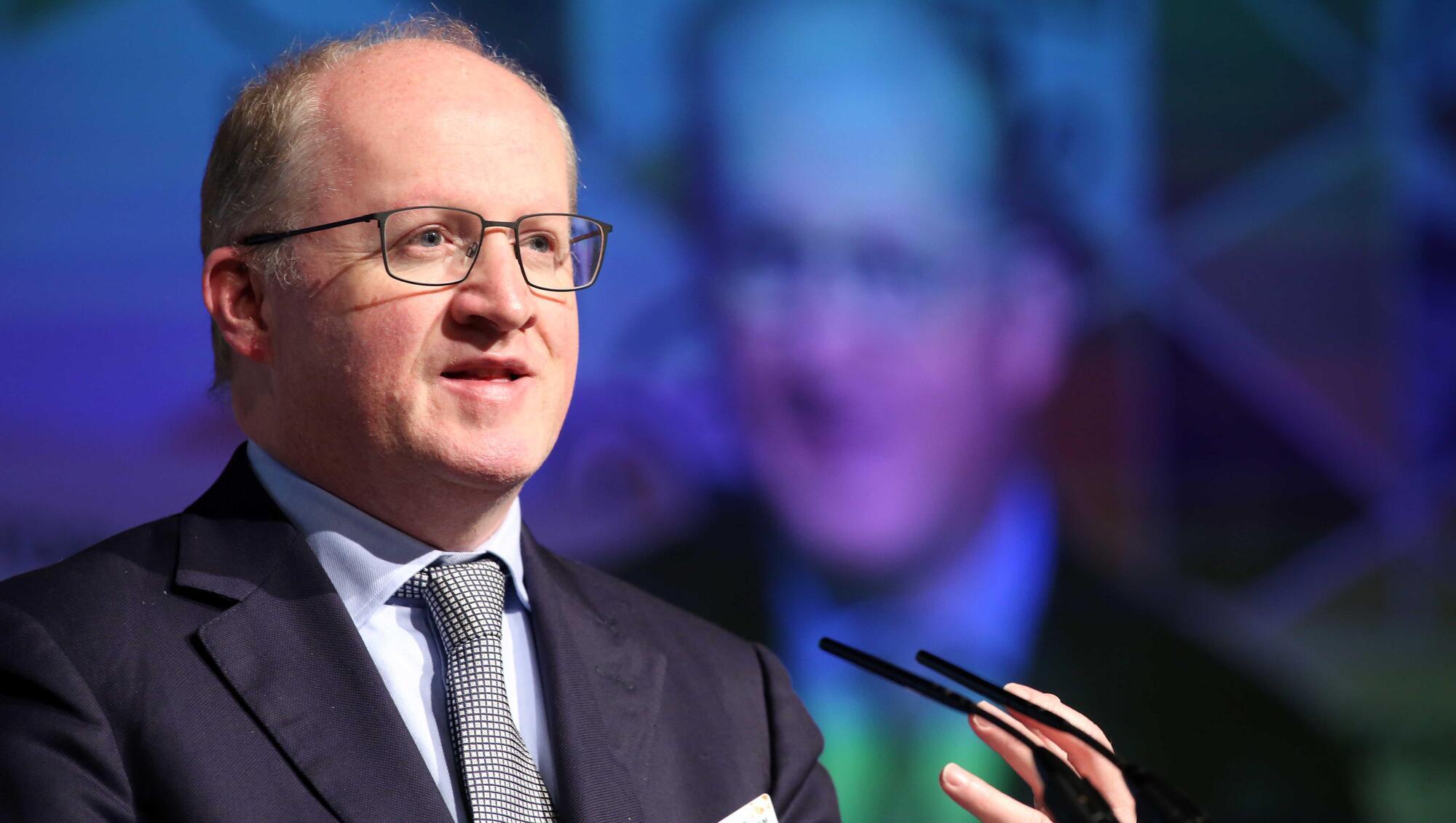
Record high euro zone inflation risked fuelling "inflation psychology," European Central Bank chief economist Philip Lane said on Monday. Picture: Sam Boal/RollingNews.ie
Record high euro zone inflation risked fuelling "inflation psychology," European Central Bank chief economist Philip Lane said on Monday, referring to a phenomenon when consumers and businesses adjust their habits in anticipation of higher prices.
Once inflation psychology sets in, consumers bring forward their spending to beat the rise in prices while businesses start lifting their own prices, expecting higher costs, with both behaviours perpetuating inflation.
"We have very high inflation rates now, and clearly we could be in a world where inflation psychology is taking hold," Lane told the annual dinner of Britain's Society of Professional Economists in London.
German government bond yields steadied within striking distance of their multi-year highs as renewed inflation concerns and European Central Bank's hawkish comments kept markets on edge.
Spreads between core and peripheral bond yields kept tightening after ECB President Christine Lagarde reaffirmed on Monday a commitment to avoid fragmentation -- a yield spread widening which might hamper the transmission of monetary policy across the euro area.
There are good reasons to speed up the exit from exceptionally easy monetary policy, Finnish Governing Council member Olli Rehn said on Tuesday.
Germany's 10-year government bond yield, the benchmark of the bloc,fell 0.5 basis points (bps) to 1.74%. It hit its highest since January 2014 at 1.926% on Thursday. DE10YT=RR "Central banks have realized that inflation has not peaked yet, so they're ready to be more aggressive. That's why yields keep rising," said Mohammed Kazmi, portfolio Manager at Union Bancaire Privée.
"Current pricing may be enough as the market is betting on the ECB to take rates well above neutral. That said, central banks have become more data-dependent, which means that there will be more volatility around the inflation numbers," he added.
Unicredit analysts expect the ECB rhetoric to remain hawkish and the 10-year Bund yield to reach 2% in the coming months.
"So not quite 'whatever it takes' but along the same lines," they argued in a note.
Unicredit analysts flagged that the German break-even rate – a gauge of inflation expectations measured as the difference between inflation-linked and nominal bond yields – did not track the recent rise in nominal rates.
While German 10-year bond yields rose from around 1% at the end of May to 1.926% on June 16, 10-year break-evens hit their highest at 2.77% on April 29 and then fell to around 2.2%.
- Reuters
Read More
CONNECT WITH US TODAY



Be the first to know the latest news and updates