Renewable island: SuperGrid promises EU energy security
An energy SuperGrid uniting Europe would be a huge step towards autonomy of energy supply, says Noel Cunniffe of Wind Energy Ireland
Renewable island: SuperGrid promises EU energy security

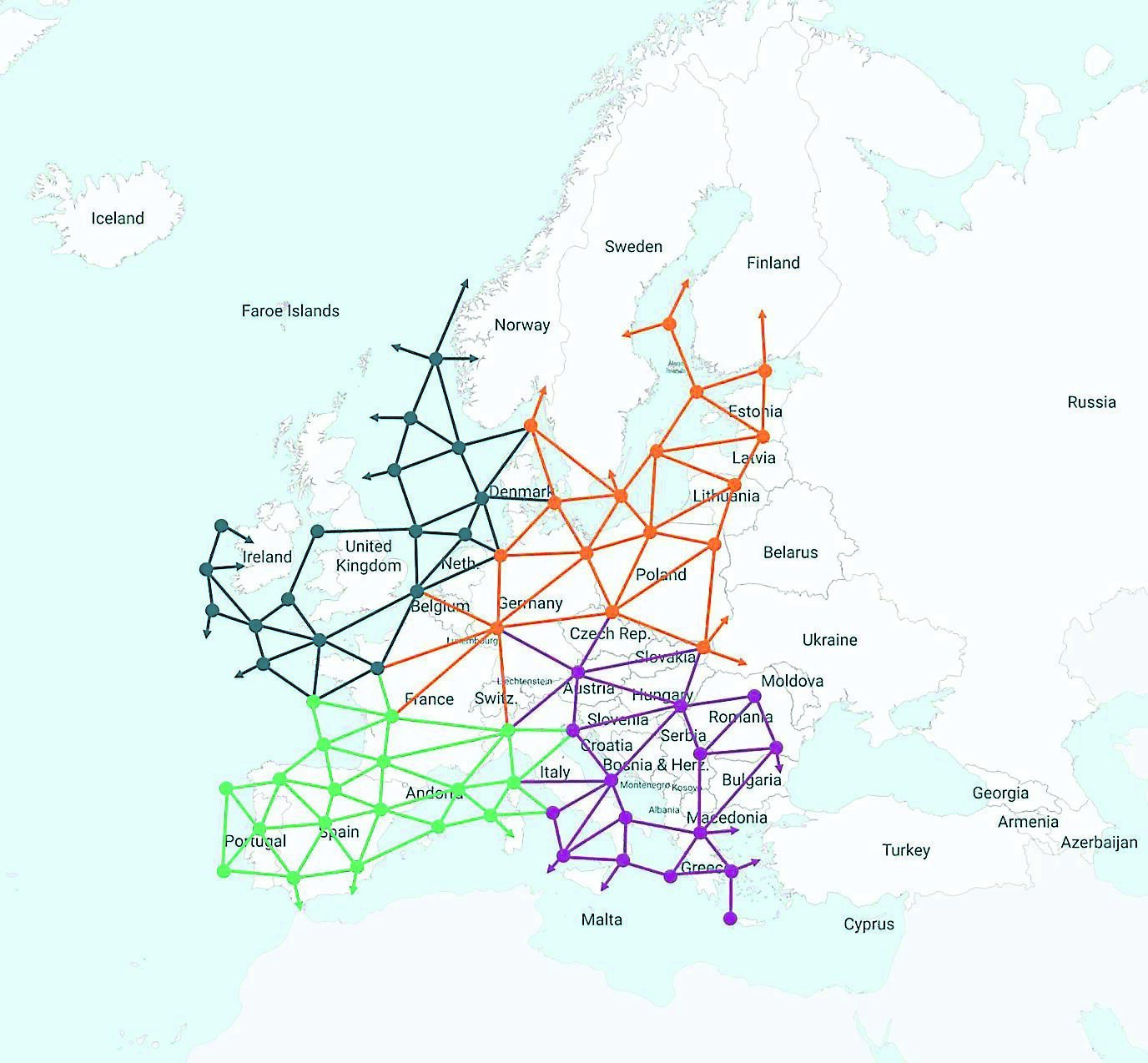
What a European SuperGrid would look like. The concept of a SuperGrid involves a fully integrated European electricity grid, essentially a large transmission network across national boundaries, making it possible to move huge volumes of electricity across great distances.

Noel Cunniffe, CEO of Wind Energy Ireland, outlines plans for a SuperGrid that would cross national boundaries and enhance Europe's energy independence 
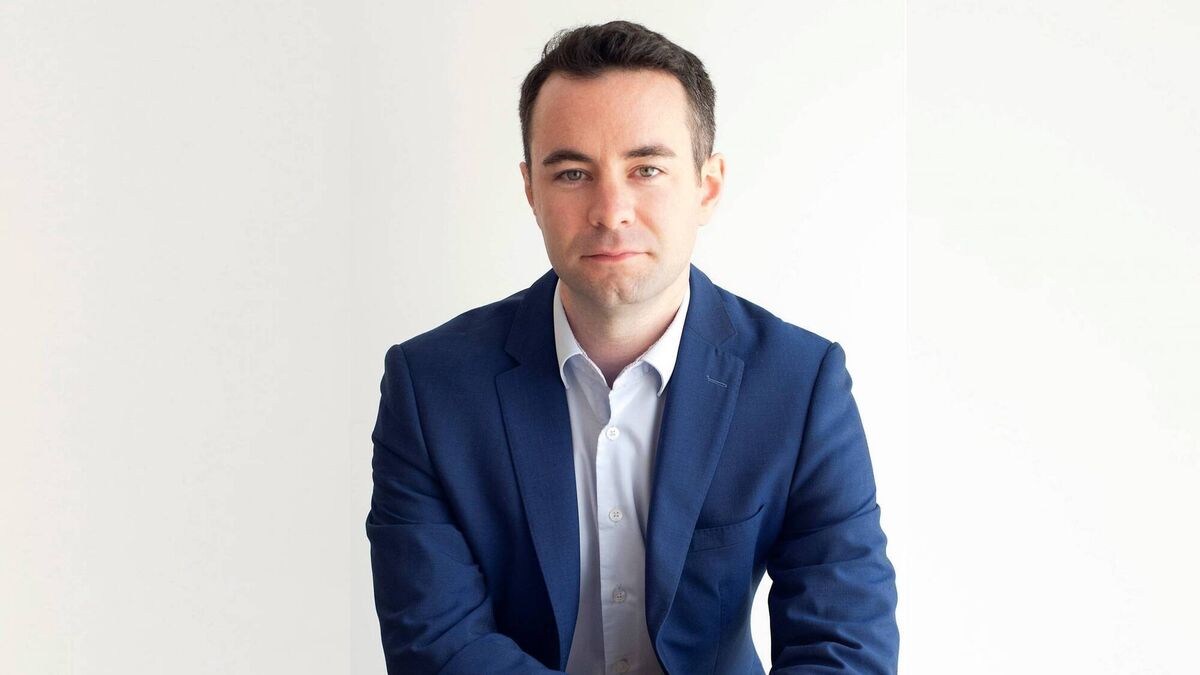
Noel Cunniffe, CEO of Wind Energy Ireland.

Today, European Union Member States paid Russia approximately $1.1 billion to import energy supplies. They will do the same tomorrow. And the next day.

Regardless of how much we want to support the people of Ukraine the reality is that Europe is literally paying for the rockets that devasted Mariupol and that are, as I write this, striking the city of Sievierodonetsk.

Whether it is oil from Saudi Arabia or gas from Russia, the economic prosperity of Europe has been built on paying brutal governments for the energy needed to power our homes and businesses.

CLIMATE & SUSTAINABILITY HUB

It does not have to be like this. We can build a Europe that is energy independent, no longer reliant on imported fossil fuels or vulnerable to spiralling oil and gas prices, where we produce our own energy and drive a truly green recovery.

Imagine a future where a café in Prague is serving hot chocolate using power from an offshore wind farm off Ireland’s western coast. Or where a farmer in Kilkenny is running his milking parlour using power from a Spanish solar farm.

This is what a future European energy system looks like, an entire continent, united and powered by clean, renewable energy using a single electricity grid – a SuperGrid. And it is one that puts Irish offshore wind energy at the heart of decarbonising not just our own country, but playing a central role in decarbonising the continent.

Ireland has some of the highest average wind speeds in Europe, averaging more than 12 m/s at 100m high on the west coast. For context, the Scottish North Sea is thought to have some of the best wind resources which have been developed to date and average wind speeds there, at the same height, are between 9.5 – 10 m/s.

We may be a small country but we have a sea area seven times larger than our land mass so how best to turn this to our advantage? The Programme for Government identifies a medium to long-term target for 30 GW of offshore wind energy. This would be around five times the current annual electricity demand for Ireland, far more than we need today.

And this is why Ireland is so central to ending Europe’s energy dependency on Russia.

At the heart of Europe’s energy future is the idea of a SuperGrid, a fully integrated European electricity grid that gets power from where it is produced to where it is needed.

Europe’s best wind resources are in the north and off Ireland’s west coast. Its best solar resources are in the south along the Mediterranean coastline. And its largest energy demand is in the heart of Europe, home to the continent’s largest cities and biggest manufacturing base.

A SuperGrid is essentially a large transmission network that cuts across national boundaries, making it possible to move huge volumes of electricity across great distances. This can be done using innovative grid technologies and high-voltage direct-current cables and power lines already use in Ireland.

EirGrid’s East-West Interconnector, for example, links the Irish and British power systems and is a 500 MW subsea direct current cable. More interconnectors are planned in the coming years linking Ireland to Britain and to Europe.

But a SuperGrid takes this one step further. It is about going beyond connecting national grids, linking the Irish system to the French or the German to the Danish, and creating a single grid for the continent.

We already know that thinking – and acting – on this scale is possible. It is already happening.

At the end of 2018, China completed an Ultra High Voltage Direct Current (UHVDC) power line, called the Changii-Guquan 1,100 kV transmission line.

This single line can deliver 12 GW of electricity – more than twice the peak electricity demand in Ireland – a staggering 3,324 kilometres from renewable energy projects in Xinjiang province in the Northwest of China, across the country to Guquan, east of Shanghai. That is around the same distance from Madrid to Moscow.

It will provide power to approximately 50 million Chinese households and will reduce coal consumption in eastern Chinese power plants by around 38 million tonnes annually.

So what would a European SuperGrid look like? Here again, Ireland has a leading role to play.

Minister for Environment, Climate and Communications Eamon Ryan TD currently holds the annually rotating Presidency of the North Seas Energy Cooperation (NSEC), which brings together Belgium, Denmark, France, Germany, Ireland, Luxembourg, Sweden, the Netherlands, Norway and the European Commission.

The purpose of this group is to better plan and coordinate efforts to ensure offshore renewable energy is delivered in the most sustainable and cost-effective manner possible. It is also driving increased levels of co-operation to better interconnect electricity grids across borders.

The development of a coordinated meshed grid in the North Sea is now seen as logical and inevitable. If we can extend this approach to offshore wind energy planned in other parts of Europe, and particularly off Ireland’s coast, and link this to the growing solar resources in the south of Europe we can start to build a foundation for a truly European SuperGrid.

There are two key initiatives that can be taken right now that would enable us to get started.

First, Ireland should work to bring together our closest neighbours – Britain, France and Spain, alongside other NSEC members – to develop a plan to build a meshed offshore grid connecting the renewable energy projects planned, and already built, in the Celtic Sea, the Channel and the Bay of Biscay.

This would provide enormous opportunities for Irish offshore wind energy to be connected to the continent and to eventually link in renewable energy projects planned for off our west coast.

Secondly, while the immediate focus and priority in Government must be on our 2030 targets, it is also time to look beyond that. Minister Ryan should establish a Coordination Council to examine how our electricity grid should be configured for after 2030, bringing together his department with EirGrid, the CRU and with industry.

Building a European SuperGrid is not a challenge to be underestimated but the world is on fire. This is not the time for business-as-usual.

Albert Einstein said: “Problems cannot be solved with the same mindset that created them”.

We need to understand there is no Irish climate change problem. It is not something each country faces individually. A tonne of carbon emitted in France or in Germany is as bad for our future as a tonne of carbon emitted here in Ireland.

And while, in the immediate sense, we need to take responsibility for our own house and decarbonise Ireland, we must also recognise our responsibility to step up, to look beyond our borders to what we can do to build a net-zero world.

In doing so, we will not just play our part in the fight against climate change but we will build an entirely new renewable energy industry supporting balanced, sustainable, regional development, creating thousands of jobs and driving inclusive growth in Ireland.

We have been laggards on climate change for far too long. It is time to lead.

x

More in this section

The Business Hub

Newsletter

News and analysis on business, money and jobs from Munster and beyond by our expert team of business writers.

Cookie Policy Privacy Policy Brand Safety FAQ Help Contact Us Terms and Conditions

© Examiner Echo Group Limited