Central Bank reinstates capital buffer amid economic uncertainty
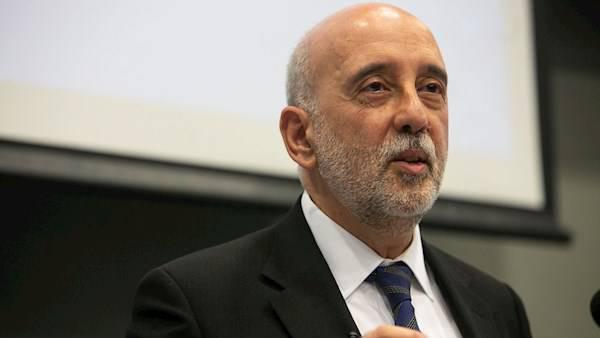
Banks were ordered to hold more capital with warnings that a protracted war in Ukraine could lead to further downward revisions to the global growth
Central Bank reinstates capital buffer amid economic uncertainty

Central Bank Governor Gabriel Makhlouf said Ireland has been left particularly exposed by the war in Uktraine.

The Central Bank announced it will gradually increase its main tool to safeguard Ireland’s resilience, in terms of bank capital, as a response to the economic pressures the country is facing.

The regulator’s Counter-Cyclical Capital Buffer (CCyB) tool will increase to 0.5%, with plans to build to 1.5% by mid-2023.

The CCyB was reduced to 0% in March 2020 to support bank lending into the economy during the pandemic. The highest it has ever been was 1% and was introduced in 2018. The buffer means that banks are required to hold more money rather than lending it out.

“Our new approach is motivated by lessons learned during the pandemic on the importance of buffers that are explicitly releasable during times of stress to support bank lending into the economy,” explained Central Bank Governor Gabriel Makhlouf.

The tool is a time-varying capital requirement which applies to banks and investment firms. It aims to promote a sustainable provision of credit to the economy by making the banking system more resilient.

“We’re not asking banks to go and get more capital, but we do think it’s the right time to return to the buffer,” said Mr Makhlouf.

As part of this new approach, the Central Bank has decided to use just the CCyB rather than a combination of the CCyB with its other buffer called the Systemic Risk Buffer (SyRB).

“Given that the impact of the pandemic on lenders and borrowers, the Central Bank no longer deem that support necessary and are announcing a rate increase to 0.5%. Our guidance is that we will move to 1.5% between now and this time next year, but we will remain data-driven and will adjust our position appropriately,” it said.

The reason for this decision comes as Ireland faces increased inflationary pressures which have been heightened by the war in Ukraine. Inflation in Ireland is expected to peak at around 8% during the summer months and then ease off slightly during the rest of the year.

The Central Bank warned that Ireland has been left particularly exposed by the war, as a small open economy which is heavily reliant on international trade and foreign direct investment, and may face a lower availability of energy and other key commodities for households.

These challenges will also need special attention when it comes to budgetary decisions, said Mr Makhlouf.

“There are a wider range of budgetary pressures for, in particular, more vulnerable households, here and around the world, through increases in key items such as food,” said Mr Makhlouf.

Mr Makhlouf has said that the invasion has put further pressure on supply chains which have already been weakened by the pandemic already.

However, he added that Irish households and businesses in Ireland continue to have important capacity to cope with these risks and are in a better position to absorb shocks when compared to the onset of the post-2008 crisis.

The Governor continued to say that retail banks have capital headroom above regulatory requirements, which puts them in a position to absorb negative shocks without adverse knock-on implications for consumers or the economy.

Meanwhile, growth forecasts for Ireland’s key markets, such as the US and the UK, this year are lower than before the outbreak of the war, the Central Bank said.

The regulator warned that a protracted war could lead to further downward revisions to the global growth outlook with implications for the Irish economy and financial system.

x

More in this section

The Business Hub

Newsletter

News and analysis on business, money and jobs from Munster and beyond by our expert team of business writers.

Cookie Policy Privacy Policy Brand Safety FAQ Help Contact Us Terms and Conditions

© Examiner Echo Group Limited