ECB ending the era of cheap money will mean financial pain for Irish households
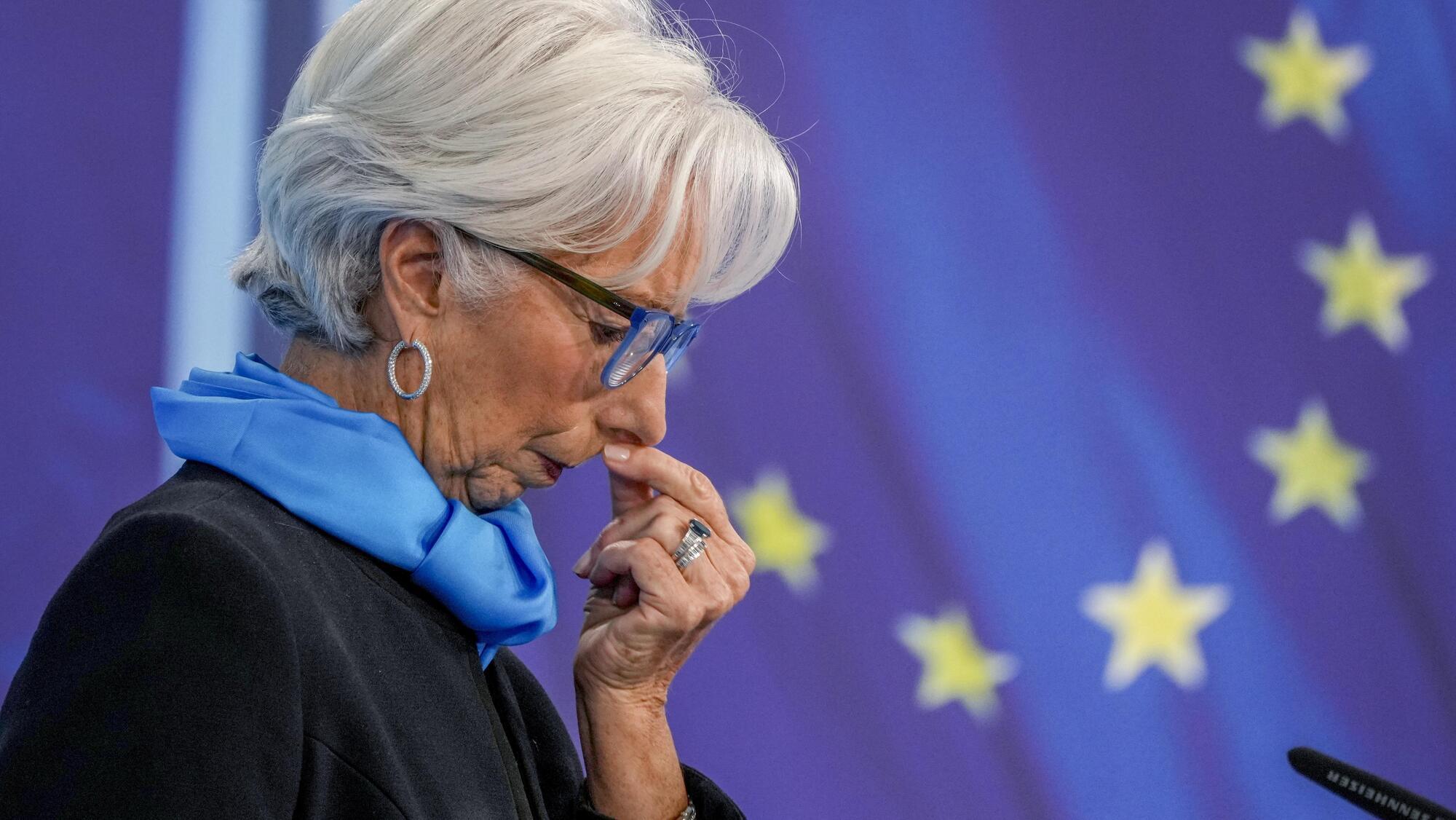
European Central Bank president Christine Lagarde: Inflation “primarily on the upside”.
The European Central Bank has paved the way for a rate hike of a quarter point in July and a potentially larger increase in September, which will push up the cost of servicing a mortgage for many thousands of Irish households this summer.
Following its Thursday gathering, the central bank led by president Christine Lagarde definitively put an end to the era of ultra-low interest rates as they forced to react as the Ukraine war drives energy and food prices to multi-decades highs in most of the eurozone.
Compared with its influential peers such as the US Federal Reserve and the Bank of England, the central bank has long delayed hiking rates.
It is now facing a delicate balancing act between controlling inflation, while not over-reacting as has occurred in the past by increasing interest rates, that could potentially choke off economic growth in some European countries.
There will be no escaping the ECB rate hikes in July and September for the 460,000 mortgage borrowers in Ireland who are on variable or tracker home loans, mortgage analysts have said.
In time, almost all the 740,000 Irish mortgaged households will be affected as they drop off their short-term fixed rates and revert to higher borrowing rates.
Financial markets have upped their bets on the pace of official rate increases and now predict increases totaling 150 basis points, or 1.5%, by the end of the year.
Any ECB rate hikes amounting to even 1% would add almost €2,000 a year to the annual cost of servicing a €300,000 mortgage.
“The ECB has brought more clarity to the outlook than expected, signaling it will raise its main policy rates in July and September," said analysts at Bloomberg Economics.
"Bloomberg Economics thinks gradual moves of 25 basis points (a quarter point) in September and October are more likely to avoid creating panic in the peripheral bond markets,” the analysts said.
President Lagarde told a press briefing that inflation was “primarily on the upside”.
The ECB now sees price growth averaging just over 2% in the eurozone in 2024, exceeding the 2% medium-term target.
It reached 8.1% in the eurozone in May and may top 7% for this year as a whole.
In Ireland, new figures showed consumer price inflation climbed to 7.8% in May, the highest rate for 38 years.
May’s figures again showed the effect of the war on Irish utility bills, as gas and electricity prices rose by annual rates of 57% and 41%, respectively, and other prices which are not related to the war in Ukraine such as home rents have now risen by over 11% since May 2021.
“This generally reads as the ECB finally realising they need to be in catch-up mode with rate hikes, at least out the gate,” economists led by James Rossiter at TD Securities said in a report.
“Once rates have reached positive territory, the pace of tightening can slow,” the analysts said.
- Irish Examiner. Additional reporting Bloomberg

CONNECT WITH US TODAY



Be the first to know the latest news and updates