Countdown to ECB interest rate hike starts getting serious next week
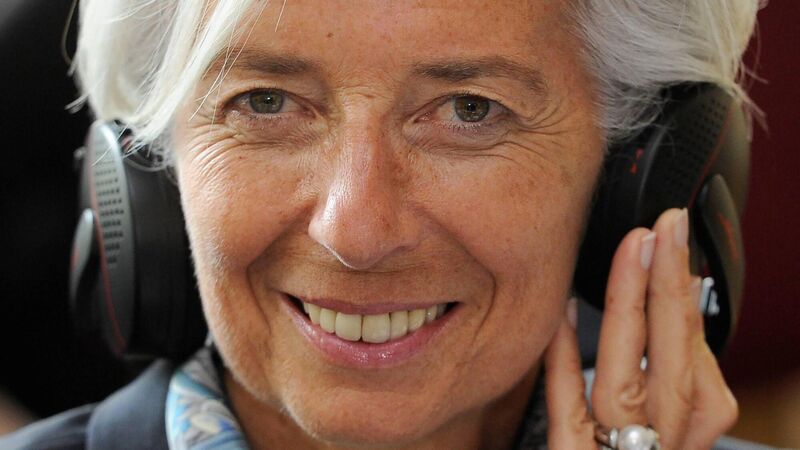
A quarter-point deposit rate rise in July and again in September is in line with President Christine Lagarde’s vow to end subzero borrowing costs in the third quarter.
Efforts by European Central Bank hawks to secure an initial half-point hike in interest rates will fail as policymakers agree on a series of smaller increases, according to a survey of economists.
The ECB will lift the deposit rate by a quarter-point in July and again in September, the poll showed. While in line with President Christine Lagarde’s vow to end subzero borrowing costs in the third quarter, that’s less aggressive than the path sought by officials like Austria’s Robert Holzmann.
Calls for more forceful action as the ECB winds down years of stimulus measures follow another eurozone inflation record last month, when prices jumped by over 8% — more than four times the target.
Ms Lagarde, however, is expected to use her news conference on Thursday next week to affirm the more cautious exit strategy she outlined last week — namely an imminent end to large-scale asset purchases before rate liftoff next month.
“The ECB will all but pre-commit to a deposit-rate hike in July, reiterating its intention to end quantitative easing as planned at the end of the second quarter,” said Claus Vistesen, chief eurozone economist at Pantheon Macroeconomics.
Derivatives markets think the answer will be 50 basis point or a half-point rise.
Key to the ECB’s decision will be fresh projections drawn up with all 19 eurozone member states. Significant upward revisions to inflation for this year and next are expected, along with a much weaker outlook for economic expansion due to Russia’s war in Ukraine and supply-chain bottlenecks in Asia.
Price growth is seen hitting the 2% goal in 2024 — a precondition for rate hikes under ECB guidance. Survey respondents envisage quarterly hikes in the deposit rate from December to September next year, taking it to 1%.
The main refinancing rate is seen reaching 1.5% at end-2023 — the level a majority of economists deem as neutral, neither restricting nor spurring economic growth.
That scenario is unlikely to please doves, including executive board member Fabio Panetta, who’ve warned against raising rates this far, instead urging a gradual approach and maybe even a pause at zero.
“The inflation environment will require a faster normalization process,” said Ulrike Kastens, an economist at DWS Group who expects “no hints toward monetary tightening — yet”.
CONNECT WITH US TODAY



Be the first to know the latest news and updates