Big ECB interest rate hike is now forecast by Deutsche Bank

The prediction from Deutsche Bank follows another record inflation reading and an intensifying public debate on how to conduct monetary policy. Picture: AP Photo/Michael Probst
Deutsche Bank broke with consensus to predict the European Central Bank will raise its interest rate by half a point, judging that hawkish officials will sway colleagues on the need for aggressive action against inflation.
The shift in view by forecasters at a major European bank shows how momentum for greater urgency, evidenced by another call for a big hike from the Austrian central bank chief, has begun to persuade observers that such a push could yet prevail.
The Deutsche Bank prediction came in a report published Tuesday by economists led by Mark Wall, and is more aggressive than any single estimate in a recent Bloomberg survey. It follows another record inflation reading and an intensifying public debate on how to conduct monetary policy.
In the latest salvo in that discussion, Austrian Governor Robert Holzmann warned on Wednesday that a lack of “decisive action” now would risk inflation expectations becoming unanchored. That comment will be one of the final remarks before a quiet period begins overnight for the ECB’s June 9 decision.
“The burden of proof has shifted further, and the data over the summer now need to disprove the case for a 50bp hike early in this hiking cycle,” the Deutsche Bank economists wrote. “We believe the ECB is continuing to underestimate inflation and we expect support for a 50bp hike will increase as the summer progresses.” While their previous base case was for two quarter-point hikes at the ECB’s July and September meetings, the forecast is now that one of those decisions will result in a move of double that magnitude, with the later option more likely. That would take the deposit rate to 0.25%.
Data on Tuesday showed inflation in the 19-nation euro area accelerated to 8.1% in May, four times the ECB’s target and more than economists had predicted.
A half-point move would match the aggression of the US Federal Reserve, which hiked by that amount last month. The central bank chiefs of Austria, Latvia, the Netherlands and Slovakia have all now publicly aired the possibility of such an increase.
“A 50 basis-point rise would send the necessary clear signal that the ECB is serious about fighting inflation,” Holzmann said in his latest remarks, in emailed comments to Bloomberg. “A clear interest-rate signal would also help to support the euro’s exchange rate. The weak euro is not helpful on the inflation front.”
By contrast, Italian Governor Ignazio Visco sounded a note of caution on Tuesday by insisting that rate hiking must be “orderly” to avoid threatening the integrity of the eurozone. He also stressed the “uncertainty of the economic outlook.”
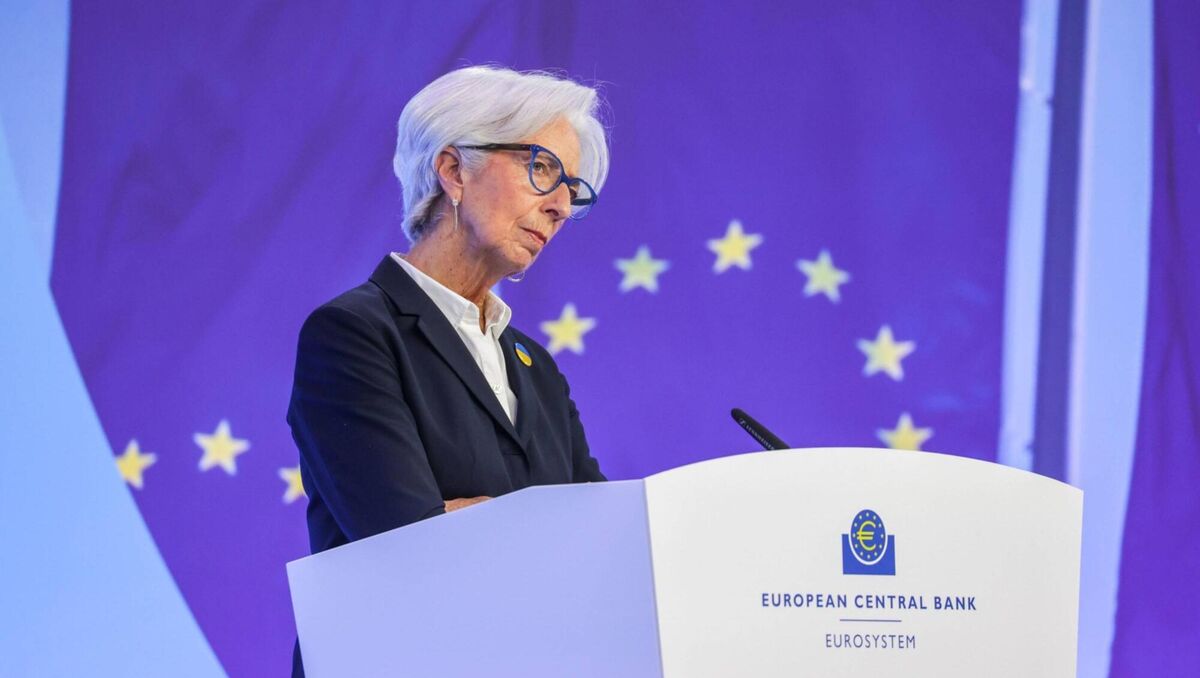
Remarks by ECB President Christine Lagarde amounting to a roadmap for monetary policy have signalled an imminent end to bond purchases, and then quarter-point rate moves in July and September, a speed described by Chief Economist Philip Lane as a “benchmark pace.”
Bank of France Governor Francois Villeroy de Galhau insisted last week that a half-point hike “is not part of the consensus at this point.”
That view is shared by Malta’s central bank chief, Edward Scicluna, who told Market News in an interview published Wednesday that he doesn’t “think there would be general support for a 50-basis-point hike, but it will be interesting to see when we discuss that based on the new projections.”
“The majority of the Governing Council seems to be in support of a smaller move, but market participants will be closely watching remarks after the ECB’s meeting on June 9 for hints.” --David Powell and Jamie Rush.
That’s reflected in forecasters’ projections, though some acknowledge a bigger increase could materialize. Traders have been hedging for the possibility of larger moves. Money markets are pricing around 69 basis points of tightening by the ECB’s September decision, implying more than two quarter-point increases.
“While a 50bps hike is not our base case scenario, this risk premium seems fair,” UBS AG economists led by Reinhard Cluse wrote in a report on Wednesday.
Deutsche Bank expects the ECB to proceed with tightening until the deposit rate -- currently at -0.5% -- reaches 2% in mid-summer 2023, with the risk of another half-point move along the way before such a neutral level is reached.
Wall and his colleagues were among forecasters who already in April mused about the possibility of a 50 basis-point hike by the ECB.
Bloomberg
CONNECT WITH US TODAY



Be the first to know the latest news and updates