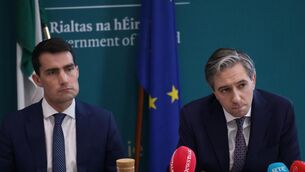
IMF says key government housing scheme does not address supply bottlenecks
It suggested that priority should be given to education, training, health, and infrastructure to increase the productivity of the indigenous sectors.
The IMF stated that the First Home affordable purchase shared-equity scheme, which is a part of the Housing for All government programme, does not address the key issue of supply bottlenecks.
While on a visit to Ireland to discuss the country’s economic growth, particularly after the pandemic, the International Monetary Fund stated insufficient supply of housing was one of several issues that government needed to take action on.
The IMF welcomed the measures in place to address the housing crisis but added that it would be important to keep this scheme, which is focused on helping first-time buyers, narrowly targeted and limited in size to prevent further upward pressures on prices.
It also said that Ireland is suffering from labour shortages that are directly impacting sectors such as construction, which is already under huge pressure due to the rising cost of supplies as a result of inflation and the demand for housing.
“Policies should, therefore, focus on facilitating labour reallocation, including through upskilling and provision of affordable childcare programmes,” stated the organisation.
The institution added that government Covid-support measures are being appropriately unwound in line with the economic recovery.
Ireland’s economy has rebounded strongly from the pandemic and GDP surpassed its pre-pandemic trend, according to the IMF.
The institution stated that Ireland’s fiscal balance is approaching its pre-pandemic level and public debt is expected to fall below 40% of GDP over the medium term, leaving additional social and growth-enhancing and green spending while ensuring value for money.
It suggested that priority should be given to education, training, health, and infrastructure to increase the productivity of the indigenous sectors. Meanwhile, as inflation is yet to reach its peak, the IMF suggested some areas in the Irish economy should be cushioned more than others.
“Given inflationary pressures, future additional support, if needed, should be temporary and carefully targeted to better support vulnerable segments of the population while maintaining price signals to induce energy savings,” stated the IMF.
Although Ireland’s economy has had an overall positive recovery after the pandemic, the IMF warned uncertainties including the remaining details of corporate income tax changes and Brexit implementation as well as the war in Ukraine and inflation could pose risks to Ireland.

CONNECT WITH US TODAY



Be the first to know the latest news and updates