US hikes interest rates in battle to tame inflation    
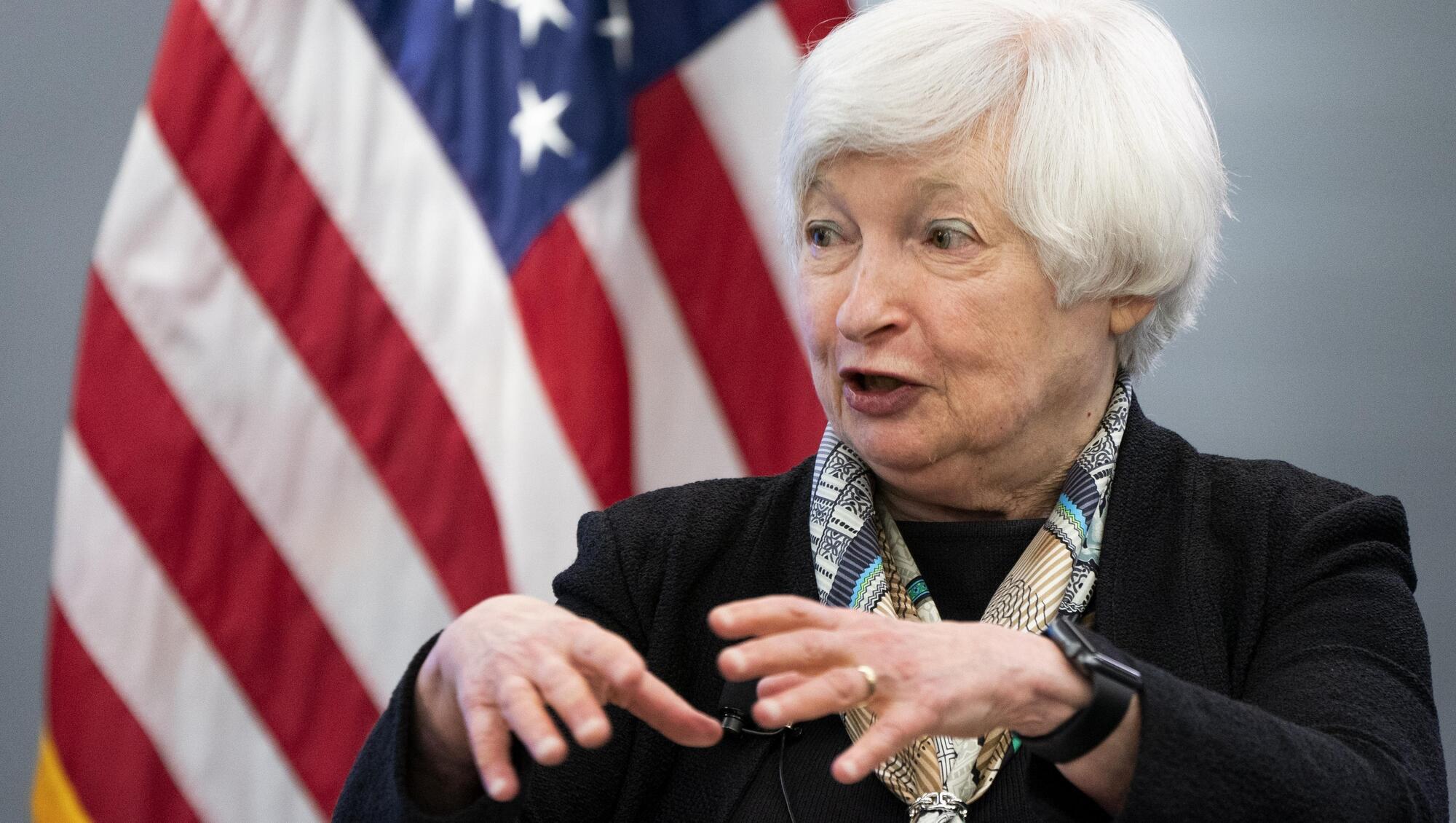
US Treasury secretary Janet Yellen said she expects solid growth in the coming year, with a possible “soft landing” for the US economy.
US hikes interest rates in battle to tame inflation    

US treasury secretary Janet Yellen. Picture: Jacquelyn Martin/AP.

The US Federal Reserve raised its key interest rate by half a percentage point — the biggest jump in 22 years — in the battle to lower inflation.

Despite a drop in GDP in the US over the first three months of the year, "household spending and business fixed investment remain strong. Job gains have been robust," the rate-setting Federal Open Market Committee said following the end of its latest two-day policy meeting in Washington.

Inflation "remains elevated" with the war in Ukraine and new coronavirus lockdowns in China threatening to keep pressure high, it said. 

The central bank did not issue fresh economic projections after this week's meeting, but data since their last gathering in March have given little sense that inflation or wage growth had begun to slow, or the torrid pace of hiring was improving.

Speaking before the announcement, US Treasury secretary Janet Yellen said she expects solid growth in the coming year, with a possible “soft landing” for the US economy as the Federal Reserve moves to bring down inflation.

“I do believe we’re going to see solid growth in the coming year,” Ms Yellen said in an interview. 

The Fed will need to be skilful and also lucky, but I believe it’s a combination that is possible.”

A number of economists have predicted a US recession in 2023 as the Fed ramps up interest rates. But Ms Yellen said that “a soft landing is possible”. 

Meanwhile, global oil prices jumped as the EU spelled out plans to phase out imports of Russian oil, which offset worries about demand in top crude importer China.

Brent crude jumped $4 to $108.97 a barrel. Europe imports some 3.5m barrels of Russian oil and oil products daily, and also depends on Moscow's gas supplies.

European Commission president Ursula von der Leyen has proposed a phased oil embargo on Russia over its war in Ukraine, as well as sanctioning Russia's top bank.

The Commission's measures include phasing out supplies of Russian crude within six months and refined products by the end of 2022, Ms von der Leyen said. She also pledged to minimise the impact of the move on European economies.

Hungary and Slovakia, however, will be able to continue buying Russian crude oil until the end of 2023 under existing contracts, an EU source told Reuters. 

"Russian oil is now 'bad oil'," said SEB chief commodities analyst Bjarne Schieldrop.

This energy war of 'good oil' versus 'bad oil' has just started." 

In the US, crude stocks rose modestly last week, as the US released more barrels from its strategic reserves.

"The Biden administration's efforts to push crude onto the international market appear to be working, as persistently solid SPR releases are resulting in ongoing robust crude exports," said Matt Smith, lead oil analyst at Kpler.

The global manufacturing purchasing managers index contracted in April for the first time since June 2020, with China's lockdowns a key contributor, Caroline Bain, chief commodities economist at Capital Economics, said in a note.

The Organisation of the Petroleum Exporting Countries (Opec) and their allies are expected to stick to their policy on Thursday for another monthly production increase. 

Reuters and Bloomberg

x

More in this section

The Business Hub

Newsletter

News and analysis on business, money and jobs from Munster and beyond by our expert team of business writers.

Cookie Policy Privacy Policy Brand Safety FAQ Help Contact Us Terms and Conditions

© Examiner Echo Group Limited