Why our struggle with energy price hikes is far from over
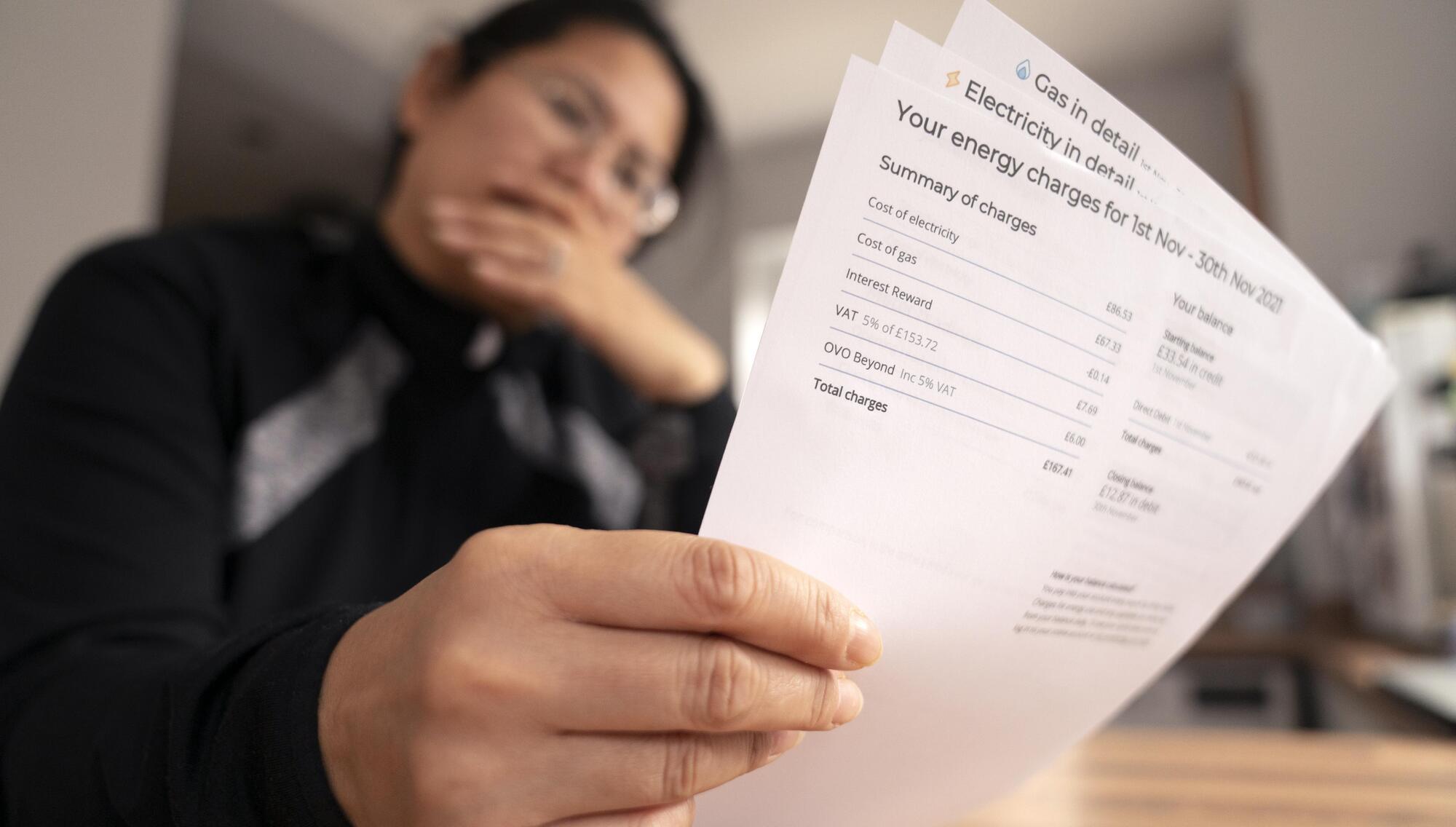
Despite the reduction in Vat, most households will still be paying more in tax to the Government each month than they were in late 2020, right before the energy crisis started to unfold.
Four in 10 households are struggling to afford everyday home energy needs, while a further two in 10 could not withstand further price increases, however small. And as overall inflation reaches a 21-year peak of 6.7%, a survey from Taxback.com reveals that 80% of the Irish public plan to make changes to their household buying behaviour.
Barry Cahill is a director at Taxback.com. "Whether they go up by €5, €25 or €75 a week, some households will simply not be able to afford to pay their bills if the costs continue to increase, as they invariably will," he says. "Many of the international price increases have yet to filter through to the Irish consumer."
The Taxback.com survey also asked whether respondents have considered changes to their buying behaviour this year as a result of increases in the cost of goods and services
"Across all categories, the majority of consumers are going to make changes of some sort, with the highest number — 83% — intending to make changes to mitigate the cost of home heating. Some 77% of people are going to do what they can to bring down how much they spend on transport costs as well as on groceries and food shopping, and 64% will shop around to a greater extent for their motor insurance. This shows that almost everyone is feeling the effects of rising prices to such a degree that they are prepared to take action.’
Gas and electricity prices in particular have skyrocketed over the past 18 months, with some suppliers more than doubling their prices over that time.
To try to mitigate these price hikes, the government has introduced a number of measures.
The electricity credit — the Electricity Costs (Domestic Electricity Accounts) Emergency Measures Act 2022 — to give it its full title, was signed into law in March. Households eligible for the credit will receive €200 off their electricity bills. The scheme is set to cost around €400 million in total and is being overseen by the energy regulator, the Commission for Regulation of Utilities (CRU).
You don’t have to apply to secure the credit. It will be given to all domestic electricity accounts automatically, but not as a cash payment. Instead, the subsidy will be deducted from domestic electricity bills by suppliers in the form of credit.
Sarah Rigney of price comparison site Bonkers.ie says that the government has confirmed that the credit will start being deducted during the spring/summer billing cycle, and that electricity customers will begin to notice it on their bills between April 1 and June 30.
"When you check your electricity bill, you will see a 'credit line' for €176.22," she says. "This is €200 excluding Vat. This will either have the identifier ‘Government Electricity Credit’, or an abbreviated version depending on your supplier."
If you want to know exactly when it will hit your bill, check your energy supplier’s website. The credit will apply to every domestic electricity account. So, if you have more than one home with domestic electricity in the Republic of Ireland, you will get the credit for each account.
This isn’t the only measure the government has taken to alleviate the rising cost of energy. Other measures in the cost of living package include a reduction of 20c per litre and 15c per litre on excise duty for petrol and diesel respectively. These reductions will remain in place until Budget 2023.
Now too, the Cabinet has agreed to cut the Vat rate on energy bills from 13.5% to 9% for a set period between May 1 and the end of October.
Ms Rigney says that this temporary measure will only cover gas and electricity, and not solid fuels or home heating oil, which has risen in price by 127% over the past year.
"The reduction of 4.5% in Vat will result in a cut of approximately €49 to annual gas bills, and €61 to annual electricity bills, according to Paschal Donohoe. However, as the new lower VAT rate will only apply for six months, the savings are likely to be half this level. Paschal Donohoe has said that these measures will offset the scheduled increase in carbon tax, which is due to come into effect on May 1."
The carbon tax increase will add around another €20 a year to the average annual gas bill and €20 per fill of a 900-litre oil tank.
Ms Rigney also reports that a one-off lump-sum payment of €99 has been approved for those who are receiving the fuel allowance.
‘This is the equivalent of three extra weeks of the fuel allowance payment and will benefit about 370,000 households nationwide.’
She also expects that the Public Service Obligation (PSO) levy on electricity bills will be discarded. The PSO levy is a subsidy charged to all electricity customers in Ireland and was originally designed by the government to support policy objectives related to renewable energy, indigenous fuels and security of supply.
"The PSO levy is charged to all electricity customers in Ireland and currently the levy is €51.60 a year excluding VAT or €58.57 with Vat included. This works out at just under €10 on every household's bi-monthly bill."
As things stand, it’s anticipated that this reduction will not be introduced until October.
The big question however is whether or not these measures will be enough to ease the burden on cash strapped households.
"While the Vat rate is a step in the right direction, more measures are likely to be needed," says Ms Rigney. "Like all consumer goods and services, Vat is levied on the net price. So, as the unit price of gas and electricity has increased, the Government’s tax take has increased too.’
This means that despite the reduction in Vat, most households will still be paying more in tax to the Government each month than they were in late 2020, right before the energy crisis started to unfold.
"It’s also important to note that this reduction in Vat is coming into effect at the start of summer when energy demand significantly reduces. The Vat rate is due to revert to 13.5% when energy demand typically increases again in autumn."
While it’s always a good idea to find ways of reducing the amount of power you use, switching supplier — as long as you’re not still in contract to your old supplier — will almost always result in a reduction in costs.
Ms Rigney points out that there are now 13 energy suppliers in the Irish market, which are all competing for new customers. To attract new business, these suppliers offer discounts of up to 40% off standard energy rates.

CONNECT WITH US TODAY



Be the first to know the latest news and updates