Tony Foley: We can't all be insulated from higher energy bills

If the Government was to fully insulate every household and business from higher energy bills, it would still have to seek increased taxes and/or higher levels of borrowing, or displace other expenditure.
These are extraordinary inflationary times by modern standards but not compared to the early 1980s.
Consumer price inflation raced to 6.7 % in March and even higher under the EU-wide harmonised index. Moreover, inflation is heading higher again before it will decline later in the year.
The Economic and Social Research Institute expects the average inflation rate for 2022 will be 6.7% while the Central Bank expects a similar rate, of 6.5 %.
The past decade has been marked by low consumer price inflation, with the average annual inflation rate of under 1% between 2013 and 2019.
Between 2015 and 2020, consumer prices declined slightly, and in 2016 there was no change to prices.
Many readers will remember the very high inflation rates of 13.2% in 1979, the rate of over 18% in 1980, as well as the 20.4% rate in 1981 and the rate of over 17% in 1982.
However bad Ireland’s inflation rate is, several countries are worse.
Ireland’s March annual inflation rate was lower than 11 of the 19 eurozone economies, while four eurozone countries had rates greater than 11%, including Estonia, Latvia, Lithuania, and the Netherlands.
A primary cause of the very high inflation is energy.
Excluding energy products, the March Irish annual inflation rate was 3.7%, still higher than the years up to 2020 but much lower than the overall 6.7% rate.
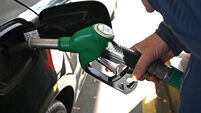
The price of energy products increased by almost 44% in the year to March; electricity increased by 22.4%; natural gas rose by 29.4%; home heating oil surged by 126.6%; petrol was up by over 35%, and diesel prices increased by 46%.
Energy inflation is high even by long-term historical standards.
Between 2010 and 2012, energy prices increased each year by around 10%. However, prices subsequently declined each year between 2013 and 2016.
The bad news is that overall prices will continue to increase and there is no prospect that prices will drop back to the 2020 or 2021 levels.
Several factors are responsible for the high inflation rate.
There were several years of expansionary monetary policy, which many economists would argue was always capable of eventually generating inflationary pressures.
As economies emerged from the Covid restrictions there was substantial pent-up demand and large accumulated savings available for spending.
Amid the Covid disruptions, this increase in demand was not matched by an equivalent increase in global supply.
The Russian invasion of Ukraine significantly worsened the inflation performance and worsened the outlook through the energy and agricultural products, but also as a result of further disruptions to global supply chains.
Russia and Ukraine are significant producers in certain foodstuffs and agricultural products, including wheat, corn, fertilisers, natural gas, oil, sugar beet, as well as sunflower oil.
And then Ireland also faced the price increases from the fallout of Brexit.
Last October's budget had projected inflation of 2.2% in 2022 and 1.9% in 2023.
One of the budget assumptions was that Brent crude oil price would trade at around $67 a barrel in 2022. The actual price in March was over $117 a barrel.
The October budget would have taken a different shape if it had been known what would happen to prices.
The Government has attempted to ease the burden of higher energy prices by various measures.
Intervention in markets such as health, housing, and education by Government to provide products or services either below market price or free is an accepted approach in most economies.
We cannot all be insulated from the direct and indirect fallout of higher energy prices.
Most of our energy products are imported. A higher energy price, other things being equal, means we have to pay more of our income over to the economies that provide the oil and gas, which leads to effects on living standards across the economy.
In other words, the country has to swap more of what it produces to obtain the same amount of oil or gas. This means there are fewer goods and services available for the Irish population.
If the Government was to fully insulate every household and business from higher energy bills, it would still have to seek increased taxes and/or higher levels of borrowing, or displace other expenditure.
The Government can decide how to apportion the impact of the energy prices between different groups in society but it cannot eliminate the direct and indirect pain for everyone.
The Government might also consider a tax on windfall profits of some energy companies, while inflation will also increase the tax take.
We need a more detailed energy programme to identify eligibility criteria and support levels. But, of course, the cost of such a programme would have to be paid for by someone.
CONNECT WITH US TODAY



Be the first to know the latest news and updates