ECB's Lagarde plays down eurozone stagflation concerns
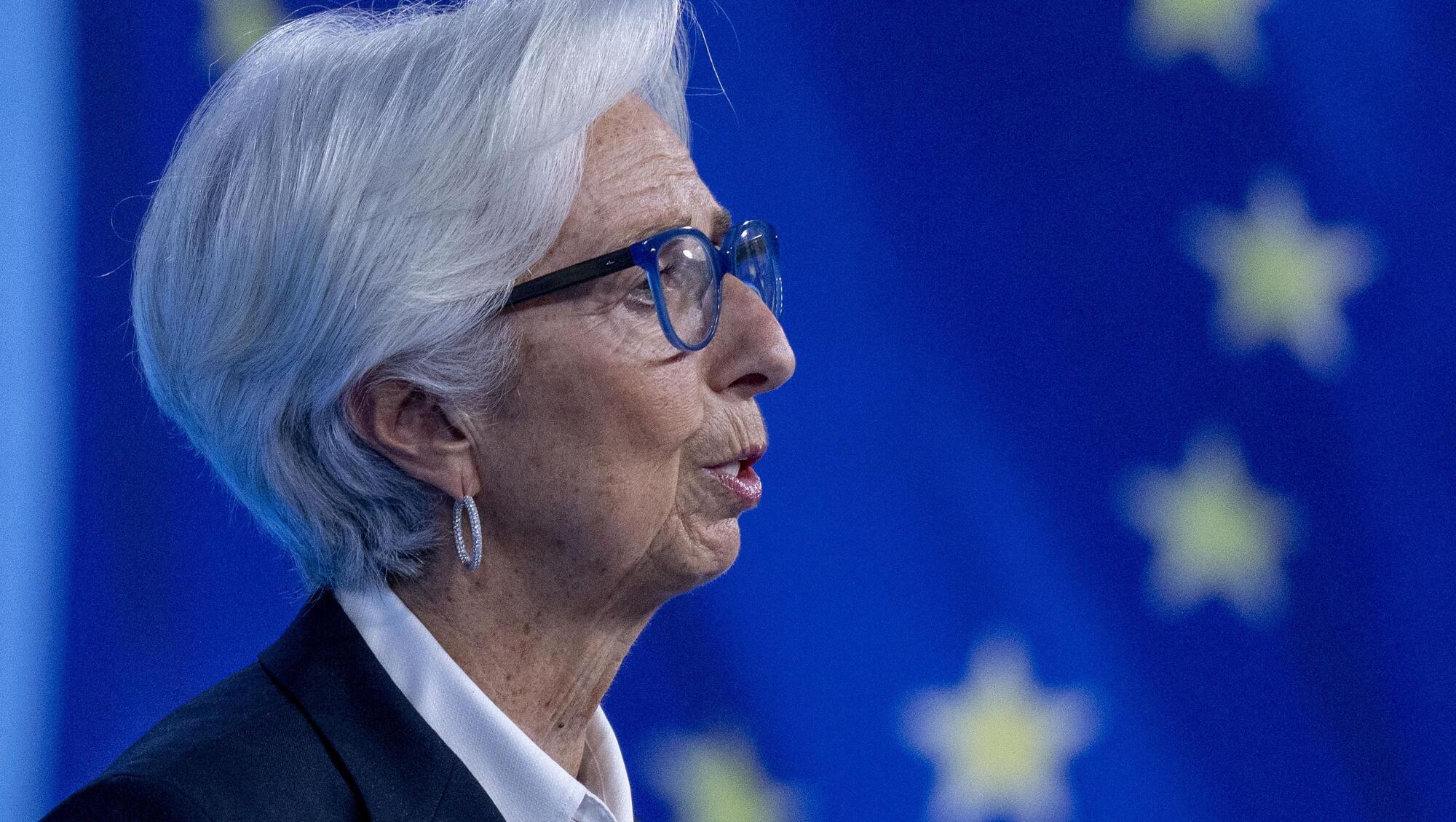
ECB chief Christine Lagarde still expects economic growth.
ECB president Christine Lagarde has played down fears about eurozone stagflation, despite Russia’s invasion of Ukraine starting to weigh on the economy while further stoking already-record gains in consumer prices.
The war will have consequences for growth as inflation quickens and confidence is damaged, Ms Lagarde told a conference in Paris. The difficulty for central banks is to maintain price stability without hurting activity, she said.
Asked about the risk of stagflation (when slow economic growth coincides with unemployment and rising inflation) Ms Lagarde said that “even in the bleakest scenario, with second-round effects, with a boycott of gas and petrol and a worsening of the war that goes on for a long time, even in those scenarios we have 2.3% growth.”
“We are not seeing elements of stagnation now,” she said.
The remarks follow this month’s surprise move by the ECB to quicken the pace at which it removes stimulus in a bid to tame record inflation, despite the economic risks stemming from the conflict.
By also weakening the link between the end of asset purchases and the start of interest-rate hikes, officials say the ECB has increased its room to manoeuvre, a point Ms Lagarde reinforced.
While some have touted that added flexibility, others have struck a more hawkish tone, with Klaas Knot of the Netherlands saying two increases in record-low rates are possible in 2022.
Before Ms Lagarde spoke, money markets brought forward wagers on hikes and are now betting on two by December.
Ms Lagarde declined to discuss the ECB’s monetary-policy stance, but conceded that it won’t move at the same pace as the US, where the Federal Reserve last week kicked off what’s set to be a cycle of rate increases.
She reiterated that Europe and the US aren’t in the same phase of the economic cycle, with the eurozone also more exposed to the war just across its border.
“We are in different universes, at a different stage in the cycle, with different starting points,” Ms Lagarde said. “We in the euro area are at negative rates, while the US never went below zero.”
With central banks limited in their ability to rein in energy costs, there’s a greater onus on governments to intervene.
The OECD estimated last week that a targeted fiscal boost of 0.5% of GDP could help cushion the war’s economic fallout without fuelling prices pressures.
Ms Lagarde urged government support to be targeted at less wealthy households, something she said hasn’t happened so far in some nations.
“All countries are in the process of putting in place plans, which are unfortunately not very targeted, that provide general support for extra energy spending that citizens will be confronted with,” she said.
“So, I have strong doubts the fiscal effort will be neutral.”
- Bloomberg
CONNECT WITH US TODAY



Be the first to know the latest news and updates