France fails to win over doubters on how to implement global minimum corporate tax rate
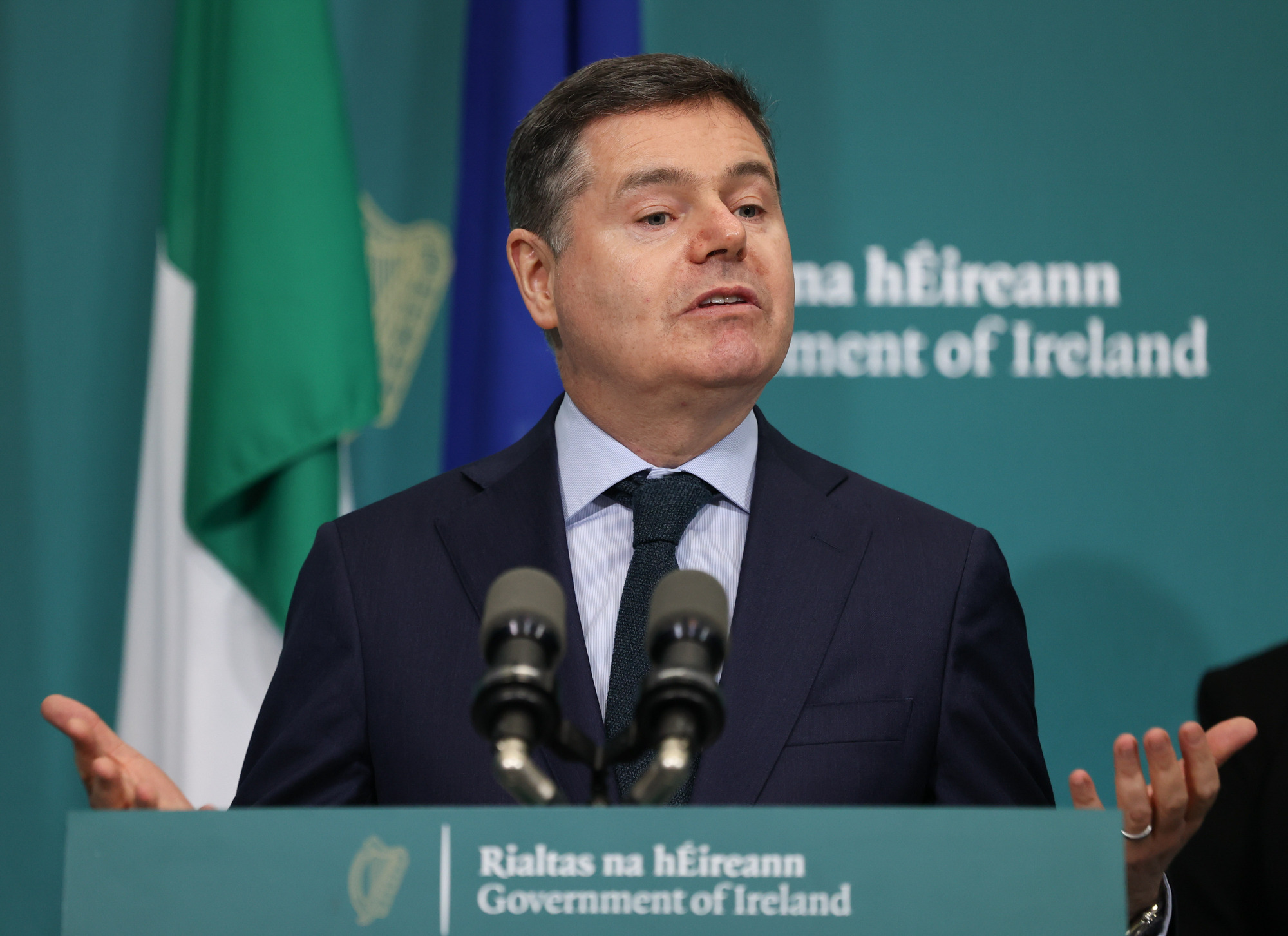
Paschal Donohoe expects the 15% global tax rate to become real.
The EU has failed to quickly agree on how to implement a global minimum tax for corporations after concessions proposed by France failed to win over reluctant countries.
At a meeting of finance ministers in Brussels, Poland, Sweden, and Malta still declined to support a compromise, even as holdouts including Hungary dropped their opposition.
The lack of the required unanimity is a blow to French president Emmanuel Macron, who has made adopting the new rules a key objective of his country’s six-month presidency of the EU that ends in June.
To some extent, the setback reflects the political sensitivity of an issue that bedevilled years of international negotiations over revamping the global tax system.
Yet France and other supportive countries had expected a simpler passage in Europe after all member states joined in last year’s global deal.
French finance minister Bruno Le Maire will pursue more talks to seek backing at a meeting of finance ministers in April.
“We are in the final centimetres of the negotiation that are always the hardest step to take,” he said. “We will take another three weeks and I’m sure we’ll get an agreement at the next Ecofin.”
The first concession presented is a five-year delay in obligatory implementation of part of the rules for countries with few affected companies.
The French also supported a proposal to delay transposition of the EU directive into national laws to the end of 2023 at the latest.
Malta said it would still need a slight extension on applying rules and some reintroduction of flexibility that was lost from the EU’s version of the minimum tax.
Swedish finance minister Mikael Damberg said that after discussion with his country’s lawmakers now is still too early to agree to an approach.
A third concession presented by France would be to include a statement on applying another part of the global deal, related to treatment of global technology firms, at the same time as the minimum tax elements.
Poland, however, said there should be a stronger, legally binding assurance that the EU wouldn’t implement only half of the global deal.
“We are ready to continue working towards a more balanced compromise text,” said Magdalena Rzeczkowska, the Polish deputy finance minister in charge of tax administration.
“Taking this into account, we are not in a position to agree,” she said.
Finance Minister Paschal Donohoe said, last month, that he fully expects the OECD’s agreed 15% global corporate tax rate for large multinational companies to come into being, as targeted, by next year, with the chances of it happening by then set to become much clearer by May of this year.
- Bloomberg and Irish Examiner

CONNECT WITH US TODAY



Be the first to know the latest news and updates