EU plans to cut dependency on Russian gas this year
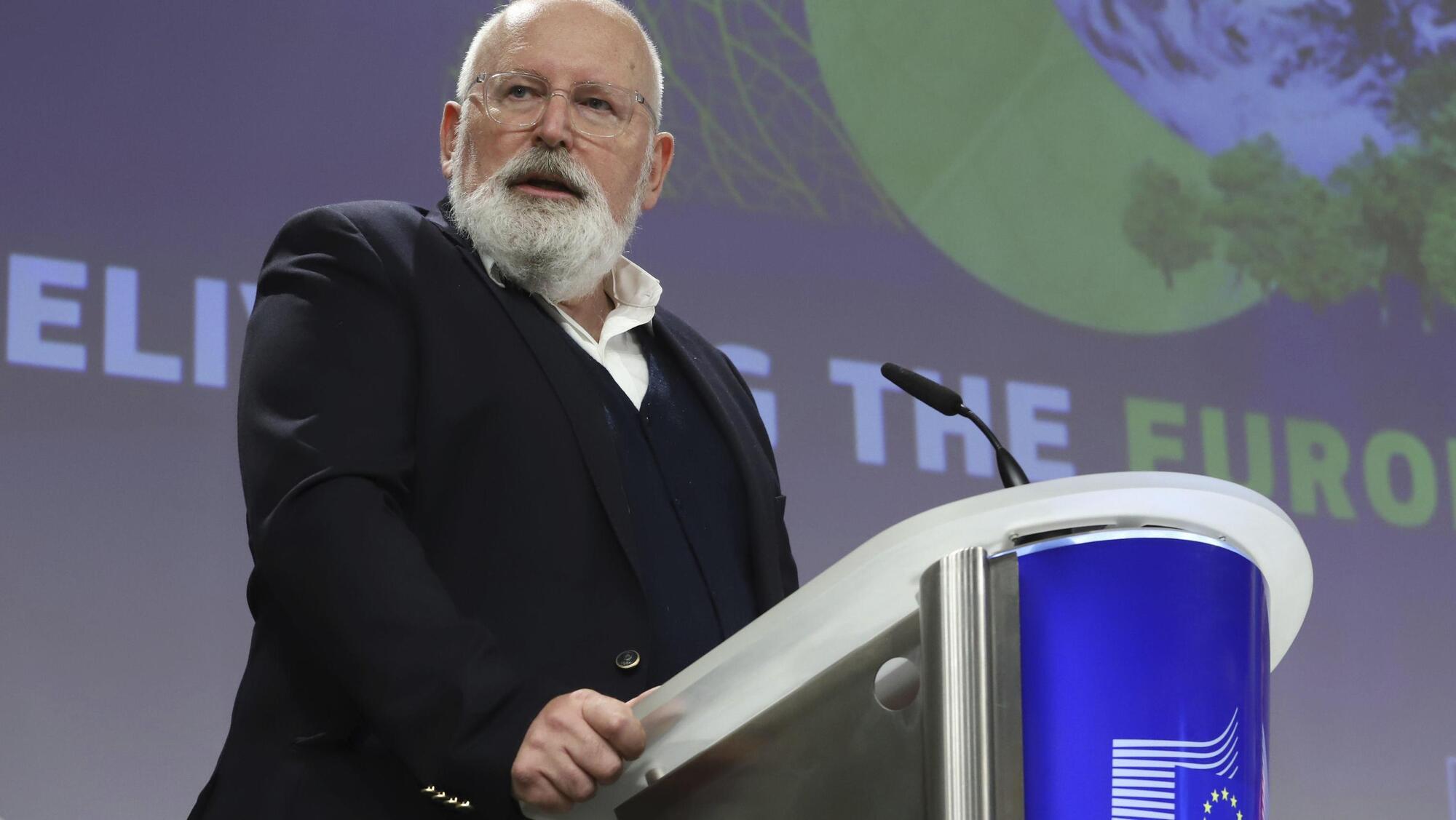
'The answer to this concern for our security lies in renewable energy and diversification of supply,' said EU climate policy chief Frans Timmermans. Picture: Valeria Mongelli/AP
The European Commission has published plans to cut EU dependency on Russian gas by two thirds this year and end its reliance on Russian supplies of the fuel “well before 2030”.
The EU executive said it would switch to alternative supplies and expand clean energy faster under the plans, which national governments will be largely responsible for implementing.

The Russian invasion of Ukraine last month has triggered an overhaul of the 27-country EU’s energy priorities as Brussels seeks to wrest countries free from depending on Russia, which supplies around 40% of the bloc’s natural gas.
“The answer to this concern for our security lies in renewable energy and diversification of supply,” EU climate policy chief Frans Timmermans said.
"It’s hard, bloody hard — but it’s possible," he said.
The new plans come on top of climate change policies the EU is currently negotiating, which are designed to cut emissions faster this decade and would alone cut EU gas use 30% by 2030.
The commission said gas and liquefied natural gas from countries like the US and Qatar could this year replace more than a third, 60bn cubic metres (bcm), of the 155bcm Europe gets annually from Russia. By 2030, increased biomethane and hydrogen use could also help.
New wind and solar projects could replace 20bcm of gas demand this year, while tripling capacity by 2030, adding 480GW of wind and 420GW of solar energy, could save 170bcm a year.
Turning down thermostats by 1°C could save an extra 10bcm this year, while by 2030, replacing gas boilers with 30m heat pumps could save 35bcm, the commission added.
Some countries are seeking more EU funding to protect consumers from soaring gas prices, which hit fresh highs this week.
Countries can tax energy companies’ profits from high gas prices, to offset higher electricity bills, the commission said. The International Energy Agency has said such taxes could raise €200bn this year.
Gas flows to Europe have so far been steady since the invasion, which Russia calls a “special military operation”.
However, on Monday, Moscow warned that Western sanctions on Russian oil — an idea supported by the US, but which has split EU nations — could prompt it to close a major gas pipeline to Europe.
The EU will also propose rules by April requiring EU countries to fill gas storage to 90% by October 1 each year. EU storage is currently 27% full.
Europe has enough storage and alternative gas supplies for this winter, but analysts say a prolonged halt to Russian imports would hit Europe’s economy and require emergency measures such as factory closures.
Meanwhile, global share markets slid lower as oil remained near record highs after the US banned Russian oil and other energy imports, stoking volatility and concerns about inflation.
US president Joe Biden banned imports of Russian oil and gas energy.
Britain announced shortly before Mr Biden’s remarks that it would phase out the import of Russian oil and oil products by the end of 2022.
- Reuters