Rural Ireland's long patient wait must prove fruitful
Waiting for essential services has become one of the necessary evils of living in a rural area — but there should at least be some certainty, writes Seamus Boland.
Rural Ireland's long patient wait must prove fruitful

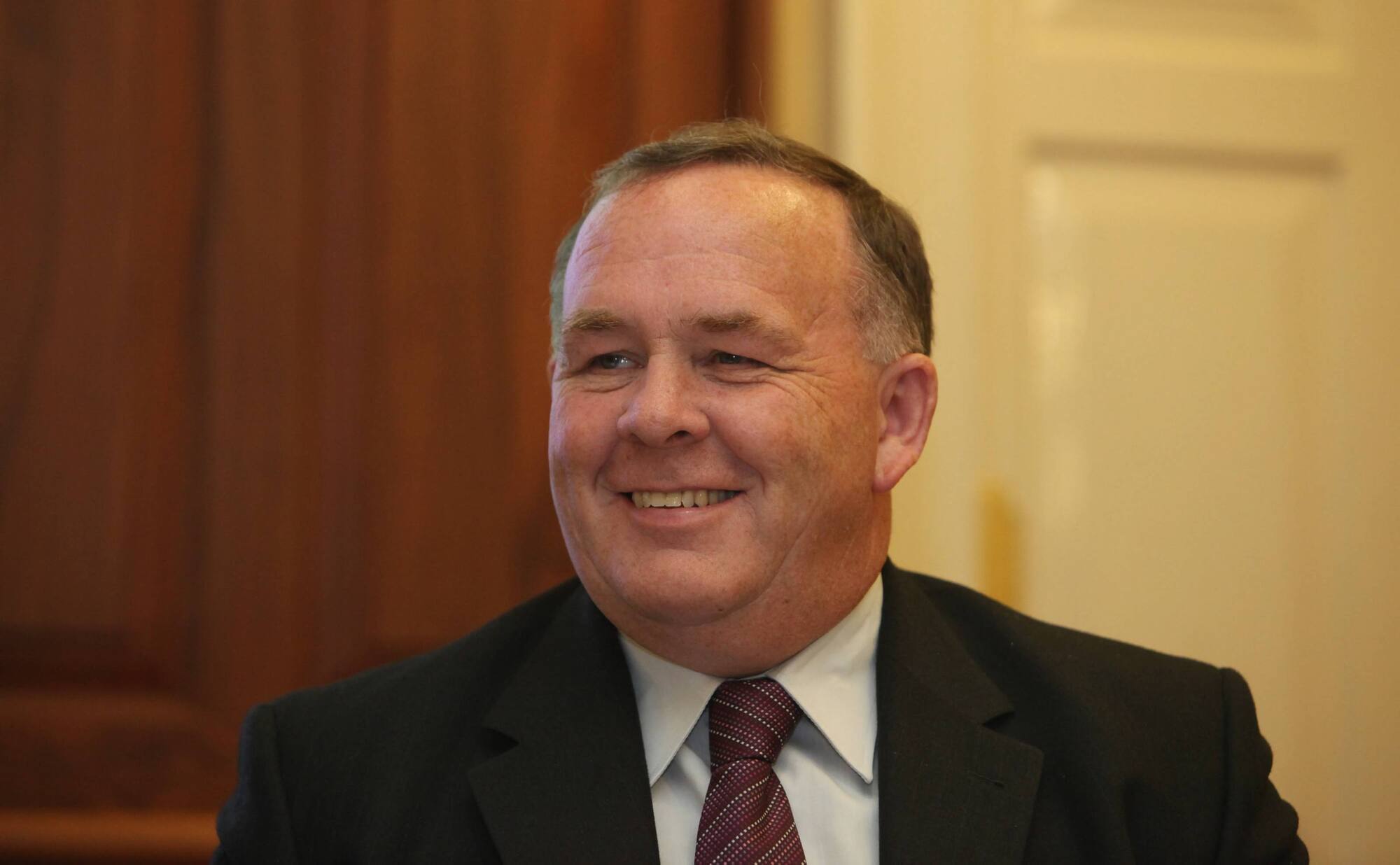
Irish Rural Link chief executive Seamus Boland.

Waiting for Godot, the famous Samuel Beckett play, is a symbolic description of waiting for that significant event in our lives.

Until then, we will have lots of practice. The bus, the train, or the meeting of the love of your life, or just waiting for the modern service phone call provider to get through the thousand instructions before you can talk to a live human being.


In rural Ireland, waiting for essential services has become one of the necessary evils of living away from the madding crowd. Indeed, the phrase “leave no one behind” could have been invented for rural communities.

It’s a phrase that has become part of the common discourse; repeated on all the chat shows, media articles, and used ad nauseam by the various political forums.

In her first president’s address to the EU Parliament, Ursula von der Leyen spoke of a European Union of equality, where no one is left behind. 

European Commission President Ursula von der Leyen.

The UN has adopted the phrase when talking about climate change and environmental transition. The phrase, which originated on the battlefields of the 19th century, means well, but as on those battlefields, many fallen soldiers were, sadly, left behind.

So unfortunately, people do get left behind, and in rural parts of Ireland, there is a history steeped in trying to catch up. Communities, often through their own initiatives, managed to see rural electrification after years of waiting. They established group water schemes, which transformed rural households, and eventually persuaded successive governments to deliver phone lines, ensuring that every rural household and business had the opportunity to install the phone.

As a compromise to the mass closure of small rural schools, children finally got a school transport system. Unfortunately, students who live under 4.8km from the school are still without a transport system.

So, coming to the end of 2021, we are still waiting. With patience, we might get broadband over the coming years, and the various forms of digitisation that come with it.

In Irish Rural Link we were the first to propose, back in 2007, that broadband would have to be delivered similar to electricity — to every household in the country. Immediately, the usual cohort of economists dismissed us as out of our depth and just mad. 

They are still complaining, failing completely to recognise the massive economic, social, and environmental returns that will accrue.

We have to be grateful that the political system that delivered electrification and telephone infrastructure had the necessary vision. Certainly, by today’s standards, we would still be waiting.

We know we need to prepare for climate change, but again, in rural areas, we are going to be late for that as well.

Our compliance with climate change means that we will have to wait to complete the retrofitting of over 500,000 homes at a cost of €56,000 per home. More likely that estimate will double by the time the finance schemes, grants, and trained personnel to do it are in place.

We will also have to wait for the provision of enough e-chargers to prevent the anxiety caused by having to make longer journeys to services like banks and post offices, which are now likely to be further away because of consistent yearly close-downs, which still continues.

And, as for alternative fuels such as hydrogen, biofuels, and natural gas in all its formats, we will be waiting for quite some time.

Meanwhile, over 40% of the population who live in rural areas will simply pay the increased carbon taxes along with the normal price increases, which are currently out of control.

Of course, we must acknowledge the Government's recent Rural Futures programme. Many towns and villages are benefiting, and there is clear evidence that official policy recognises the need to develop a strong rural infrastructure. And we could do better. For instance, why not have our own climate summit? Here, all of the stakeholders could meet and thrash out the actual delivery of the various initiatives proposed in the climate plan.

The huge investment, which requires a combination of loan and grant initiatives, could be quantified. Farmers could finally be allowed to estimate their own contribution, in terms of energy production on the farm. And, of course, a comprehensive retrofitting plan with agreed timeframes could also be finalised.

There would also be a place for community-based energy co-operatives, which are still very much in their infancy. Such co-operatives, properly established, would transform rural communities in terms of sustainability on all fronts.

Waiting endlessly, as in Godot, can be a pointless, despairing exercise made worse by the complete unknown. However, waiting in the knowledge of some certainty is, at least, a cause to hope.

Seamus Boland is chief executive of Irish Rural Link

CLIMATE & SUSTAINABILITY HUB

More in this section

The Business Hub

Newsletter

News and analysis on business, money and jobs from Munster and beyond by our expert team of business writers.

Cookie Policy Privacy Policy Brand Safety FAQ Help Contact Us Terms and Conditions

© Examiner Echo Group Limited