Two children at secondary school? That'll be €3k, thanks
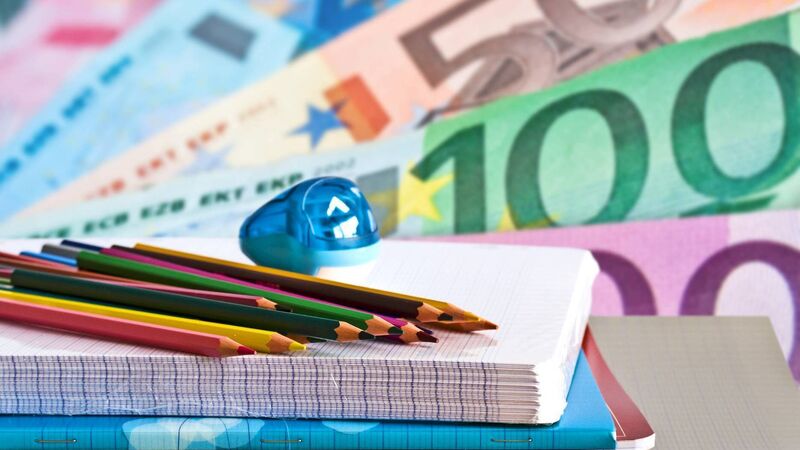
Back to school costs continue to spiral as parents struggle under the financial pressure
Two children at secondary school? That'll be €3k, thanks

It now costs a staggering €1,500 to send one child to secondary school.
It might seem like only last week that they broke up for the holidays, but the summer is never as long as it promises to be. Parents — if they haven’t already — are beginning to grapple with the costs of returning to school.

And these costs are not getting any smaller. The latest Irish League of Credit Unions (ILCU) survey shows the overall spend on school items is up for both primary and secondary schools. 

The cost of sending a child to primary school this coming year is just shy of €1,200 at €1,186, up €63 on last year, while parents of secondary school children can expect to pay an average of €1,491, up from €1,467.

Paul Bailey of the ILCU says that since they began carrying out the back to school research over six years ago, they have seen a steady increase in the cost of school books and uniforms.

“It now costs a staggering €1,500 to send one child to secondary school, while the cost for a primary school child is not that much cheaper at nearly €1,200,” says Mr Bailey. 

For parents with more than one school-going child, these costs can place huge financial pressure on a family.

School books once again top the list this year as the most expensive item for parents of secondary school children. They come in at €211, up from €196 last year.

Buying second hand — if it’s possible — is always worthwhile. You just need to make sure that you’re getting the right edition of the book in question. If you have to buy new books, make sure you shop around. The online sales options for schoolbooks have improved significantly in the last few years.

Selling last year’s books can also go a long way towards reducing the cost of this year’s book bill. 

With one eye on maintaining resale value, check if the retailer will offer free or cheap book covering when you buy. If passages must be underlined, get the student to use a pencil rather than a pen.

Many schools offer book rental schemes, which can help lower the cost.

Many schools operate book-lending schemes of course, and these offer an excellent means of reducing the outlay on schoolbooks.

Extracurricular activities are the top cost for primary school parents, at €178, up from €167 last year. 

Spending on gym gear/sports equipment has increased for both primary school (€77, up €15 from 2020) and secondary school (€121, up €11 from 2020). 

Significantly, 43% of parents say they will have to deny their children new gym gear, a sharp increase of 16% from 2020. Parents also reported that 71% of schools are still seeking so called ‘voluntary contributions’.

It’s important to remember that despite how much pressure you come under to pay, these are voluntary contributions, and you don’t have.

Funding back to school continues to be a challenge for parents, with 63% saying that covering the cost of back to school is a financial burden. 

Nearly a quarter of respondents (24%) are getting into debt to cover the costs of back to school. Of these, three quarters have debts of over €200, with 21% having debts over €500. 

The average debt parents find themselves incurring is €336. The good news here at least is that this is down €61 on last year’s figure.

Ways to pay

Over two thirds of Irish parents said they use their monthly income to pay for back to school costs, followed by savings at 36%. 

Unsurprisingly, the number of parents using savings is up 2% from 2020, possibly due to reduced spending during the lockdown. Those relying on their credit card to pay for back to school costs is also down slightly at 17%, a reduction of 3%.

However, the number of Dublin parents relying on their credit card for back to school purchases is worryingly high at 31%. Credit card finance is among the most expensive kind. If you don’t pay the debt in full at the end of the billing period, you’ll incur interest rates as high as 26.6%.

A credit union loan is the preferred choice of 5% of parents, while 3% are still turning to moneylenders. Some 14% of parents rely on the state’s Back to School allowance, up 1% from last year.

Mr Bailey zeros in on the fact that nearly a quarter of parents go into debt to pay for back to school costs, with a fifth of these incurring debt of over €500.

“If parents are unable to pay for back to school from their household income or through their savings, I would encourage them to explore cheaper forms of finance, by talking to their local credit union or bank, rather than using a credit card or going to a moneylender,” he says.

Most of those who qualify for the Back to School Clothing and Footwear allowance do so automatically, so you don’t have to apply. Note too that the Covid-19 Pandemic Unemployment Payment is a qualifying social welfare payment for the allowance, but you will need to satisfy a means test to secure it.

If you think you qualify but you haven’t received it, you can apply online at mywelfare.ie. The rates currently stand at €150 for an eligible child aged 4–11 and €275 for an eligible child aged 12 to 22.

Covid-19 has had a profound impact, with seven in 10 adults surveyed reporting that the mental health of their household has been affected, and almost a third saying that their physical health has suffered.

Impact of lockdowns

As expected, households struggled with the challenges of home schooling with almost one in three parents saying they found it difficult to juggle home-schooling with work commitments, and over a quarter agreeing that home-schooling was a burden.

One in three parents said the extra cost of feeding children when home-schooling had the most significant effect on household finances. This was a noticeable increase from 2020. 

Over one fifth (22%) of parents reported that expenditure on laptops/tablets to support home-schooling has had an impact on their household finances compared to 11% in 2020.

Some 65% of respondents agreed that that home-schooling and lockdowns had a negative effect on their children’s overall educational performance, and that their children were less focused on schoolwork.

One of the biggest impacts of home schooling and lockdowns, according to 88% of parents, was that children missed their friends and social activities. 60% also said that despite this, children enjoyed being at home and spending more time with family.

While a decision on the rollout of vaccinations to school children in Ireland is being considered by government, the survey revealed that 72% of parents agree vaccinations should be offered to secondary school students, with 48% in agreement for primary school students.

The biggest concern for parents about their children returning to school is the impact of a further lockdown (48%), while 41% are worried about exposure to Covid-19 and the health and safety of their children.

More in this section

The Business Hub

Newsletter

News and analysis on business, money and jobs from Munster and beyond by our expert team of business writers.

Cookie Policy Privacy Policy Brand Safety FAQ Help Contact Us Terms and Conditions

© Examiner Echo Group Limited