Don't let up in Covid-19 spending, urges ECB head Lagarde   
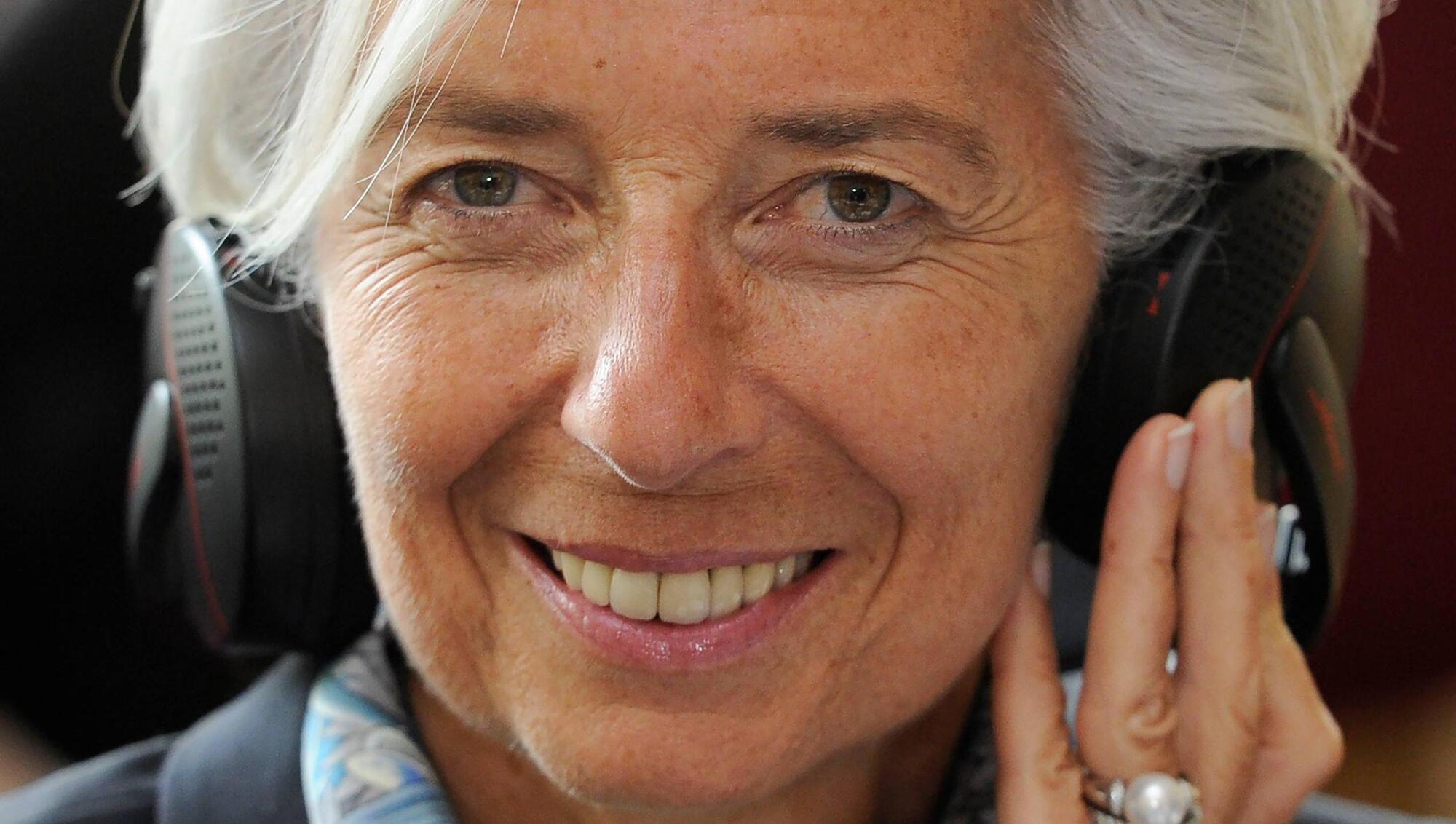
Withdrawing fiscal support would risk delaying recovery and amplifying long-term scarring effect, she says
'A premature withdrawal of fiscal support would risk delaying the recovery' after the pandemic, according to ECB president Christine Lagarde. 

'A premature withdrawal of fiscal support would risk delaying the recovery' after the pandemic, according to ECB president Christine Lagarde. 

ECB president Christine Lagarde said governments can’t afford to let up efforts to support the region’s economy through the pandemic-induced crisis.

“An ambitious and coordinated fiscal stance remains crucial, as a premature withdrawal of fiscal support would risk delaying the recovery and amplifying the longer-term scarring effects,” she told a meeting of the IMF. 

The ECB’s own measures “can be recalibrated if required to maintain favourable financing conditions”, she said.

It comes as concerns that Europe is flagging its support for its economies while the White House under US president Joe Biden is set on pumping many billions into the US economy.

Covid threat to world economy

At the same time, there are growing concerns about the potential threat to global economy getting out of the crisis should new variants of the Covid disease emerge.

The US economy is set to be turbo-charged by a $1.9 trillion (€1.6tn) economic relief package. At the same time, the eurozone’s joint recovery fund hasn’t even been signed off on in all member states.

French finance minister Bruno Le Maire said earlier this week that he’s “deeply concerned” at the slow implementation of the €750bn plan.

Several ECB officials have argued that national and joint efforts in Europe will provide significant support, even if they are smaller in size than in other parts of the world.

“These numbers will unlikely match the numbers in the US, but I do think the efficiency of the spending in Europe is a bit higher,” Dutch central banker Klaas Knot said. 

Sustained drop in oil price

Meanwhile, the price of oil clung to losses with concerns over the economic recovery casting a cloud over the return to normal demand.

"The increase in oil product stocks is probably not due to weaker demand ... but to high refinery utilisation," Commerzbank analysts said.

Still, demand remains weakened by the impact of the coronavirus. 

The global benchmark, Brent crude fell 22 cents to $62.94 a barrel

At the same time, Russian oil output increased from average March levels in the first few days of April, traders said.

India faces new Covid surge  

India, the world’s third-biggest oil importer, reported a record number of daily Covid-19 cases, with Indian states facing a vaccine shortage. Daily deaths in Brazil hit a record of 4,195 earlier this week. 

India’s fight against a renewed wave of coronavirus infections is beset by vaccine shortages in several states and cities including the financial capital, Mumbai.

The nation’s worst-hit state, Maharashtra, has only three days worth of vaccines in stock, Health Minister Rajesh Tope told reporters, while the country reported a new daily record of more than 126,700 cases.  

The steep jump in infections from early February, when the country reported around 11,000 daily infections, has forced states to reinstate movement curbs and other restrictions. 

For Indian prime minister Narendra Modi, whose party is fighting five state elections, the unfolding health crisis has also spurred public anger at the government’s failure to get ahead of the virus. 

• Bloomberg and Reuters

More in this section

The Business Hub

Newsletter

News and analysis on business, money and jobs from Munster and beyond by our expert team of business writers.

Cookie Policy Privacy Policy Brand Safety FAQ Help Contact Us Terms and Conditions

© Examiner Echo Group Limited