Munster SMEs look beyond banks for finance as relationship banking comes to an end
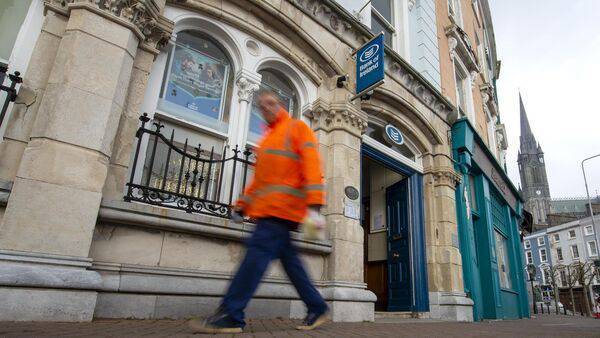
The Cobh branch of Bank of Ireland, closed after the recent announcement that more than 100 branches would shut across the country. File picture.
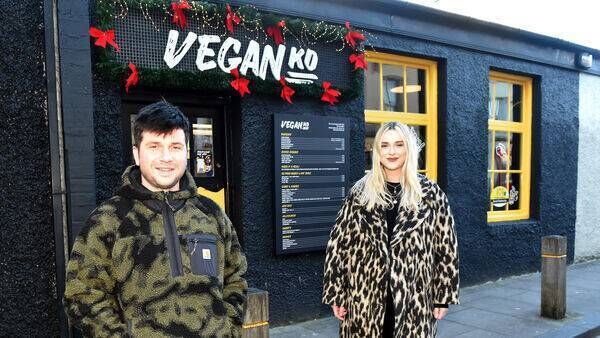
For Cork City’s VeganKo, a new vegan fast-food venture run by Nino Huzjak and Martina Radkryic, proper finance options for their business was very important as they continued to operate throughout 2020 despite disruptive trading conditions.
“It was very important. At this stage we were a very young business, said Mr Huzjak. Developing their business from the kitchen table to a retail store during the pandemic was challenging, said Mr Juzjak but the Croatian couple did not want to stop because of the pandemic.
“I mean it wasn’t easy but we didn’t want to stop just because of the pandemic. We had all of the conditions to keep open at that time so we just switched to the shop,” he said.
VeganKo began as a self funded startup with “a couple of grand” enough for equipment and a stall, said Mr Juzjak, but later approached financial lenders when they wanted to grow further.
Advised by established businesses and their accountant that credit would not be available to them as a new company, VeganKo applied to Microfinance Ireland (MFI)-the government’s lending vehicle for small businesses.
A loan from Microfinance along with funding from GDG business finance helped them open their new store.
“I tried with the bank, they actually said at the time if Microfinance reviewed our application that they would be able to offer some finance too.
“I guess it is really hard to get a loan from the bank for the hospitality industry right now so that is probably a better solution out there with all these financial institutions around. You just need a good broker to find the best deal,” said Mr Juzjak.
Operating on a takeaway basis for the moment, Mr Juzjak wants to open an outdoor dining area if restrictions ease to Level 4. The vegan entrepreneur said accessing the finance to do so is difficult when lenders are waiting to see what happens too.
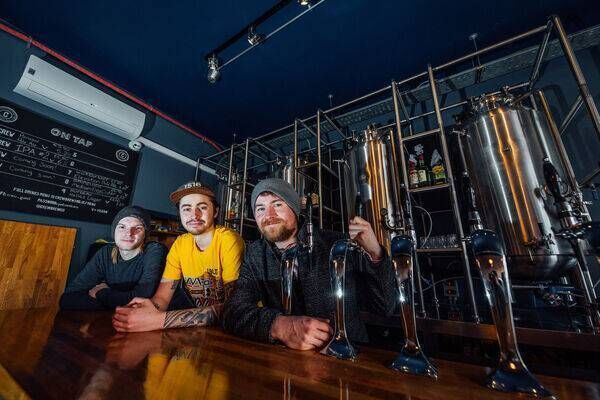
Hampered by Covid-19 since the pandemic’s beginning in China last January, Crew Brewing’s Jono Crute knows a thing or two about financing an SME during the pandemic.
“We scraped around to find every source we could to try and fund our own business,” said Mr Crute, one of three entrepreneurs behind the Limerick microbrewery.
Open for less than two weeks in 2020, Crew Brewing’s business plans were disrupted long before the first case of Covid-19 was confirmed in Ireland after the outbreak in China disrupted production of their brewing equipment.
A lack of collateral and the huge start up costs associated with breweries deterred loans from retail banks, said Mr Crute who got underway with a priming grant from Limerick’s Local Enterprise Office.
Private investors from the hospitality sector along with government restart grants allowed them to reopen briefly and the MFI, with its interest and payment breaks, was an important finance source for the trio as well.
“It [MFI] allows you to get your idea up and running without any pressure for repayments,” said Mr Crute.
Hoping for outdoor service to resume soon, Mr Crute would prefer to access any future finance through government schemes. He thinks business supports need to be extended even as restrictions are eased due to reduced service capacities.
“Again I think if we were starting now and we went to the banks they would say ‘absolutely not’ until there is some clarity,” said Mr Crute.
For both entrepreneurs, alternative lenders bridged the gap left by risk-averse retail banks but for serial Cork tech entrepreneur Donal Cahalane, this practise has been ongoing long before Covid-19.
Similar to the difficulties adapting to rapid financial technology changes in personal banking, Mr Cahalane said traditional lenders are in danger of being left behind when it comes to business banking.
“I think they are in a massive danger where they are losing the battle for the SME business,” he said and pointed to Revolut’s advances in business accounting and Stripe’s advances in payment processing for online e-commerce.
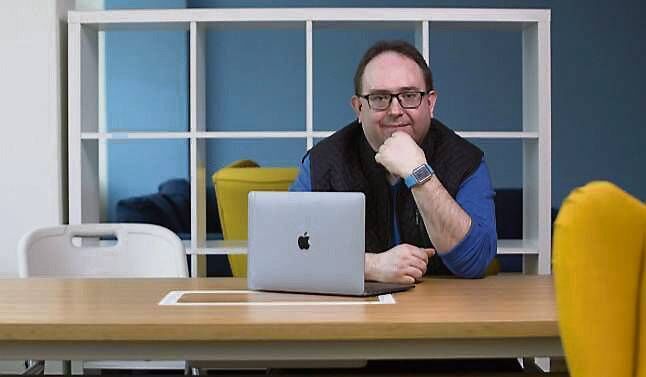
Rigid application processes and centralised decision-making hinders a bank’s engagement with SMEs for financing, according to Mr Cahalane, who said altogether this leads to an entire sector not being served by retail banks.
"The way banks operate obviously, every single fiber in a banker's soul is to avoid risk at any cost, and then on the other side they are interacting with an entrepreneur and the only thing they have to offer is that they are a bit more comfortable with risk than the average person.
“I know especially from technology start ups, I know a whole bunch of them that would never go near an Irish bank. They collect all their money with Stripe, they pay their taxes, the only time they go near AIB or Bank of Ireland or Ulster Bank or anybody else is literally when they are paying themselves their salaries,” he said.
Closing bank branches removes the last advantage the retail banks had for this sector, Mr Cahalane said, as there is no longer a human face to take a bet on an entrepreneur's idea with knowledge of the local economy.
An active angel investment scene in Cork, “although not Silicon Valley stuff” is subverting this practice according to Mr Cahalane, but he does not think it was impossible for banks to adapt to the Munster region’s needs.
“To the start up community in Cork, both banks have been good and have shown their support in differing ways putting a bit of money into different things and that, but products for the SME market don't get designed in Cork, they get designed in Dublin.
“And if you let the banks in Cork have a little bit more freedom, I think you would have a very different landscape in terms of how businesses would be financed,” he said.
“It’s not as black and white as saying the banks are crap, you’re just dealing with Irish people being slow to innovate with stuff,” he added.

University of Limerick’s Kemmy Business School senior lecturer Antoinette Flynn said the consequences of recent branch closures will impact older SMEs operating in the Munster region more, especially for those located away from urban centres with poor internet connectivity and subject to seasonal trading.
“You do have to differentiate between startups and established businesses when you are talking about finances,” said Dr Flynn.
“There is a certain amount of risk that the businesses are going to have to take on and it's narrowing the choice of the consumer and for the SMEs.
“It will definitely highlight the effect of a small business in a rural setting, they are just going to have a lot more difficulty lodging cash,” she said.
Dr Flynn said a business trading in a rural holiday town may not be able to rely on online banking services due to poor coverage and that closing local services compounds this difficulty. They may find it also more difficult to bridge a working capital gap if they are not technologically savvy enough to navigate products offered by retail banks online.
But if they don’t have the coverage, and can't avail of the banking services, it’s looking back to the government to prioritise that,” she said.
“The idea of relationship banking, that was very much squeezed by the fallout of the financial crisis and the closure of the branch network will squeeze that further,” said Professor Flynn.
Appetite for credit, in demand and supply, hinges on the quality of the information available from the Government ahead of trading conditions for the year.

Some SMEs are preparing to invest when the opportunity allows, said Linked Finance’s Niall O’Grady, one of the country’s biggest lenders to SMEs outside of the main retail banks.
CONNECT WITH US TODAY



Be the first to know the latest news and updates