Small gain but likely long-term pain for Ireland as British hike corporate tax to 25% to pay the Covid bills
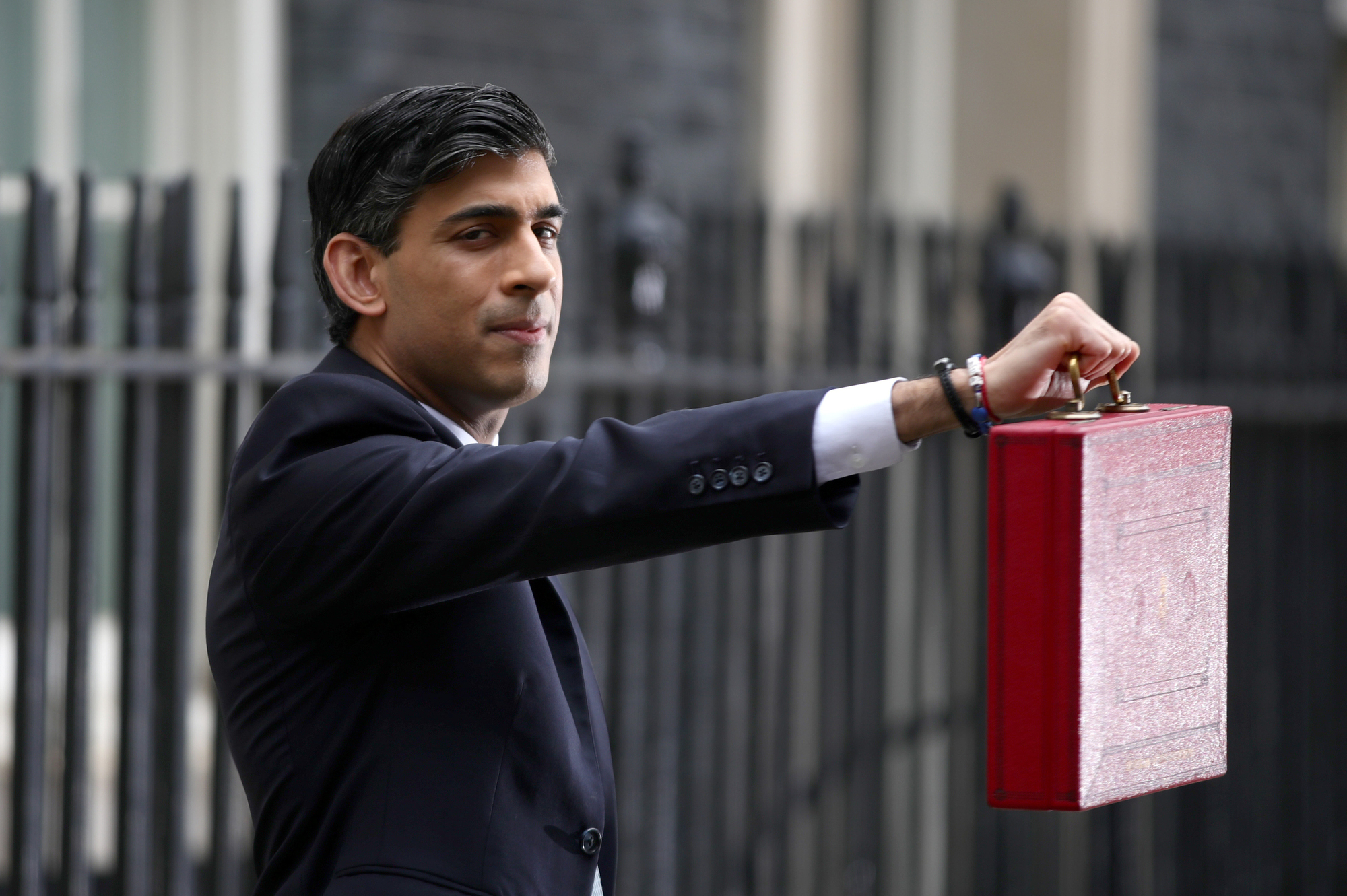
Chancellor of the Exchequer Rishi Sunak outside 11 Downing Street, London, before heading to the House of Commons to deliver his budget.
A decision by British chancellor Rishi Sunak in his budget to hike the British rate of corporation tax to 25% to help pay for the huge bills in fighting Covid-19 is no bonanza for Ireland, and may even pile pressure on the Government here over maintaining its competitive rate, business leaders and economists have warned.
The hike was sharper than expected and means the headline rate of British corporation tax will now be exactly double the Republic's long-standing rate of 12.5%.
The British decision, although it will be deferred and sweetened by other measures, marks the abrupt ending of the global trend in recent decades of major economies in cutting business taxes as a way to boost jobs and attract mobile investments from abroad.
It comes as President Joe Biden had campaigned in his run for the White House on reversing the US corporation tax cuts ushered in by his predecessor Donald Trump as recently as three years ago.
The British chancellor's decision is also remarkable because many in the British government led by Boris Johnson had championed Brexit for it opening the door to slashing corporation taxes and supposedly launching a jobs boom for Britain and its financial services industry, in particular.
Many commentators in Ireland had feared since the Brexit referendum in 2016 that the creation of a Brexit regime of low-corporation tax, popularly known as "Singapore-on-Thames", would rapidly dilute the attractiveness of Ireland's competitive corporation tax regime.
Irish experts say the reversal by Britain shows its need to finance the huge Covid costs but that there will be little to no dividend for Ireland.
It may point to some "short-term gain, but long-term pain" for Ireland, said senior economist Jim Power, and will likely put more focus on the 12.5% rate here.
Ireland is already facing a shake-up in the global tax regime as the EU Commission, a number of the most powerful European countries, and now the US under President Biden, seek to upend the decades-old global tax system.
Critics have long attacked the Irish tax regime as amounting to "tax banditry" and allege it effectively gives the multinationals a free ride.
A process already under way and driven by the Organisation for Economic Cooperation and Development (OECD), which has the support of the Irish Government, is widely accepted as meaning the exchequer here will in time raise less from corporation taxes, which account for 20% of all Irish tax revenues.
Fergal O'Brien, director of policy and public affairs at business group Ibec, said it was clear the global trend to cut corporate taxes had come to an end as the Covid-19 economic crisis swept in.
"It is also clear that there will be co-operation between the US and the EU through the OECD on this minimum global effective tax rate," Mr O'Brien said.
"Taken together, competing on the basis of very low tax rates won't be a sustainable strategy for us going forward," he said.
Instead, Mr O'Brien expects Britain will focus on investing public funds into a small number of innovative areas and that Ireland will have to follow suit.
"I think corporates are going to be looking at the long term sustainability of their business and I don't think we will see knee-jerk moves of potential short term benefits" for Ireland, as they look to what happens in global tax reform, Mr O'Brien said.
Business group Isme said the UK rate hike should make Ireland more attractive and competitive in the short-term, but that the OECD’s multinational tax reform measures are a bigger concern.
Its chief executive Neil McDonnell said a higher corporate tax rate in the UK could put pressure on British companies – already struggling due to Brexit – which have a strong trading relationship with Ireland to move operations here.
But he warned the prospect of the British public also paying more tax in the coming years could be mirrored here.
Mr McDonnell said that tax rises, across the board, could be on the way in Ireland “unless the Government gets a grip on its current account spending”.
Ann McGregor, chief executive at the Northern Ireland Chamber of Commerce and Industry, said it welcomed "many aspects" of Mr Sunak's budget, "in particular the extension of the furlough scheme, which provides relief for firms facing enormous cash-flow pressures as a result of the pandemic".
She also welcomed new incentives for business investments.
Given the Covid-19 costs, "the markets were focused on how the chancellor would pay for all of this", said Dean Turner, economist at UBS Global Wealth Management in London.
"The deferred rise in corporation tax shouldn’t have caught many by surprise, but the size of the jump to 25% is towards the top end of expectations," he said.
Savvas Savouri, chief economist at Toscafund in London, said those in business "whose heads dropped on hearing the chancellor announce the rise in corporation tax to 25% will have lifted their heads and grinned when they heard super-deduction relief".

CONNECT WITH US TODAY



Be the first to know the latest news and updates