Ibec sees €11bn in extra savings promoting recovery but unemployment rate to stay high in early 2021
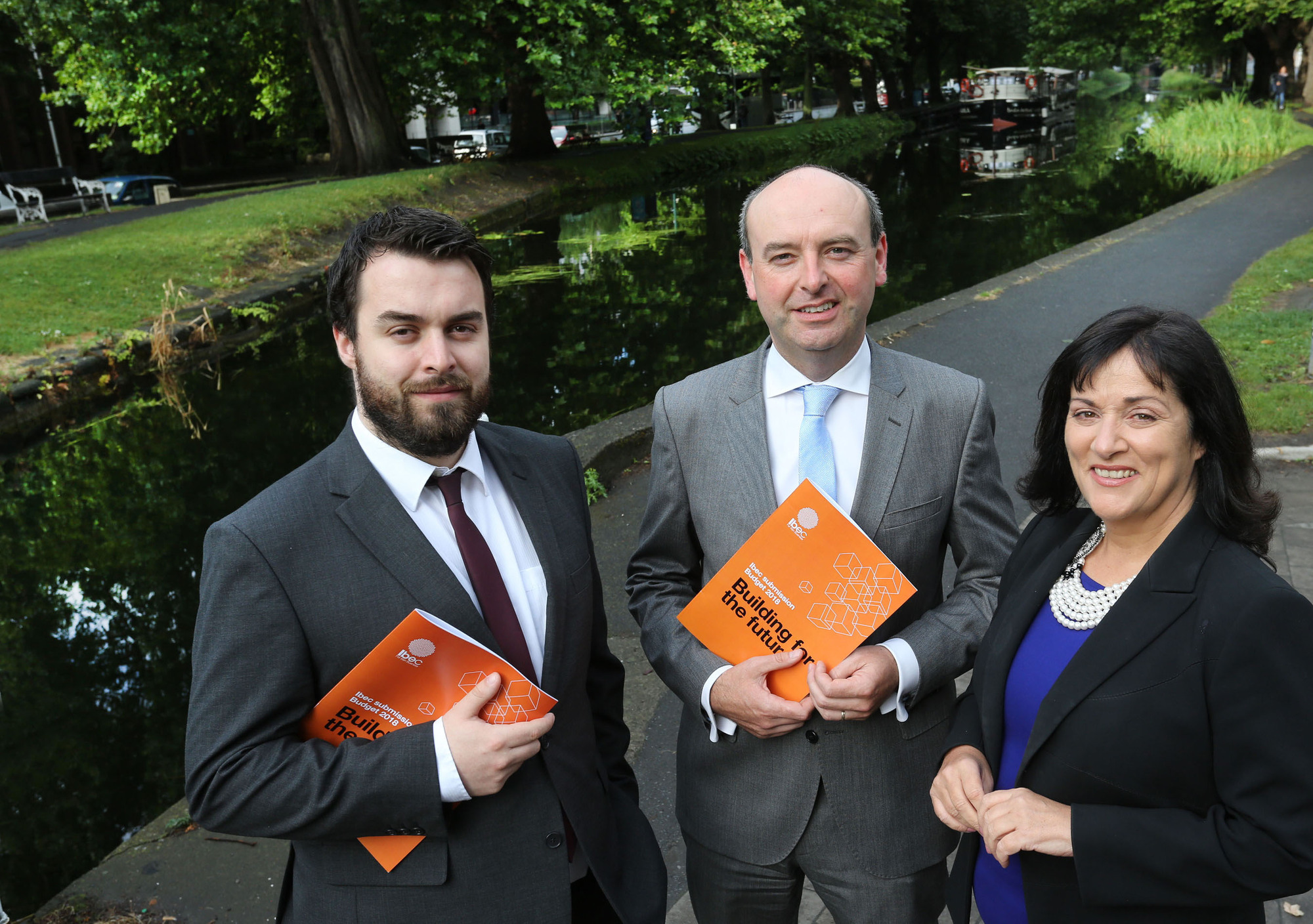
Ibec chief economist Gerard Brady, Ibec director of policy and public affairs, Fergal O' Brien and Ibec president Anne Heraty. Picture Gary O' Neill
Business group Ibec sounded an upbeat message over "the resilient" Irish economy, predicting some €11bn in Covid-19 household savings will help boost recovery next year but warned unemployment will remain at an elevated level before the rollout of vaccines helps those parts of the economy worst hit by Covid-19.
In its final economic report for the year, Ibec forecasts that unemployment, which includes people on the pandemic unemployment payment, or PUP scheme, will average 10.3% through 2021.
That average rate for unemployment for the whole of 2021 compares with a sub-5% rate before the onset of the global Covid crisis and also masks significantly higher unemployment in the first part of 2021.
It said it assumes the first half of the new year will continue to be tough for the sectors such as hospitality most damaged by the Covid economic crisis before a strong recovery sets in for the second half of the year, as the vaccines are widely made available.
Nonetheless, Ibec said that the exports-driven business model that has driven Ireland for decades remains "resilient in the face of Covid".
"The other pillar will be delivering record household savings into the domestic economy," said its chief economist Gerard Brady, citing at least €11bn in additional savings Irish households have built up during the lockdowns.
"If the right incentives and channels are found, 2021 could be an extraordinarily strong year for consumer spending which would, in turn, drive a recovery in employment," Mr Brady said.
Ibec said the €11bn pot is almost as much built up when the Government's savings scheme, called the Special Savings Incentive Accounts, or SSIAs, started to mature from 2006. The controversial SSIA scheme unve


CONNECT WITH US TODAY



Be the first to know the latest news and updates