From Mayfield with love: Rob Horgan continues Velo's coffee mission
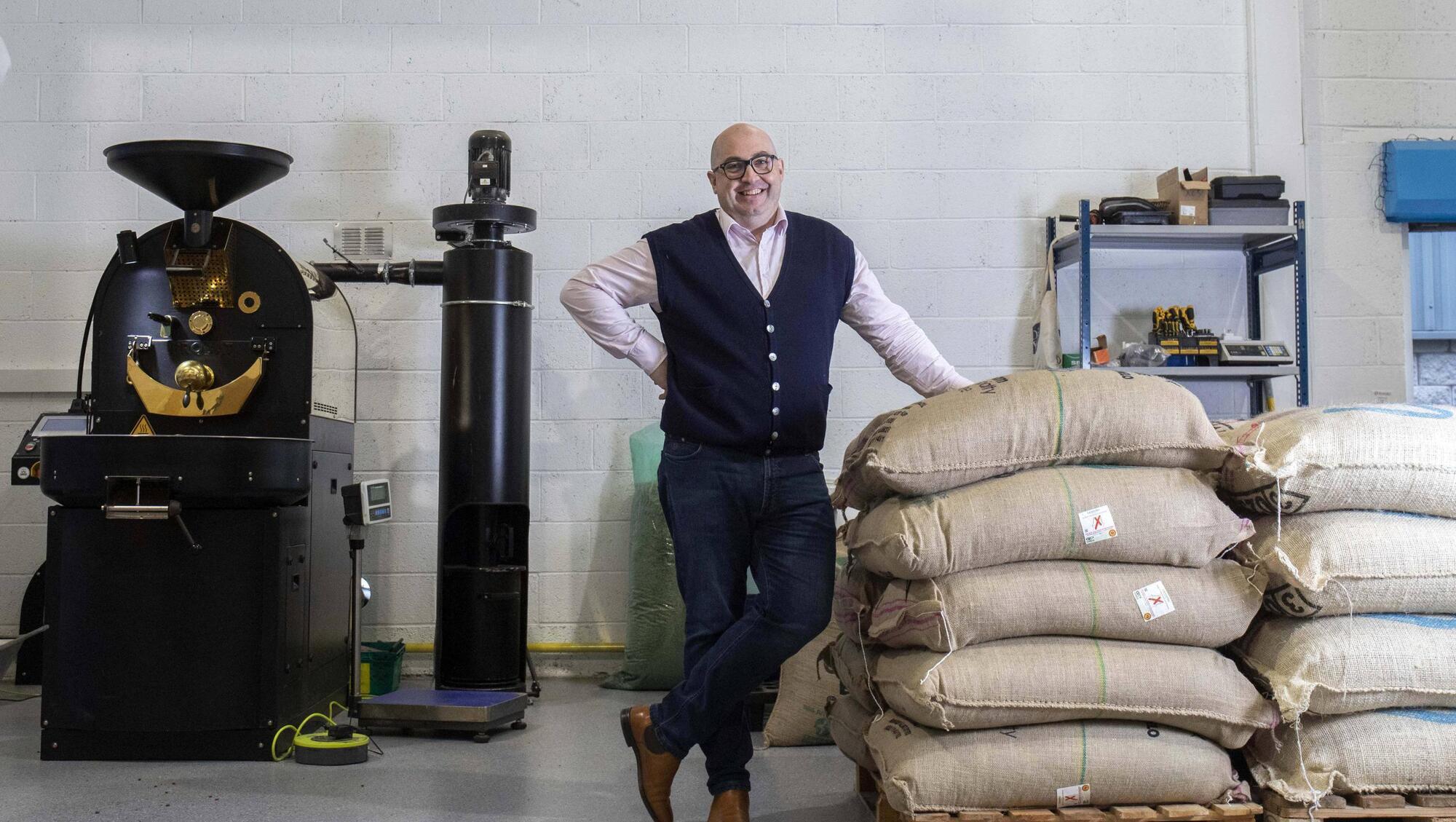
Rob Horgan, owner of Velo Coffee Roasters, which supplies Aldi's 167 stores: 'What we try to do is roast a coffee bean to suit them at a price that is good value at many levels.'
An instantly recognisable blue bag barely needs its energetic logo to define it. Velo got it right from the start of this coffee venture, and now there is mad pink, bright yellow, orange, navy blue packaging – not colours we expect in food. A bicycle theme runs throughout the range – fancy a BMX from Brazil?
While delivering happiness in every cup, and acknowledging that coffee is a good business to work in, 2025 was a tough year for Velo. Supply issues, Trump tariffs, currency fluctuations, increased costs of transport, had to be dealt with. Velo owner Rob Horgan, the immediate past president of Cork Chamber is sanguine, and expects problems in business. “We try to buy forward for stability. Last year was about survival. Coffee is quoted on the stock exchange, and last year 50% tariffs on Brazilian coffee were punishing,” he says.
“We got a warning three months ahead that Brazil would have no coffee for three months. Fortunately, we have good partnerships with suppliers, but business survives on stability." His retail partners have been aware of the vicissitudes of the supply of beans, and credits Aldi, Dunnes, and Tesco with Velo’s survival. “It’s still a small Cork business, viable because of the support of retailers.”
In 2015, Rob Horgan started the café in Cork which inspired his coffee business. At that time, his aim was to have everything in his café sourced locally, except obviously the coffee and tea, but when he planned to expand, buying large volumes locally wasn’t sustainable. Instead, he looked at the element that he grew most interested in. So he trained in coffee roasting and sourcing in Germany, looking to be able to control each stage of the process, from dealing with coffee farmers to packaging and selling products to retailers. He didn’t want to have a shop. His sights were more on volume so he could produce enough which could be sold through retailers for a reasonable price to the consumer.
From India, Guatemala, San Salvador, Brazil, and Colombia, the green, raw, coffee beans arrive to a warehouse and roastery in Mayfield in jute sacks, having been picked from the trees as red or yellow cherries, with two beans per cherry, (the exception being the pea berry which has just one).
The variety and style of coffee is determined by the origin of the beans, and for how long and at what speed they are roasted.
Read More
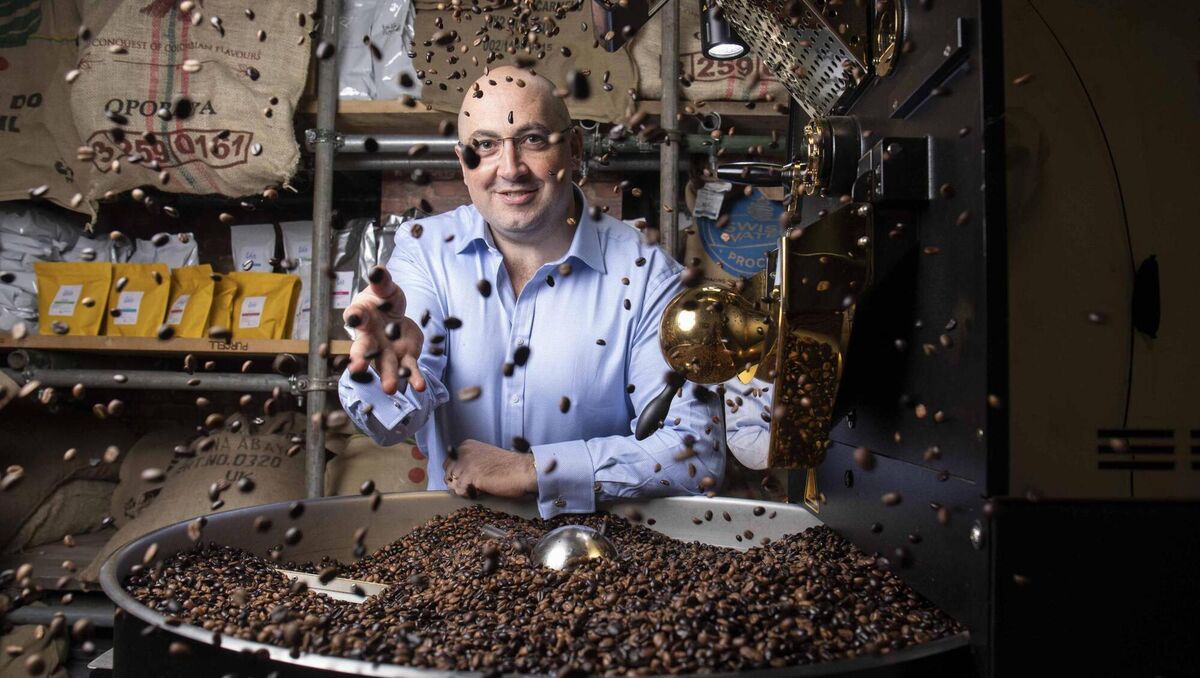
Consumers are increasingly interested in making coffee at home, choosing a good, creamy milk when making cappuccino. Velo’s El Salvador is very good with it. But most sales are to those who like to make their coffee black, and at home. They are increasingly recognising and demanding better quality coffee. A community of enthusiasts do online tutorials, and share their predilections, comparing notes, with chat up lines including, instead of favourite music performers, questions about a favourite coffee or method of brewing, Some even put it on their dating profile.
We consumers buy expensive, fancy, complex machines (Velo sells them online), and many consumers like to be part of a club where new beans are delivered regularly. But the human roasters themselves also use simple methods such as the French press, Aero Press, drip, pour over, stovetop mokka, espresso and pods. “People decide for themselves how they want their coffee to taste, and how they want to make it,” says Rob. “What we try to do is roast a coffee bean to suit them at a price that is good value at many levels.” When traveling around Ireland, Rob brings his own French press to enjoy coffee in hotel rooms.
Irish consumers have changed from being a nation of tea drinkers, to also being a nation of coffee drinkers. We like to know where our beans come from, what to expect from them in terms of taste and richness, and we like them in many forms, from press button pods to beans we grind for every cup.
“Good quality retailing at a reasonable price. Education without alienation,” are Rob Horgan’s two mantras. His three roasters are controlled by four living and breathing operators, also known as roasters, who empty raw beans into hoppers, and at the end of the process, guide whole and ground beans into the various packaging options aimed to capture the vibrancy of the coffee.
The business of roasting beans is down to split second timing. Over-roast and the beans will burn and have to be discarded. It’s monitored on the super tech computer screen which judges, amongst other important activities, the level at which fluctuating moisture is taken out of the beans. 16-17% is a typical moisture loss. The less moisture remaining, the longer they will keep. “It’s like roasting a chicken,” says roaster Adam Coughlan. “It’s an oven with notions!” But he can barely take his eye off that screen. Most control of flavour involves endothermic (heat-absorbing) Maillard (caramelising), and exothermic (heat-releasing) reactions. The process moves between these states as green beans take in energy, undergo browning, generating their own internal heat, pushing moisture out of the bean.
From light green, the roasting arm rotates slowly, darkening the beans, and when the roast is completed, the base grid of holes allows cool air through to take down the temperature. Then it goes through a filter which separates any bits of stones, or undesirable bean sizes.
Rob prides himself in a consistent product, and would not mix even a few of over-roasted beans with perfect ones to save money. He has to adjust the blend of beans which, like any plant, can vary from season to season. One year might require a few seconds more in the roaster, another year, a few seconds less, or the various beans might be blended in different proportions. Brazil and Colombia are often blended.
The biggest challenge is consistent quality. Countries have different quirks and ways of harvesting. Finer country estates for example in India will do six passes – picking the same plants by hand over days, when each cherry containing the beans is just ready. They must have a uniform size, otherwise the roast will be uneven.
A good barista will accentuate good coffee. Over time we can all become good coffee makers. As with wine, drink what you like, and experiment to see what suits your taste buds best. And like wine, we can taste different flavours which come from the different areas which are influenced by soil, topography, weather. Experimenting is part of the fun.
The coffee business has changed markedly in recent years. Before covid, pods were in decline, then the pod market took off and is now 2.5 times the market of other forms of their coffee. While they would prefer to use biodegradable capsules, the pressure of pod machines is too high to use anything but aluminium. But they are recyclable. And Rob offsets biodegradability with the sustainability of coffee growing. It takes seven years for a coffee plant to grow. And there is no devastation of forests for coffee farming.
Coffee farmers have their problems too. Last year a herd of a dozen white elephants rushed into a farm in India in search of water. ”There was nothing to do but avoid potentially vicious confrontation and allow them to stay and leave in their own time with their precious calves,” said Ashol Patre, visiting Velo from India to educate staff and retailers. “It took eight days of our production that we had not anticipated.” The up side is delicious Indian coffee in a pink pack with notes of chocolate, Ferrero Rocher, apples – perfect for espresso and for iced coffee.
Velo sells 20% of its production online and works hard to keep customers interested. See Velo on TikTok and note their presence in Chattanooga, Tennessee. You will also learn how to make a cold brew from Nicaraguan beans. Only for the dedicated. There is a Velo café in Dubai, and the hottest news, as I write, is that Rob just landed another wholesale account there. As small businesses go, with an expected turnover this year of €5 million, hard work and tenacity are reaping rewards for Rob Horgan and Velo.
A collection of the latest business articles and business analysis from Cork.
CONNECT WITH US TODAY



Be the first to know the latest news and updates