Revenue 'to work with taxpayers' impacted by soaring fuel costs
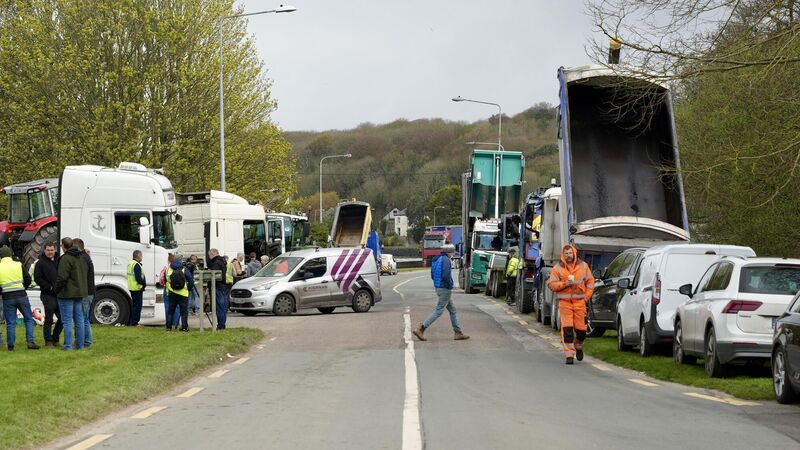
Fuel Protesters this week at Irving Oil Refinery Whitegate. Picture by Noel Sweeney
Revenue has said it will work with taxpayers impacted by the soaring price of fuel to ensure good compliance records can remain on track.
Speaking on Friday, the agency said it was aware that the continued rise in fuel and other costs is causing cash flow difficulties for certain individuals and businesses, adding that it will engage with any viable company experiencing these issues.
Collector-General at Revenue James Twohig said: "Rising fuel and other costs have affected businesses in a variety of ways. Revenue acknowledges that it can be a worrying time in terms of the ability to keep an otherwise good tax compliance record on track. Revenue will adopt a pragmatic approach where businesses have been adversely impacted because of rising fuel costs”.
He added that Revenue had a "strong record" of agreeing flexible and appropriate payment arrangements where businesses are facing temporary cash flow difficulties, and that it will work with those affected by rising fuel and other costs to take their financial circumstances and capacity to pay into account.
Mr Twohig said he would "strongly encourage" taxpayers to send in tax returns on time and to engage early with the agency if difficulty arises when paying tax.
"Rather than hope that such payment difficulties will resolve in time, my advice to taxpayers adversely impacted by rising fuel and other costs is to proactively engage with Revenue to agree mutually suitable arrangements," Mr Twohig concluded.
Fuel protests continued into their fourth day on Friday with further measures to be considered at key meeting with representatives.
Fuel Protesters at Irving Oil Refinery Whitegate on Thursday. Picture by Noel Sweeney
Ibec said the protests, now in their third day, is presenting "significant cost and operation disruption," which is already impacting on supply chains, while also presenting health and safety risks to workers.
The group said members across critical business supply chains, such as food, medicines and construction, are all reporting growing risks to production processes in the next 48 hours unless the protests are removed from essential infrastructure such as ports, industrial zones and transport hubs, warning that some sites have already ceased production.
CONNECT WITH US TODAY



Be the first to know the latest news and updates