General operative who wrote 'clumsily worded' note to management awarded €23,400 by WRC
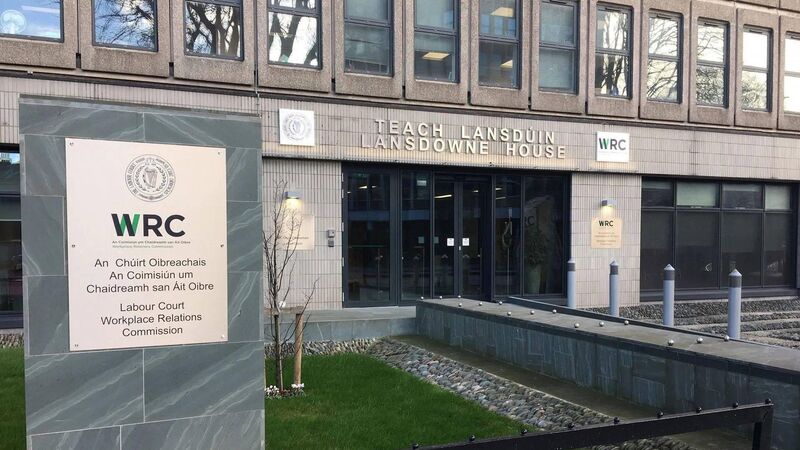
The case was heard at the WRC
A general operative who used an "ill-judged bargaining tactic" during pay negotiations with his former employer has been awarded €23,400 by the Workplace Relations Commission (WRC).
Joe Quigley was employed as a general operative at AMP Engineering Ltd between May 2017 and April 2025, earning €18 per hour in a 39-hour work week at the time of his dismissal last year.
In early 2025, Mr Quigley repeatedly raised concerns with management about his rate of pay, believing that his length of service entitled him to parity with other colleagues whom he felt were being paid more than him.
He also had unresolved concerns about poor conditions in the company's canteen facilities, which he says contributed to his growing frustration and sense of unfair treatment at work.
In April last year, he handed his line manager a handwritten note in a "moment of upset and anger."
Written "in the spur of the moment," the note set out three “options” for increasing his pay, with Mr Quigley adding that it was never intended as a resignation.
AMP Engineering Ltd said that immediately after delivering this note, Mr Quigley left work early at 1 pm without notifying management.
The respondent added that it interpreted one line of the note, which said: “Agree by end of day or won’t be back after wedding holidays,” as a resignation. That same afternoon, human resources issued him a letter stating they were “accepting” his resignation.
Mr Quigley repeatedly said that he did not resign and showed up to work the next morning on April 17, at the usual time of 7 am.
He stated that his line manager allowed him to continue working that day while awaiting guidance from HR, and he completed a full shift until 5 pm.
After the bank holiday weekend for Easter, Mr Quigley said he was called to a meeting with HR. At this meeting, he was "informed definitively" that the company had treated his note as a resignation and that he was "required to leave the premises immediately."
The complainant said he was instructed to collect his belongings and exit the building through the front office. He stated that he was told not to return, an instruction he understood to mean that he had been dismissed rather than having resigned.
Mr Quigley said that the real reason for his dismissal was that he had repeatedly raised concerns about his pay and workplace conditions, and that "management did not want to address these issues."
Defending the company's actions, AMP Engineering Ltd said that given the explicit wording of the ultimatum and the Complainant’s early departure, management interpreted the note as a resignation in the event that his demands were not met.
However, WRC adjudicator Breiffni O'Neill ruled that a resignation must be "clear, explicit, unambiguous, and unconditional.
"The note in question was plainly part of a pay negotiation, however clumsily worded," Mr O'Neill noted.
"The Complainant set out demands—unreasonable or otherwise—with an ultimatum. An ultimatum in the context of pay negotiations does not equate to a resignation."
Mr O'Neill added that a conditional threat "is not a resignation," adding: "At most, it is an ill‑judged bargaining tactic."
The adjudicator found Mr Quigley's total financial loss attributable to the dismissal as €39,000.
Taking into account limited mitigation efforts by Mr Quigley and the requirement that the award is "just and equitable," Mr O'Neill ordered AMP Engineering Ltd to pay €23,400 to Mr Quigley in respect of his unfair dismissal.


CONNECT WITH US TODAY



Be the first to know the latest news and updates