Famed luxury department store Saks files for bankruptcy in US
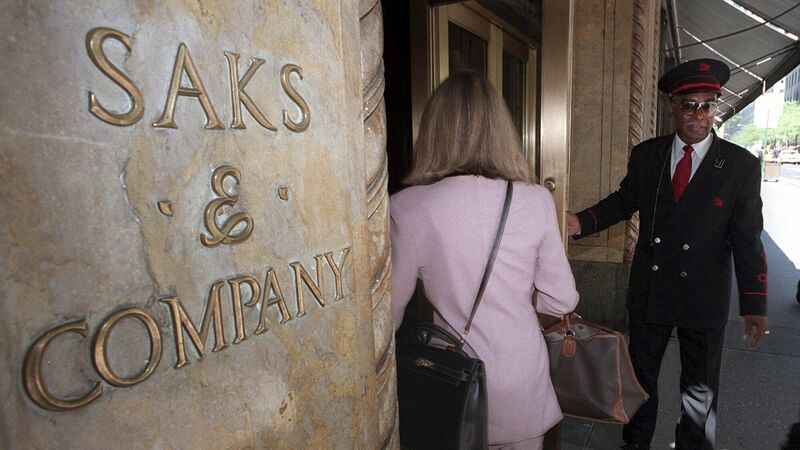
A Saks & Company doorman opens the 50th Street store entrance for a customer. Saks Global Enterprises has filed for bankruptcy to address mounting losses and a substantial debt load that has weighed down the iconic luxury retailer. Picture: AP Photo/Richard Drew
Saks Global Enterprises has filed for bankruptcy to address mounting losses and a substantial debt load that has weighed down the iconic luxury retailer.
The company, which operates its Saks Fifth Avenue stores along with Bergdorf Goodman and Neiman Marcus, entered Chapter 11 bankruptcy in Texas, it said in a statement.
Saks appointed former Neiman Marcus Group chief executive Geoffroy van Raemdonck as its new CEO and said it is evaluating its “operational footprint” to invest where there is the greatest long-term potential.
The move comes just over a year after debt investors handed Saks billions of dollars of new debt to help fund its acquisition of Neiman Marcus. But within months of doing so, the debt tumbled to deeply distressed levels, and by the end of 2025, Saks skipped an interest payment to bondholders totaling more than $100m (€85m).
“This is a defining moment for Saks Global, and the path ahead presents a meaningful opportunity to strengthen the foundation of our business and position it for the future,” Mr van Raemdonck said. Mr Van Raemdonck replaced Richard Baker, who stepped down on Tuesday.
Saks has secured approximately $1.75bn in financing, including $1.5bn from an ad hoc group of the company’s senior secured bondholders, according to Wednesday’s statement. Stores under the brands Saks Fifth Avenue, Neiman Marcus, Bergdorf Goodman, and Saks OFF 5TH, will remain open, it added.
Upon court approval, the $1bn of debtor-in-possession financing from the ad hoc group will provide liquidity to fund Saks’ operations and turnaround initiatives, the company said in the statement. A further $500m (€425m) of financing will be available to the company upon emergence from bankruptcy, expected later this year, it added.
The providers of the new money may also be able to roll-up certain of their existing bonds into the new facility, according to a court filing on Wednesday.
The bankruptcy is a watershed moment for Saks, which traces its roots back more than 150 years. Its flagship location on New York’s Fifth Avenue opened in 1924, when the stretch of now-prime real estate was largely residential. The business expanded from coast to coast in the ensuing decades, becoming an entry point to high fashion for many Americans, and went public for the first time in the mid-1990s.
But the company has struggled to adapt to shifts in the industry as the luxury brands it offers in its department stores also market directly to consumers. The retailer had been negotiating a restructuring with creditors and weighing other ways to shore up liquidity, including raising emergency financing or selling assets, yet ultimately landed on a Chapter 11.
The road to bankruptcy has been rocky at times over the past weeks as lenders grew frustrated with the company’s situation and its management team. It was only in June that creditors tacked on hundreds of millions of dollars of additional debt to Saks in an effort to boost its finances, part of a deal that reorganised which lenders get paid out first.
The deal created multiple tiers of bondholders, each with different claims on the company’s assets. Saks’ asset-backed lending facility was also amended to require the company maintain a minimum amount of excess liquidity, but the company has underperformed since then.
Saks cut its full-year guidance in October after reporting declining sales tied to inventory-management challenges, and a 13% year-over-year drop in revenue to $1.6bn in the second quarter.
In the court filing, Saks’ chief restructuring officer Mark Weinsten said that the financing raised over the summer proved to be insufficient to repay the money they owed trade partners, or restore inventory flows to planned levels ahead of the holiday season.
This not only affected the topline, but also constrained the company’s ability to access its asset-backed lending facility. Eventually, at the start of January — a low point in the season for sales — the company faced a “perfect storm” of liquidity challenges.
Bloomberg