Construction sector remains in contraction as new orders and jobs increase
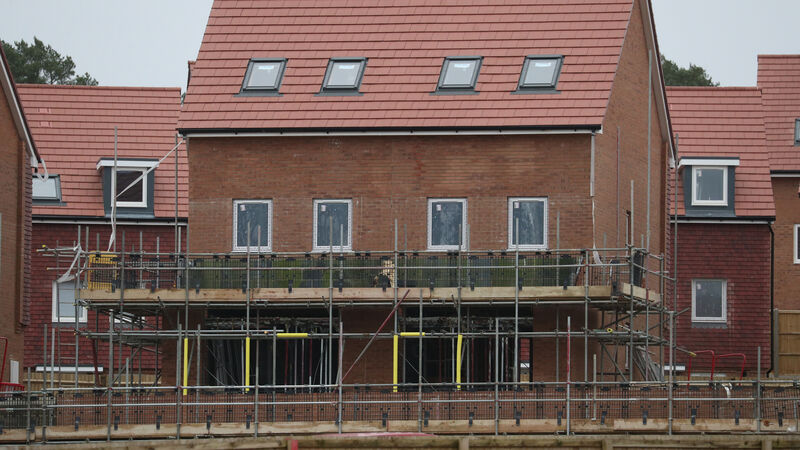
The residential sector was the best performing sub-sector during December.
Construction activity continued to fall in December, but an increase in new orders and expanded employment presented a more “upbeat picture” for the sector heading into 2026, the latest AIB Construction Purchasing Managers Index (PMI) shows.
During December, the PMI had a reading of 48.4 — up from 46.7 recorded in November. However, this is still below the 50 mark which indicates the sector went through a contraction during the month.
Any number of above 50 would indicate growth in the sector.
This is the eighth month in a row the sector recorded a reduction in activity, but it is the slowest fall in activity since June 2025.
Senior economist at AIB John Fahey said from a sectoral perspective “the survey indicated that the weakness in activity remained broad-based in December, albeit the pace of contraction eased across all three sub-sectors”.
“In this context, the best performing of the three was the residential sector. Homebuilding activity declined for an eighth month in-a-row, although the pace of contraction was the mildest since May,” he added.
The continued reduction in activity in the homebuilding sector is continuing to impact the housing crisis.
According to the most recent data from the Central Statistics Office (CSO), in the first nine months of 2025, there were 24,325 homes completed — which is a 13% increase on the same period in 2024.
However, the Government has set a target of 300,000 homes by 2030, which would mean an average of 50,000 new homes a year.
Commercial building activity contracted for the second month in a row, while civil engineering remained the weakest of the three sectors.
However, Mr Fahey added “assessing some of the other main components”, the December survey indicated some “encouraging signs for the sector”.
“The new orders index, which is viewed as a leading indicator, registered expansion for the first time in five months, with panellists noting improved demand and a scaling-up of projects,” he said.
“Against this backdrop, there was an increase in employment levels in the sector for the second month running.”
Optimism among construction firms when it comes to the prospect of increasing activity levels over the coming 12 months strengthened to its highest levels in 11 months.
Increasing customer enquiries boosted confidence in the outlook for 2026.
“The rise in new orders and optimistic outlook for the next 12 months encouraged construction firms to expand both their staffing levels and purchasing activity during December,” the PMI said.
Firms are also facing delays in securing purchased inputs, with suppliers' delivery times lengthening again in December.
“Panellists reported stock shortages at suppliers and traffic delays,” the PMI said.
“As well as difficulties sourcing materials, constructors were also faced with a further sharp increase in input costs. Although softening from November's eight-month high, the pace of inflation was still above the average for 2025 as a whole. Among the items reported to be up in price were metals such as aluminium, copper and steel.”
In addition, sub-contractor rates also rose at the end of the year, although the pace of inflation eased to a six-month low.


CONNECT WITH US TODAY



Be the first to know the latest news and updates