Hauliers criticise new Dublin Port charges as 'hidden tariffs'
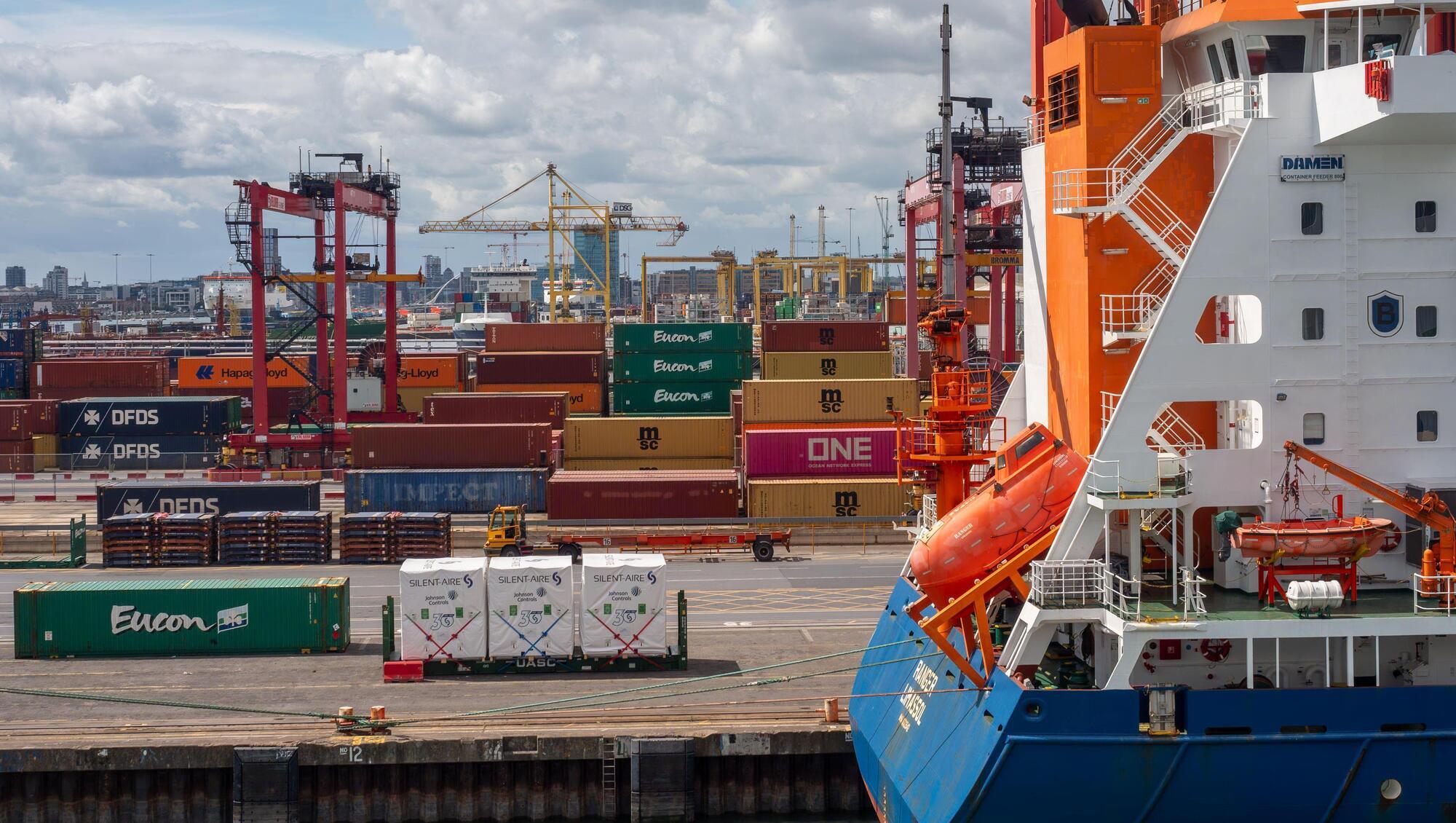
The new charges at Dublin Port have been sanctioned by Government to fund infrastructure projects at the port
Hauliers criticise new Dublin Port charges as 'hidden tariffs'

The Irish Road Haulage Association has criticised new charges at Dublin Port. The port says the charges are necessary to fund vital infrastructure works.

The Irish Road Haulage Association has branded new charges at Dublin Port as anti-business and "self-sabotage on Irish trade interests".

The new charges at Dublin Port have been sanctioned by Government to fund infrastructure projects at the port. Up to €165bn of trade flows through Dublin Port each year and the location handles 80% of all containerised freight that comes into the Republic of Ireland.


Dublin Port Company said it had finalised its pricing framework for 2026–2030 to support the next phase of its Masterplan 2040. It said the port had seen a significant increase in pricing and borrowing, with average annual capital investment set to increase from €65m (2015–2024) to €170m between 2025 and 2030.

Minister for Public Expenditure, Infrastructure, Public Service Reform, and Digitalisation Jack Chambers visited Dublin Port last week to see work continue at the MP2 project at the port, which will provide additional roll on/roll off, and lift on/lift off capacity.

But the Irish Road Haulage Association president Ger Hyland warned a range of new charges at the port will threaten competitiveness. The new charges include a 5% increase in the price of a container and a €15 infrastructure charge.

Mr Hyland said this would have to be passed on to consumers and described it as a "massive act of self-sabotage on Irish trade interests" at a time when Dublin Port company’s pre-tax profits increased by 2.6% to €35.9m.

“These charges — effectively hidden tariffs — risk driving up consumer prices, squeezing already pressured supply chains, and undermining the competitiveness of Irish importers, exporters, and logistics operators,” said Mr Hyland. “These charges function as de facto tariffs on trade into and out of Ireland. 

“They will inevitably cascade through the supply chain — from shipping companies, to hauliers to distributors, from retailers to consumers. It will lead to even higher prices for hard press Irish consumers and I am calling on the Minister to intervene and see sense."

In a statement, Dublin Port Company said it had to fund essential continued investment to maintain capacity and resilience.

"Following consultation with our customers, the updated port charges, including the introduction of an infrastructure levy from 2026, are necessary to fund this investment and ensure Dublin Port can continue to support Ireland’s trade and economic growth. 

"While we recognise that the increase presents challenges for customers, the changes should be viewed against the substantial economic value the port enables, and they are not expected to have an inflationary impact. We remain committed to engaging with stakeholders as the implementation phase begins."

x

More in this section

The Business Hub

Newsletter

News and analysis on business, money and jobs from Munster and beyond by our expert team of business writers.

Cookie Policy Privacy Policy Brand Safety FAQ Help Contact Us Terms and Conditions

© Examiner Echo Group Limited