Xiaomi declares Europe foray in 2027
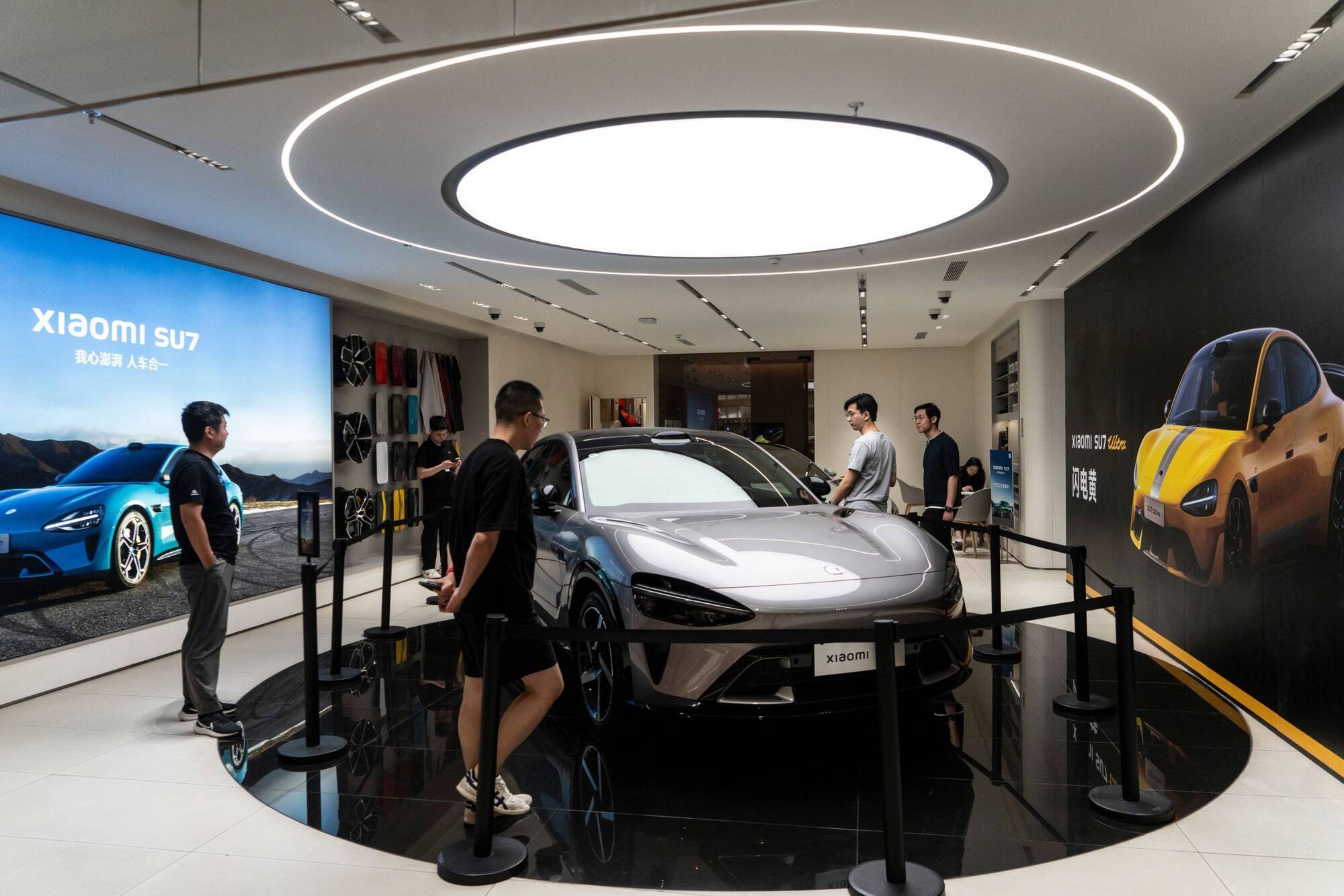
A Xiaomi Corp. YU7 electric SUV on display at one of the company's stores in Shanghai. Photographer: Qilai Shen/Bloomberg
Xiaomi intends to sell its first electric vehicle in Europe by 2027, declaring plans to take on Tesla and BYD globally after gaining traction with its year-old Chinese EV business.
President Lu Weibing shed more light on the company’s expansion plans after reporting a 31% rise in quarterly revenue, riding the successful launch of its second electric vehicle over the summer. That helped counter slowing demand for smartphones.
Xiaomi has previously described ambitions to go global, though it has never specified a target market. Europe is a common destination for Chinese carmakers like BYD seeking to tap a more lucrative arena, while governments across the continent are wooing Chinese EV and battery firms in part to mitigate the impact from US tariffs.
Strong demand for the YU7 sport utility vehicle, which co-founder Lei Jun released at the end of June, is propelling Xiaomi’s $10bn (€8.6bn) gamble on a fast-growing but crowded EV arena. The company aims to become one of the world’s top five carmakers, despite a production crunch that’s testing its ability to scale up. Wait times for the SUV have stretched to more than a year.
Revenue climbed to 116 billion yuan (€13.9bn) in the June quarter, just edging past the average analyst estimate. It delivered 81,302 cars, taking the total to more than 157,000 in the first half — on track to surpass 2024’s haul. But smartphones — its original and largest business — slid 2.1% and missed the average projection by about 5%.
While Xiaomi doesn’t expect smartphones to see much growth this year, the company’s goal is to increase its market share in China by 1% every year, Lu told reporters on a post-earnings call on Tuesday.
Losses from the EV division narrowed to about 300 million yuan during the period. Lei said at an investor meeting in June that the carmaking venture is expected to turn profitable in the second half of this year.
Xiaomi has gained some €100bn of market value over the past year, galvanised by a drive into EVs that’s gained momentum against much larger and more experienced rivals. The company seems to have shaken off a fatal accident involving one of its SU7 sedans in March, which had its Autopilot turned on. The crash prompted regulators to rein in the deployment of advanced driver assistance technology.
The Chinese government also intervened in June to try to stop a long-running price war that has squeezed margins all along the auto supply chain. Xiaomi has avoided getting embroiled in the discounting as demand for its vehicles remains high. Xiaomi’s overall net income roughly doubled to 11.9 billion yuan, helped in part by fair value gains on financial instruments.
Still, the stock is now trading at more expensive valuations than BYD as well as global smartphone rival Samsung Electronics.
Xiaomi is grappling with a slowdown in its core business and sluggish consumer spending. Xiaomi along with rivals Apple Inc. and Huawei Technologies Co. offered steep discounts over the big June shopping festival in an attempt to lure shoppers, pressuring margins.
AI and chip design is another arena where Xiaomi is ramping up resources. The Beijing-based firm unveiled a 3-nanometer chip called the Xring O1 chip, designed to power devices including the Tablet 7 Ultra. Lei said the company would invest $7 billion this decade into semiconductors.
Bloomberg


CONNECT WITH US TODAY



Be the first to know the latest news and updates