Intel forecasts revenue below Wall Street estimates
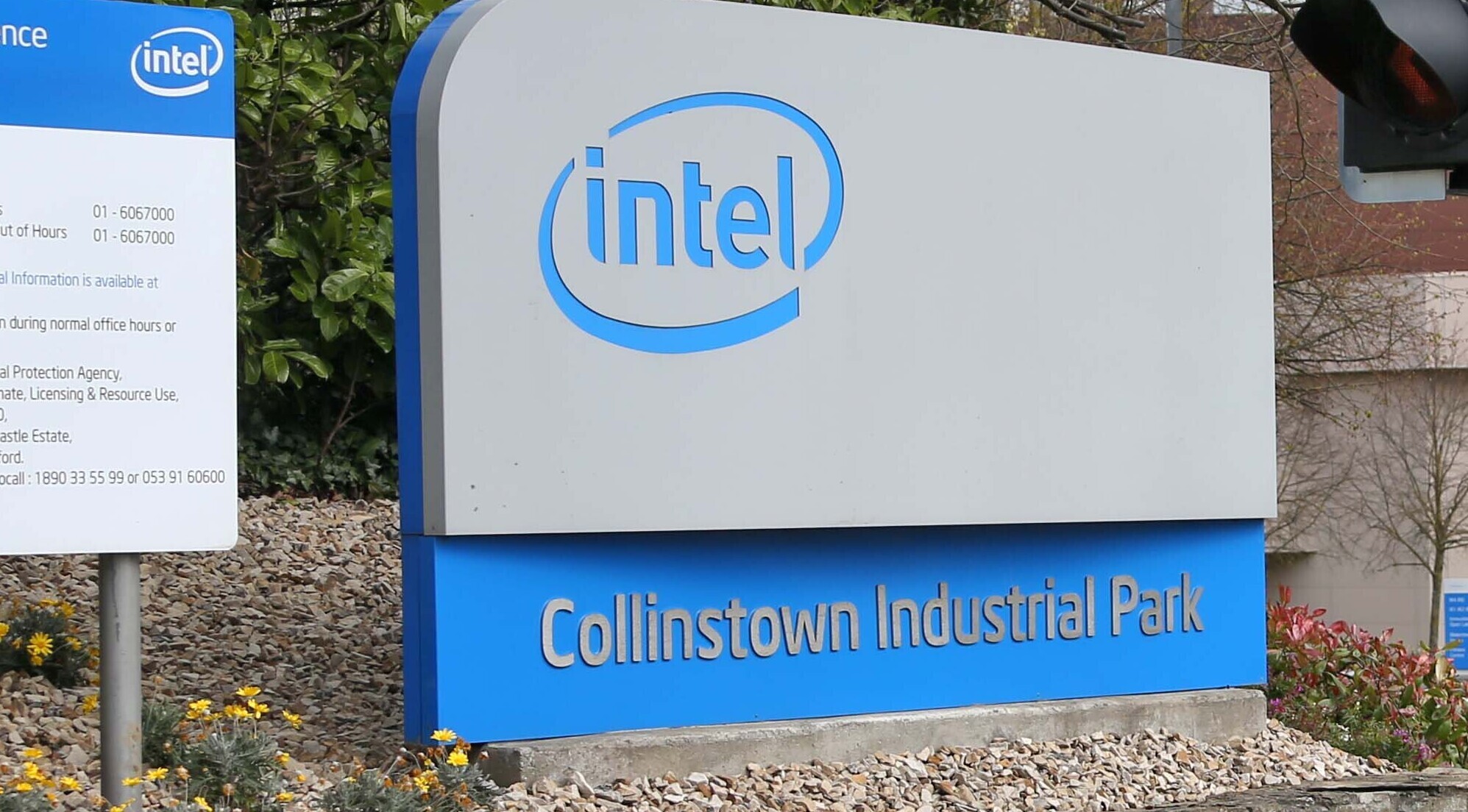
Intel's reduction of revenue forecasts comes in the same week as reports of imminent significant job cuts at the chipmaking giant which employs almost 5,000 people in Ireland.
Intel forecast second-quarter revenue below Wall Street estimates on Thursday, casting a shadow over new CEO Lip-Bu Tan’s first round of earnings at the helm.
It comes in the same week in which there are reports of significant job cuts on the way at the chip-making giant, which employs almost 5,000 people in Ireland.
The company — based in Santa Clara, California — expects revenue of $11.2bn (€9.8bn) to $12.4bn (€10.9bn) for the June quarter, compared with analysts’ average estimate of $12.82bn (€11.3bn), according to data compiled by LSEG. In a statement, chief financial officer David Zinsner said:
Amid Mr Tan’s attempts to streamline the company and cut costs, Intel also said it is reducing its adjusted operating expense target to approximately $17bn (€14.9bn) in 2025, down from its previously stated goal of $17.5bn (€15.4bn), and is now targeting $16bn (€14.1bn) in 2026.
“Intel is taking actions to drive better, more efficient execution across the business. The plan includes streamlining the organisation, eliminating management layers,” the company said in a statement.
While US president Donald Trump has, for now, spared chips from tariffs, Beijing’s high retaliatory levies on US-made semiconductors cloud the outlook for Intel’s sales to China, typically its largest market.
Chips made in the US are set to face levies of 85% or higher, based on the state-backed China Semiconductor Industry Association’s notice earlier this month.
Intel is one of the most closely-watched companies in a series of financial results being reported this week, the first set of results since Mr Trump embarked on a global tariff war.
On Thursday night, Google parent Alphabet unveiled a $70bn (€61.5bn) share buyback and beat quarterly revenue estimates, benefiting from steady growth in its digital advertising business, which helped offset muted growth at its cloud computing unit.
Tariffs had triggered worries of an economic downturn, prompting companies to rethink their spending on advertising. But analysts say the digital ad market held its ground in the first quarter.
Revenue from Google’s mainstay ad business, which makes up about 75% of its overall revenue, rose 8.5% to $66.89bn (€58.7bn) in the quarter — a slowdown from the prior quarter’s 10.6% increase but above analysts’ expectations of a rise of 7.7%.
The company reported total revenue of $90.23bn for the first quarter, compared to analysts’ average estimate of $89.12bn, according to data compiled by LSEG.
Also on Thursday, PepsiCo, which operates two facilities in Cork, cut its annual profit forecast as the drinks and snack giant signalled higher production costs and subdued consumer spending due to the uncertainty fuelled by tariffs.
Its shares fell more than 5% yesterday.
“We expect more volatility and uncertainty, particularly related to global trade developments, which we expect will increase our supply chain costs,” chief executive officer Ramon Laguarta said in a statement.
PepsiCo chief financial officer Jamie Caulfield added: “Relative to where we were three months ago, we probably are not feeling as good about the consumer.”
- Reuters

CONNECT WITH US TODAY



Be the first to know the latest news and updates