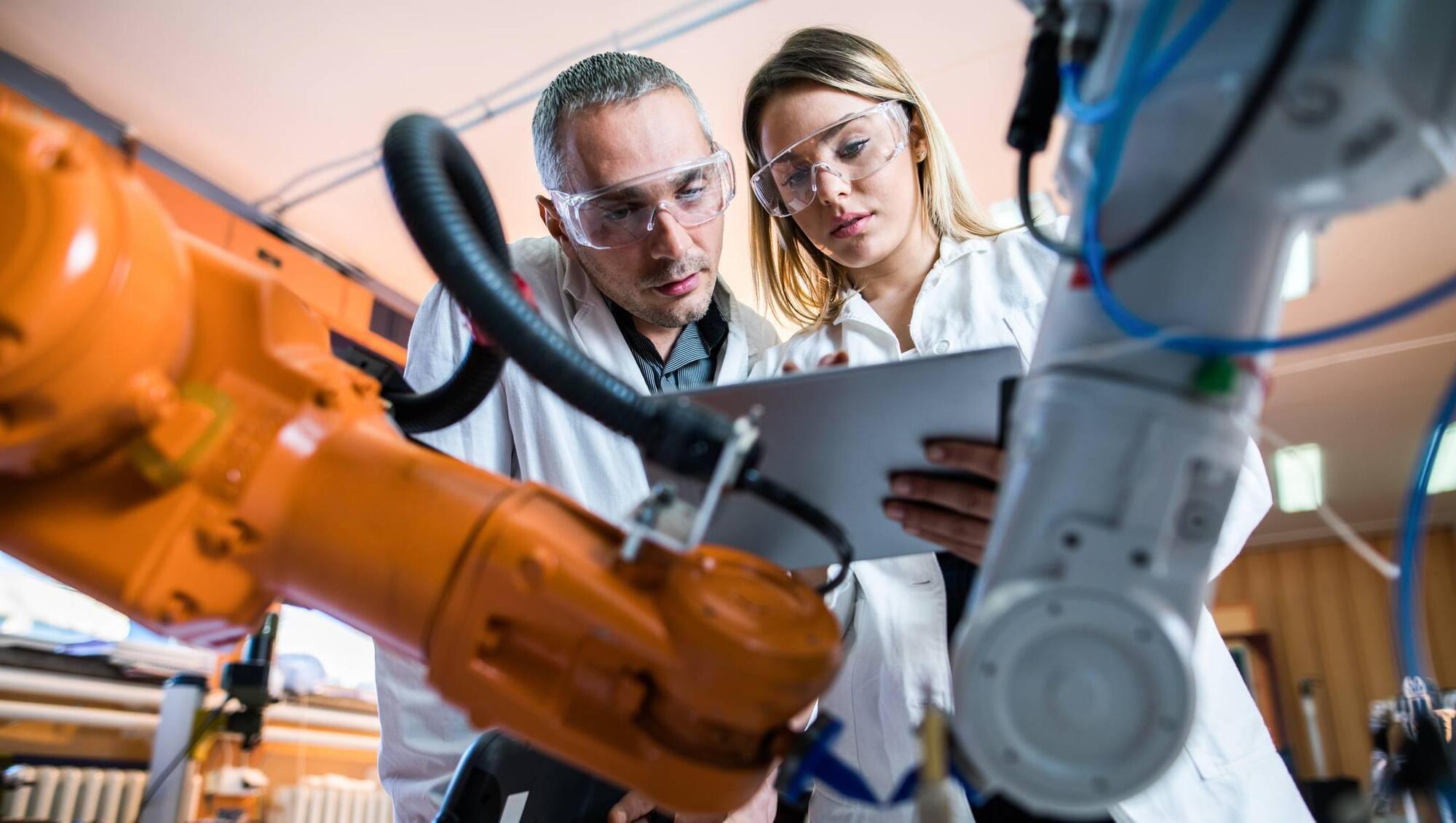
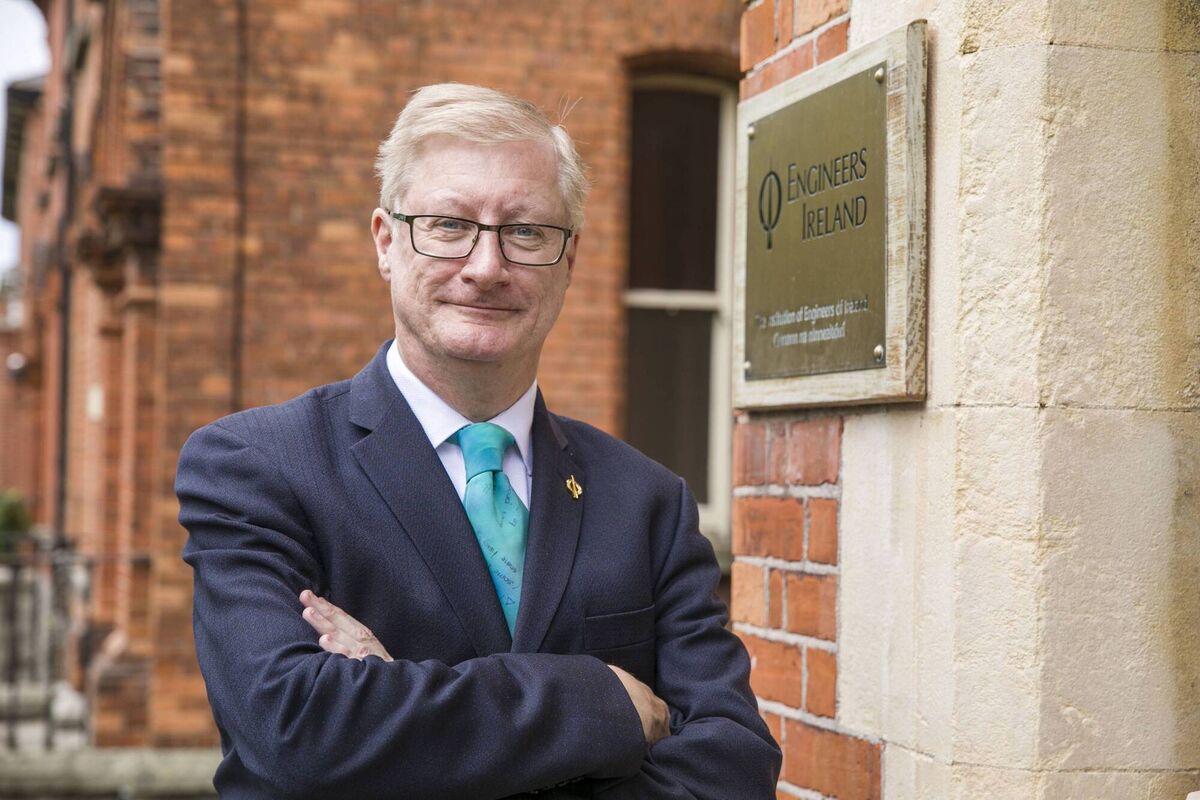
Failure to address the gender imbalance in engineering will exacerbate the existing skills shortage, warns Engineers Ireland (EI), the industry’s national representative body.
The engineering sector employs 60,000 people in Ireland. Recent research for EI estimated that 6,000 vacancies in engineering would arise in 2024.
Just 24% of student engineers in Ireland are female. Pay gaps after graduation are not helping — with 20.1% of male graduates of engineering, manufacturing and construction earning a salary of €60,000 or more, compared to 12.7% of females.
“Boosting female participation is a priority for engineering companies worldwide,” said Damien Owens, director general, Engineers Ireland. “A lot of companies in Ireland are recruiting engineers from overseas, so around half of our newest members are from overseas.
“The gender balance is 60:40 among our new members, which is much more equitable versus the 24% of female engineering students in Ireland. A lot of these new members are in biomed, mechanical, software and robotics.
“We need to raise awareness of how engineering has diversified as a profession in line with the technological advances and demands in other sectors. It is not just about building roads and bridges, though these activities remain vital to society.”

Changing perceptions around engineering will be a key theme for EI at this year’s National Ploughing Championships in Ratheniska, Co Laois, where its stand will feature an autonomous robot dog, Setanta, who works at construction sites conducting laser scans to identify deviations from construction plans, testing air quality and other roles deemed unsafe for humans.
The EI stand will also feature a life-sized representation of the human heart and arterial system, engineered to support biomedical research to combat heart disease; an interactive Formula 1 experience demonstrating the importance of automotive engineering to motorsports; and an opportunity for attendees to visit space through virtual reality.
EI’s research shows that one in four people consider engineering to be a better career for men than women. The battle for minds, however, starts far earlier than one might think.
“Research shows that by age 7-to-10, a lot of our career choices are already made,” says Damien Owens. “We need to get to people early, even before secondary school, when people are streaming their subjects towards their career choices.
“We need to change fears around the difficulty of maths and people’s perceptions that engineering is only for the mentally elite. There are a lot of things we need to change. Unfortunately, there’s no silver bullet solution.”
One positive impetus for female engineers is a seeming absence of a glass ceiling in engineering. An EI survey a few years ago showed that women occupy more senior roles in engineering than in many other professions, in many cases paid more than their male counterparts.
Still, EI believes that this finding does little to offset their concerns around female graduates earning less than their male colleagues. And of the 24% of female students graduating in engineering, just half (12%) go on to pursue a career in engineering.
That fall-off rate, however, may be partly masked by the fact that engineering graduates end up working in sectors as diverse as medical devices and robotics to wind farms. Data from the HEA shows that male graduates of STEM courses are twice as likely as their female counterparts to have the word “engineer” in their job title, nine months after graduation.
Either way, none of this deflects EI’s focus from seeking to boost the levels of female participation in engineering and its plans to promote greater gender balance in STEM roles with campaigns in schools, the Ploughing Championships and elsewhere.
Damien Owens says: “We need to change perceptions of engineering in Ireland to encourage more women and other underrepresented groups, such as students from more rural backgrounds, to consider it as a career path. Engineering is vital for the functioning of the Irish economy and there is a real risk of skills shortages in the future as the demand for engineering continues to grow.
“Greater representation of our society in engineering will not only shore up skills shortages, but it will also bring new ways of thinking and better balance to the future of the profession, which is increasingly focused on innovation and data-centric problem-solving.
“It is particularly concerning that younger people of 16 to 24 consider engineering as a ‘man’s job’. We want to challenge that perception and show younger people in particular that engineering is open to everyone,” he adds.
Engineers Ireland’s exhibition at the National Ploughing Championships will be open to the public to visit from September 17-19.
EI also has resources on its website for teachers, career guidance counsellors, parents and students as part of its STEPS Programme: www.engineersireland.ie/schools

Subscribe to access all of the Irish Examiner.
Try unlimited access from only €1.50 a week
Already a subscriber? Sign in
CONNECT WITH US TODAY
Be the first to know the latest news and updates