AIB shares climb 5% as lender delivers record €2bn profits haul
Focus on Irish lenders following major lessening of competition in banking market
AIB shares climb 5% as lender delivers record €2bn profits haul

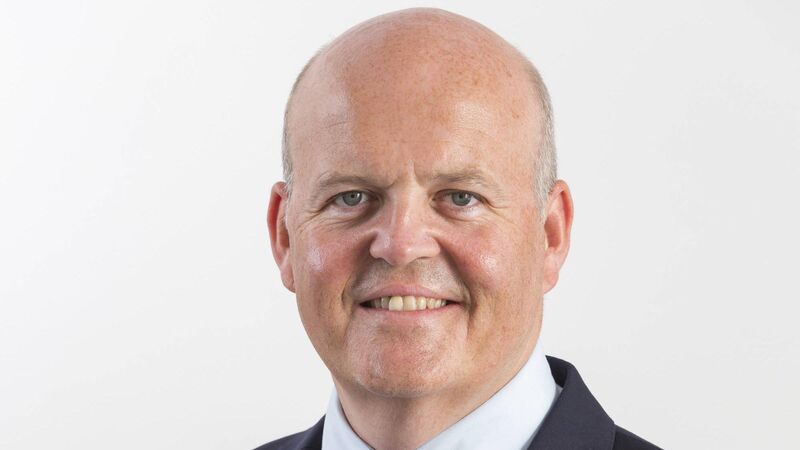
AIB chief executive Colin Hunt said the bank had 'an exceptional year'.

AIB has posted a record annual profit haul of €2bn after the lender tapped the surge in European Central Bank interest rates that has driven income, while facing little significant competition to pay out to attract deposits. The shares closed 5% higher on the outlook for the current year.    

The profit compares with the €765m in after-tax profits the lender made in 2022 as net interest income soared to over €3.8bn from a restated €2bn in 2022, reflecting the interest rate hikes, or “the changed interest rate environment and higher average customer loan volumes”, AIB said in its earnings statement.


The lender, which is now almost 40%-owned by the Government, also pledged to distribute a total of €1.7bn to shareholders, which includes €700m in cash by way of dividends. The  Government's stake could fall to 34% as part of the shares buyback plan.  

AIB is the second of the two large general lenders that dominate Irish banking to report 2023 earnings. Bank of Ireland last month posted a record annual pre-tax profit of €1.9bn, also reflecting sharply higher interest rates.

The performance of the shares of AIB and Bank of Ireland in recent years reflect for the most part the benefits of higher levels of net interest income flowing to lenders since the ECB started out on its campaign to tame inflation by hiking official rates in the summer of 2022.

Exit of rivals

The Irish banks have also benefitted hugely from the exit from banking in the Republic by their once fierce rivals, Ulster Bank and KBC Bank.

AIB chief executive Colin Hunt said 2023 was “an exceptional year” despite the global uncertainty. The current year “marks the beginning of a new three-year strategic cycle for the group”, he said. 

The bank reported a total impairment charges from souring loans of €327m in 2023, mostly reflecting its commercial property loan book, but wrote back €155m in previous provisions it had made for corporate and small business loans. 

While keeping a close look on lending to office developments, “overall credit quality remains robust against the backdrop of inflation and higher interest rates”,  the bank said.

Investors are looking carefully at whether AIB and its rivals can continue to generate large amounts of net interest income should the ECB start to cut interest rates aggressively from this summer. 

AIB nonetheless said it expected to generate net interest income of more than €3.6bn this year, even as the ECB and Bank of England start to cut interest rates this year.

Ahead of Wednesday’s earnings, AIB shares had risen 12% since the start of the year. And the shares have more than doubled since mid-February in 2021 when it became clear AIB was set to benefit from reduced competition with the departure of Ulster Bank. After the results, AIB shares rose 5% on the day and have now gained 14% from a year ago to value the bank at almost €12bn on stock markets.  

Mortgage lending

Some international analysts believe AIB and Bank of Ireland will prove their resilience in terms of generating income. AIB, Bank of Ireland, and PTSB accounted for a huge share of the €12.5bn in new mortgage lending advanced last year. 

AIB said it had a share of 33% of new mortgage lending last year despite the market failing to grow as anticipated as fewer borrowers switched mortgages as ECB rates climbed. PTSB unveils its earnings on Thursday. 

Maria Jesus Parra Chiclano, vice president, European financial institution ratings at Morningstar DBRS, said AIB could hold onto "a large part of the extraordinary results seen in 2023" even as ECB interest rates fall this year. 

She cited the benefits for the bank from the loans acquired from Ulster Bank amid the consolidation of Irish banking, the lender's ability to manage the costs of its deposits this year, and the healthy prospects for the Irish economy.  

"Retail banking in Ireland is a concentrated market nowadays with mainly three main players, or four if you include Barclays Ireland, after the exit of Ulster Bank and KBC Group, which has boosted market shares for the remaining players, especially BoI, AIB and PTSB, providing them with additional growth levers," the senior analyst said.  

"Still, the Irish market is a small concentrated banking market and when looking into the rest of Europe there are other concentrated banking markets such as Netherlands and Belgium, and even larger markets such as France," she said.

x

More in this section

The Business Hub

Newsletter

News and analysis on business, money and jobs from Munster and beyond by our expert team of business writers.

Cookie Policy Privacy Policy Brand Safety FAQ Help Contact Us Terms and Conditions

© Examiner Echo Group Limited